Discover current SBA 7a loan rates, master rates by loan size, fees & negotiation tips to secure the best deal today.
March 25, 2026
Current SBA 7a loan rates range from 9.75% to 15.00% depending on your loan size, whether you choose a fixed or variable rate, and the current prime rate.
Here is a quick look at where rates stand right now (based on a prime rate of 6.75%):
| Loan Amount | Max Fixed Rate | Max Variable Rate |
|---|---|---|
| $25,000 or less | 14.75% | 13.25% |
| $25,001 - $50,000 | 13.75% | 13.25% |
| $50,001 - $250,000 | 12.75% | 12.75% |
| Over $250,000 | 11.75% | 9.75% |
Rates as of February 2026, with prime rate at 6.75%.
These are the maximum rates lenders can charge. Your actual rate may be lower depending on your credit, your lender, and your loan details.
Figuring out what you will actually pay on an SBA 7(a) loan can feel confusing. Rates change with the prime rate. Fees add to your real cost. And every lender has its own markup rules.
This guide breaks it all down in plain language - so you know exactly what to expect before you apply.
I'm Cesar DonDiego, a finance and accounting professional with a background in financial analysis, cash flow planning, and helping small business owners make smarter funding decisions - including navigating current SBA 7a loan rates to find the most cost-effective options. My hands-on experience working with business owners across different industries means I can help you cut through the jargon and focus on what actually matters for your bottom line.
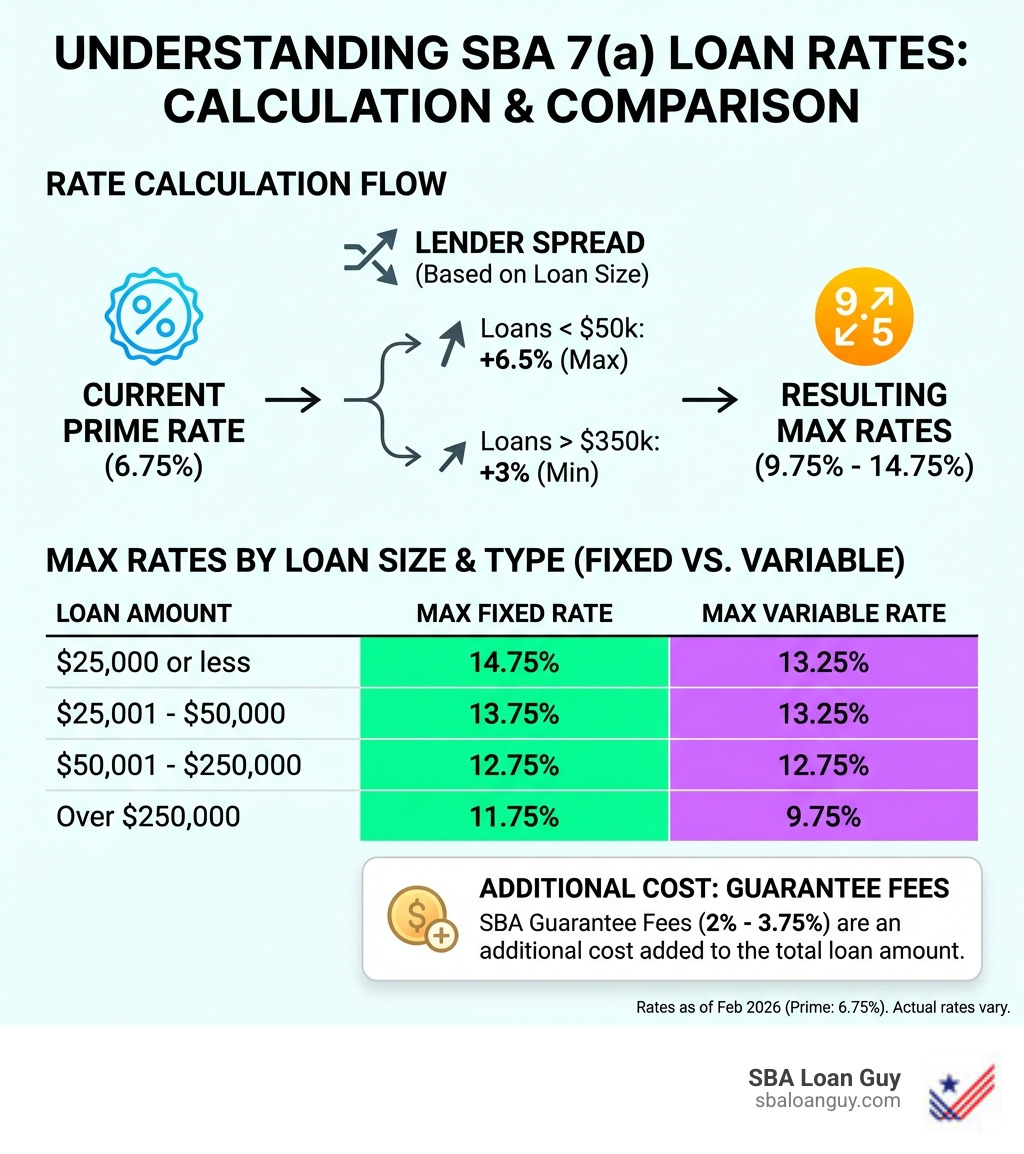
To understand current sba 7a loan rates, you first need to know that the SBA doesn’t actually lend you the money. Instead, they give a "thumbs up" to a bank or a private lender, promising to pay back a big chunk of the loan if you can't. Because the government is taking on that risk, they also get to set the rules on how much interest the lender can charge you.
Think of your interest rate like a sandwich. The "bread" is the base rate, and the "meat" is the lender's spread (their profit).
Lenders can offer you two types of rates:
The Prime Rate is the heartbeat of current sba 7a loan rates. It is heavily influenced by the Federal Reserve. When the "Fed" raises rates to fight inflation, the Prime Rate goes up, and your SBA loan becomes more expensive.
For example, if you have a variable-rate loan of $500,000 and the Prime Rate jumps by 0.25%, your annual interest cost just went up by $1,250. This is why we keep a close eye on market changes for our clients in places like Houston and Chicago—timing your application can sometimes save you thousands in interest costs over the years.
If you want to do your own detective work, the best place to look is the FTA wiki downloads page. This is where the SBA posts official notices about rate caps and any quarterly updates.
However, keep in mind that these are just the maximums. To find out what a specific bank will charge you, you’ll need to look at their lender disclosures. At SBA Loan Guy, we help you skip the manual searching by matching you with lenders who are currently offering competitive pricing below those legal maximums.
One of the most important things to know is that the SBA actually lets lenders charge higher rates for smaller loans. This might seem backward, but it’s because it takes just as much work for a bank to process a $50,000 loan as it does a $500,000 loan. To make it worth their time, they are allowed a bigger spread.
Here is how the maximum variable rates break down based on the loan amount:
To make it easy, here is a table showing the maximums as of early 2026 (Prime at 6.75%):
| Loan Amount | Max Variable Spread | Max Variable Rate | Max Fixed Rate |
|---|---|---|---|
| ≤ $25,000 | Base + 6.5% | 13.25% | 14.75% |
| $25,001 - $50,000 | Base + 6.5% | 13.25% | 13.75% |
| $50,001 - $250,000 | Base + 6.0% | 12.75% | 12.75% |
| $250,001 - $350,000 | Base + 4.5% | 11.25% | 11.75% |
| Over $350,000 | Base + 3.0% | 9.75% | 11.75% |
As you can see, once you cross that $250,000 or $350,000 limit, your interest rate can drop significantly. If you are close to a threshold—say you need $240,000—it might actually be cheaper in the long run to borrow $251,000 because of the lower interest rate cap!
Interest isn't the only thing you pay. To get the full picture of current sba 7a loan rates, you have to look at the fees. These are governed by the 13 CFR 120.221 regulations.
This is a one-time fee you pay to the SBA for "insuring" the loan. For the fiscal year 2025/2026, the fees generally look like this:
Lenders also pay an annual service fee to the SBA. While the lender pays this, it’s factored into the cost of doing business. For 2025/2026, this fee is 0% for loans under $500,000 and around 0.55% for larger loans.
If you are using the loan for real estate (with a term of 15 years or more), be careful about paying it off too early. If you pay off more than 25% of the loan in the first three years, you’ll hit a penalty:
Expect to pay for things like appraisals, business valuations, and attorney fees. These usually range from 2% to 6% of the total loan amount. The good news? You can usually roll these costs into the loan so you don't have to pay them all out of pocket on day one.
Even though the SBA sets maximums, you don't want to pay the maximum if you don't have to! Getting the best current sba 7a loan rates requires a bit of preparation.
First, you need to make sure you meet the size requirements. Your business must be considered "small" by the SBA’s standards, which varies by industry. You also need to ensure you aren't on the list of type of ineligible business (like gambling, speculative real estate, or certain non-profits).
For more details on how these loans work, you can check out our page with More info about SBA 7(a) loans.
Yes, you can negotiate! Here are four levers you can pull:
No. There are no interest-free SBA loans. While there was some temporary relief during the COVID-19 pandemic where the government paid a few months of interest for some borrowers, all new loans charge interest. However, compared to many other types of business funding (like merchant cash advances which can have 30%+ effective rates), SBA loans are very affordable.
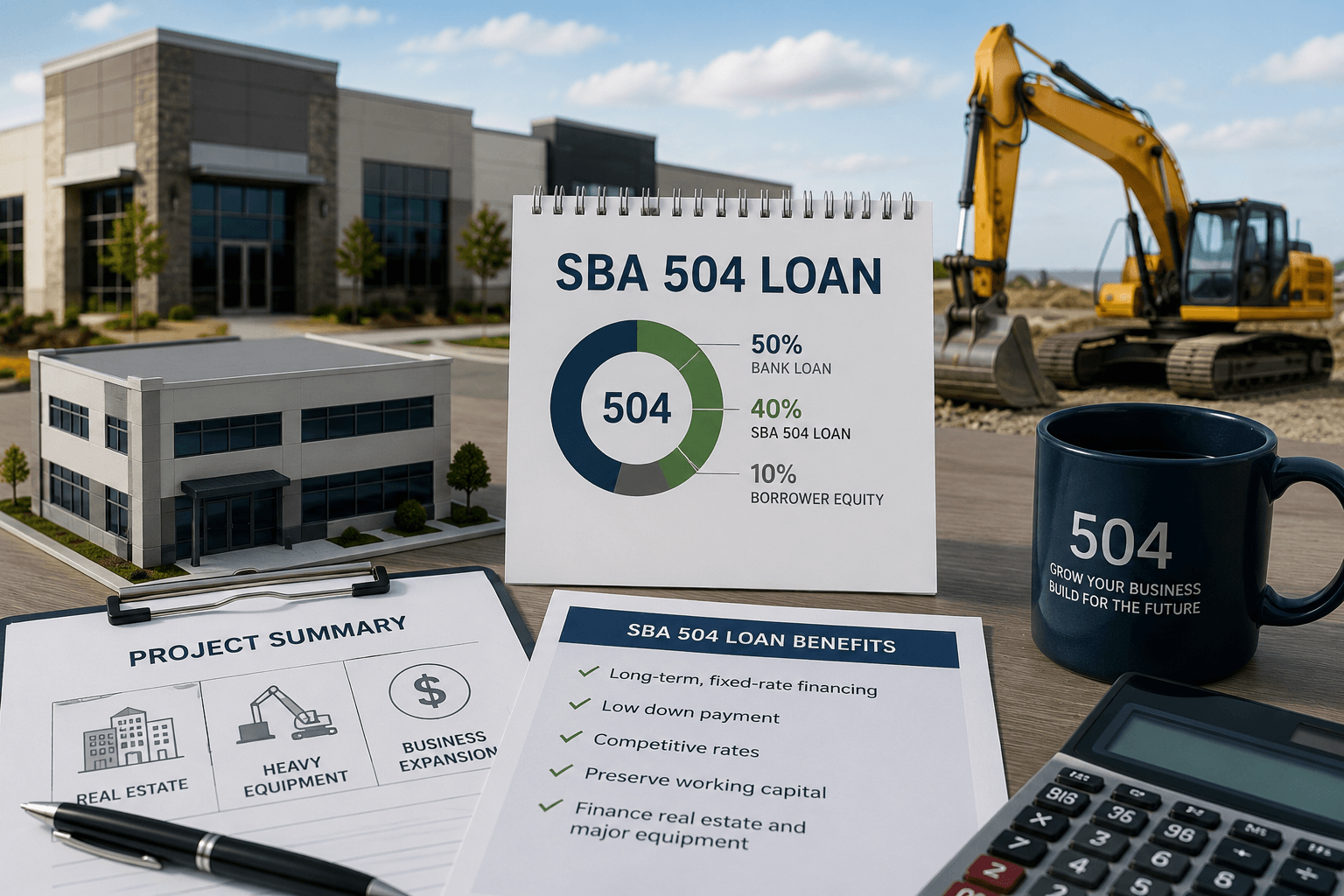
The maximum amount you can borrow through the 7(a) program is $5 million. If you need more than that, you might look into the SBA 504 program, which is specifically for large real estate or equipment purchases.
On average, it takes 45 to 90 days from the time you submit your application to the time the money hits your bank account. If you are in a rush, the SBA Express program offers faster decisions (within 36 hours), but the maximum loan amount is lower ($500,000) and the interest rates are often slightly higher.
Navigating current sba 7a loan rates doesn't have to be a nightmare. By understanding how the Prime Rate works, knowing the caps for your loan size, and preparing your credit and equity, you can secure funding that helps your business grow without drowning you in debt.
At SBA Loan Guy, we specialize in making this process simple. Whether you are in The Woodlands, TX, or operating in New York City or Indianapolis, we provide a personalized pre-qualification snapshot and match you with the right lenders for your specific needs. We guide you through the paperwork and help you negotiate the best terms possible.
Ready to see what kind of rate you can get? See if you pre-qualify today and let us help you find the capital you need to succeed.

A distilled, 0–100 snapshot of how fundable you are based on credit, cash flow, equity, and documentation. Plus the top fixes to raise your score fast.
A curated shortlist of lenders that fit your profile and use of funds, with why each is a fit and exactly what they’ll want to see.
A tailored, step-by-step list of required docs and forms (formats, who provides them, and common pitfalls to avoid).
A realistic week-by-week path from pre-qual to closing, with milestones, dependencies, and an estimated target funding date.
Hands-on prep and documentation for SBA disaster programs (EIDL and others), including submissions, follow-ups, and guidance through appeals or requests for more info.
We prepare your application, match you with the
right lenders, and guide you until funding.