Craft your winning sba loan business plan: Expert blueprint with templates, financial tips & lender secrets for SBA 7(a) approval.
March 27, 2026
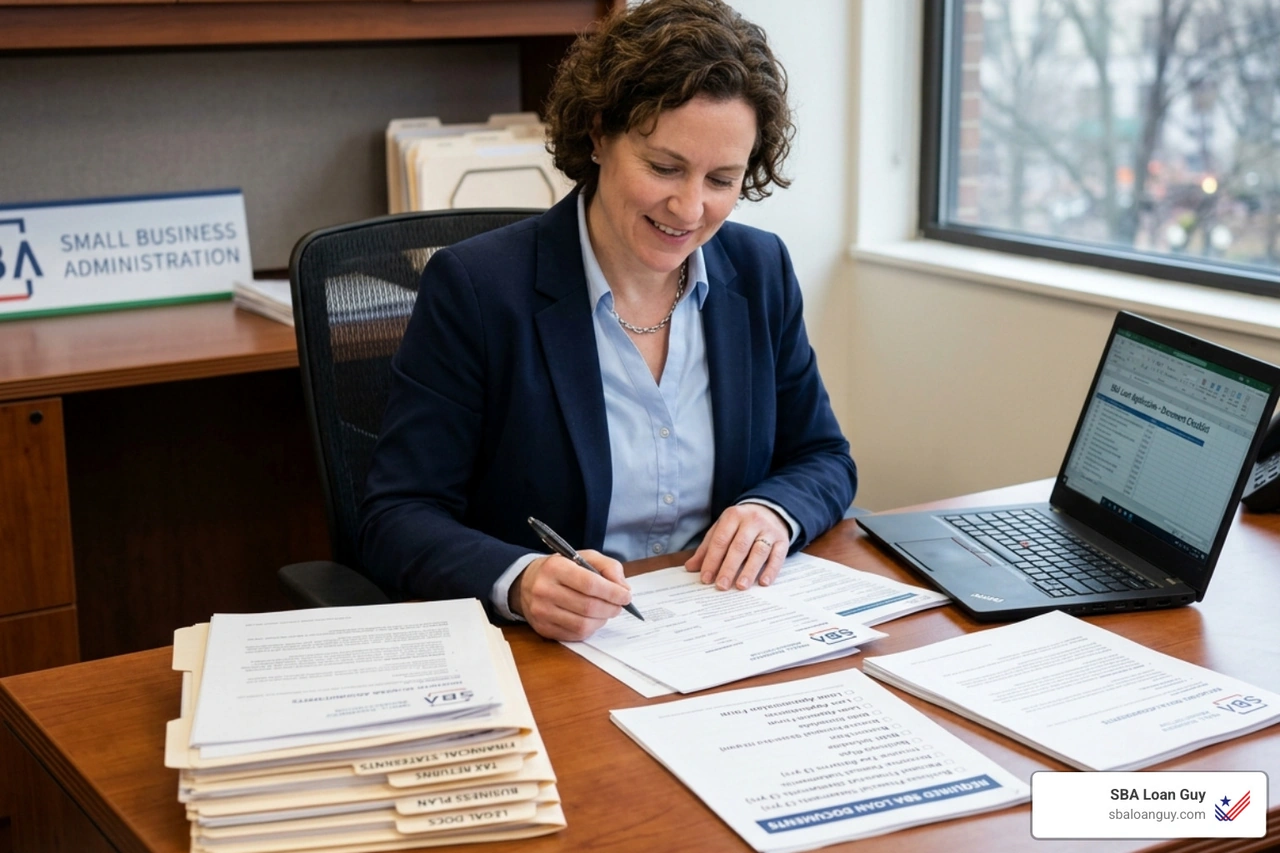
An sba loan business plan is a structured document that shows lenders your business is worth funding — and that you can pay the loan back. If you're applying for an SBA 7(a) loan, here's what you need to know right away:
What an SBA business plan must include:
In 2024, nearly 51% of SBA loan applications were fully approved and another 34% were partially approved. That's a strong approval rate overall — but the most common reason eligible applicants still get rejected is a weak or incomplete business plan.
Your business plan isn't just paperwork. It's the document that answers every question a lender has before they even meet you.
I'm Cesar DonDiego, a finance and accounting professional with hands-on experience helping small business owners structure their financials and plan strategically — including preparing documentation for an SBA loan business plan. I'll walk you through exactly what to write, section by section, so your plan builds lender confidence from page one.
Think of an sba loan business plan as your business’s roadmap. It tells the story of where you are now, where you want to go, and how the loan will help you get there. Lenders at banks in Houston, Chicago, or Orlando aren't just looking for a good idea; they are looking for proof that you can pay the money back.
The Small Business Administration (SBA) doesn't actually lend you the money directly. Instead, they guarantee a part of the loan, which makes it less risky for the bank. Because the government is involved, the bank has to follow strict rules. They use your business plan to check if your company is stable, if your leadership is smart, and if your goals are realistic.
In 2024, 51% of SBA loan applications were fully approved. This shows that if you do the work and follow the rules, your chances are actually quite good! Whether you are looking for a standard 7(a) loan for working capital or want More info about SBA Express loans for faster funding, the plan is the key that opens the door.
You might have seen business plans written for investors (like the people on Shark Tank). Those plans usually focus on "getting big fast" and "disrupting the market." An SBA business plan is a bit different.
Lenders care most about:
While a traditional plan might be flashy, an sba loan business plan needs to be practical and grounded in real numbers.
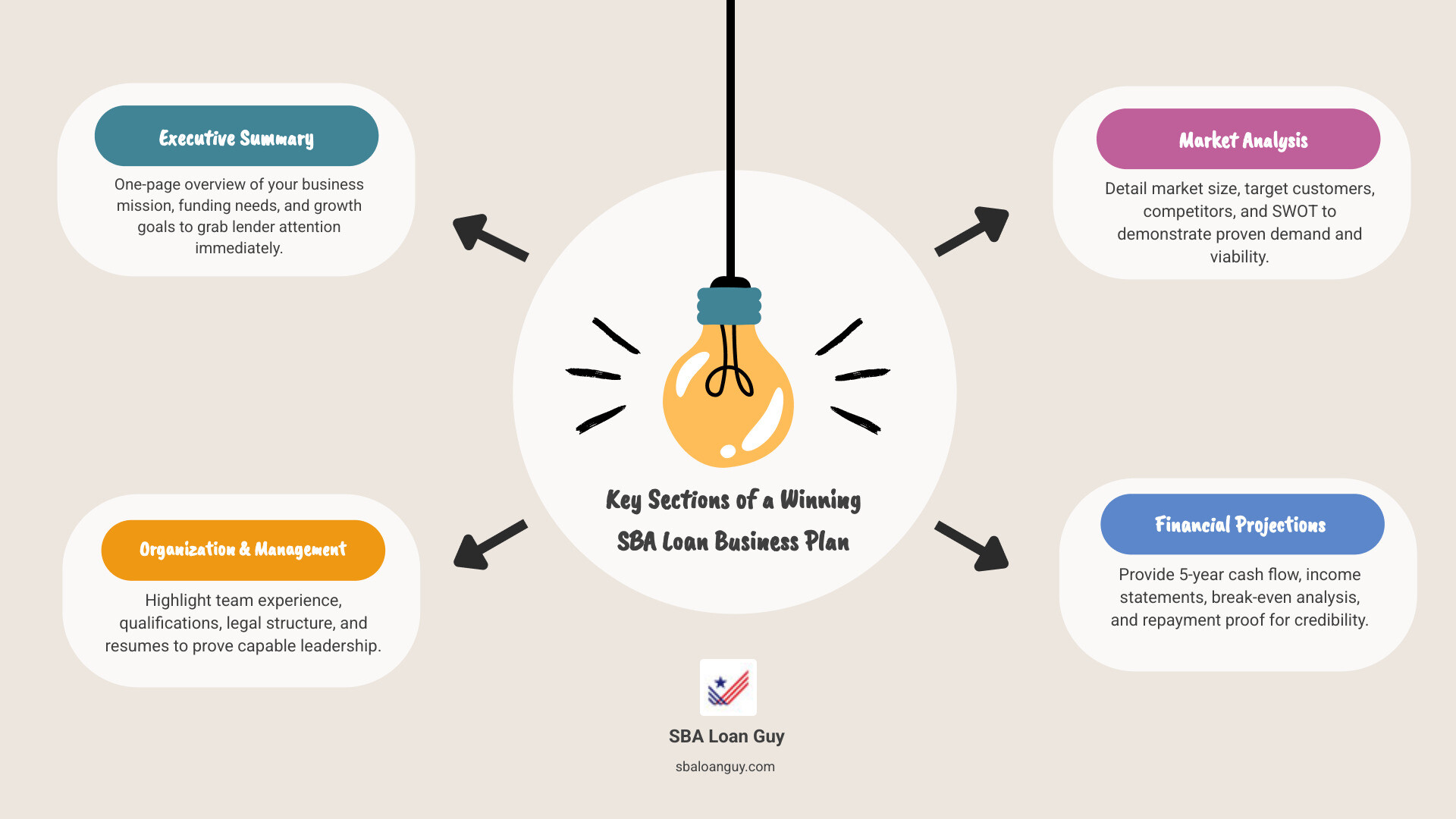
To make your plan easy for a lender to read, you should follow a standard format. Lenders review hundreds of these, and if they can't find the information they need quickly, they might say "no" simply because they are confused.
Here are the core sections we recommend:
To help you visualize your competition, we suggest including a table like this in your plan:
| Feature | Your Business | Competitor A | Competitor B |
|---|---|---|---|
| Price | Mid-range | High-end | Low-cost |
| Location | Downtown Houston | Suburbs | Online Only |
| Customer Service | 24/7 Support | Business Hours | Email Only |
| Unique Value | Local sourcing | Brand Name | Fast Shipping |
Even though the Executive Summary is the first thing the lender reads, it should be the last thing you write. This is because it summarizes everything else in the document.
Keep it to just one page. It should include your mission statement, a quick look at your products, and your high-level growth goals. Think of it as your "elevator pitch." If the lender only had two minutes to read about your business, what would you want them to know? Be clear, be excited, and most importantly, be professional.
Lenders don't just lend to businesses; they lend to people. They want to know that the people running the show have the "know-how" to handle the money.
In this section, you should:
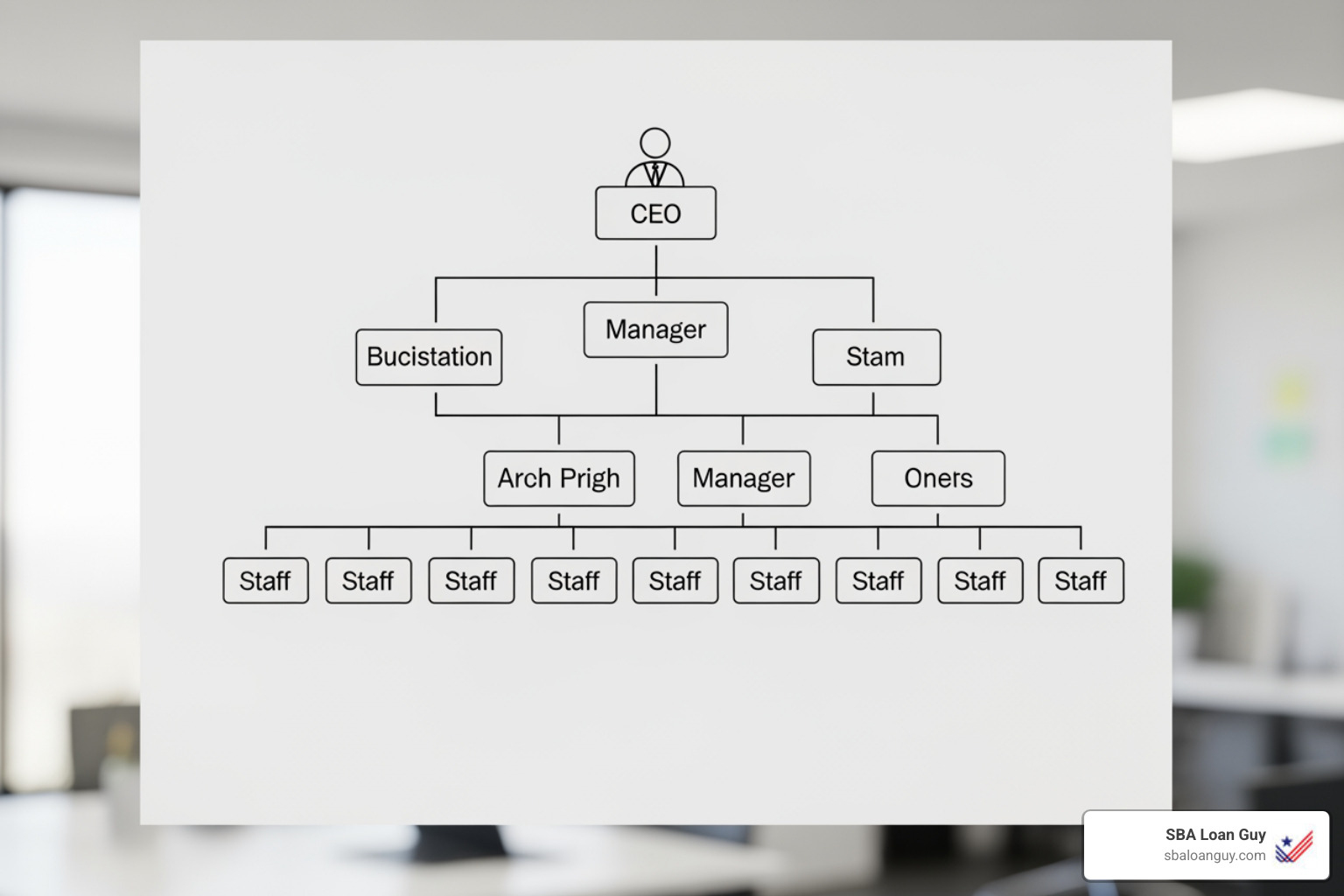
Don't be afraid to "brag" a little here. If your manager has 20 years of experience in the industry, make sure that is front and center!
A lender wants to see that people actually want to buy what you are selling. You need to prove there is a "market" for your business. This involves "market sizing."
We use three fancy terms for this, but they are simple once you break them down:
You should also include a SWOT analysis. This stands for Strengths, Weaknesses, Opportunities, and Threats. It shows the lender that you are honest about your challenges and have a plan to beat them. If you need help getting started, SCORE templates are a great free resource provided by the SBA’s partners.
What problem are you solving for your customers? In this section, describe your product or service in detail.
Use simple language. If you are a plumber, don't just say "we fix pipes." Say "we provide emergency 24-hour plumbing services for homeowners in the New York City area, solving the problem of water damage during off-hours."
Having a great product is only half the battle; you have to sell it. Your marketing plan should explain how you will find customers. Will you use social media? Local radio ads in Chicago? Or maybe door-to-door sales?
Lenders love to see that you understand "customer habits." For example, if you are opening a coffee shop, show that you know your customers stop by between 7:00 AM and 9:00 AM on their way to work. If you need a larger loan for this expansion, you can find More info about SBA 7(a) loans on our site to see how the funds can be used for marketing.
This is the most important part for the bank's "underwriter" (the person who officially approves the loan). They want to see the numbers.
You should provide a five-year outlook for your business. The first year should be broken down month-by-month. This shows the lender that you have thought about seasonal changes (like a toy store making most of its money in December).
You also need a break-even analysis. This is a calculation that shows exactly how much you need to sell every month just to pay your basic bills. Once you sell more than that, you are making a profit!
Don't just ask for "some money." Be exact. If you need $250,000, explain every penny.
The SBA has rules about "eligible uses." You can't use the money to pay off personal debt or buy a boat for fun. Your request must align with business growth.
If you already have a business, you need to show your past "report cards." This means providing:
The lender wants to see a clear "repayment plan." They want to know that after you pay all your employees and bills, there is enough money left over to pay the bank back. If you want to learn more about the technical side of business finances, you can explore SBA’s online courses.
Even smart business owners make mistakes. Here are the "red flags" that make lenders nervous:
I talk to lenders all the time, and they often give me the same advice:
You should review your plan at least once a year. However, if you are going through a big change—like moving to a new location in San Francisco or launching a new product—you should update it right away. A "living" document is much more useful than an old one.
The SBA website offers several sample business plans for different types of industries. Looking at a real-world example, like a consulting firm or a toy company, can help you see how to structure your own thoughts.
While the SBA provides translations of their guides in Spanish for informational purposes, the actual loan application and your sba loan business plan must be submitted in English. If your primary language is not English, it is a good idea to work with a professional translator or a consultant to ensure your plan is clear and accurate.
Writing an sba loan business plan can feel like a big mountain to climb, but you don't have to do it alone. A well-written plan is your ticket to the funding you need to start or grow your dream. It proves to the lender that you are a serious, prepared, and capable business owner.
At SBA Loan Guy, we specialize in making this process easy. We provide expert guidance, help you prepare your application, and match you with the right lenders in our network—whether you are in Houston, Indianapolis, or New York City. We offer a personalized pre-qualification snapshot so you can see where you stand before you even apply.
Ready to take the next step toward your business goals? See if you pre-qualify for an SBA loan today and let's get your business the funding it deserves!

A distilled, 0–100 snapshot of how fundable you are based on credit, cash flow, equity, and documentation. Plus the top fixes to raise your score fast.
A curated shortlist of lenders that fit your profile and use of funds, with why each is a fit and exactly what they’ll want to see.
A tailored, step-by-step list of required docs and forms (formats, who provides them, and common pitfalls to avoid).
A realistic week-by-week path from pre-qual to closing, with milestones, dependencies, and an estimated target funding date.
Hands-on prep and documentation for SBA disaster programs (EIDL and others), including submissions, follow-ups, and guidance through appeals or requests for more info.
We prepare your application, match you with the
right lenders, and guide you until funding.