Discover why you need an SBA loan specialist for SBA loans. Get expert guidance, avoid pitfalls, and boost approval odds now!
March 26, 2026

An SBA loan specialist is a government or lender-assigned professional who guides your loan application through the SBA process — from paperwork to approval.
Here's a quick overview of what they do:
SBA loans can be powerful. We're talking up to $5 million for a 7(a) loan or up to $15 million for a 504 loan. But the application process is not simple. There are multiple departments, overlapping roles, and — as many business owners have discovered the hard way — specialists who sometimes go quiet for weeks.
One frustrated applicant described the SBA as "a total cesspool of loan officers and specialists each pretending to be the other one." That's an extreme take, but the confusion around roles is real, and it catches many business owners off guard.
Knowing who does what — and how to work the system — can mean the difference between getting funded and getting stuck.
I'm Cesar DonDiego, a finance and accounting professional who has worked closely with small business owners on financial strategy, cash flow, and funding decisions, including navigating the often-confusing world of SBA loan specialists. In the sections below, I'll break down exactly how this process works and what you can do to move your application forward with confidence.
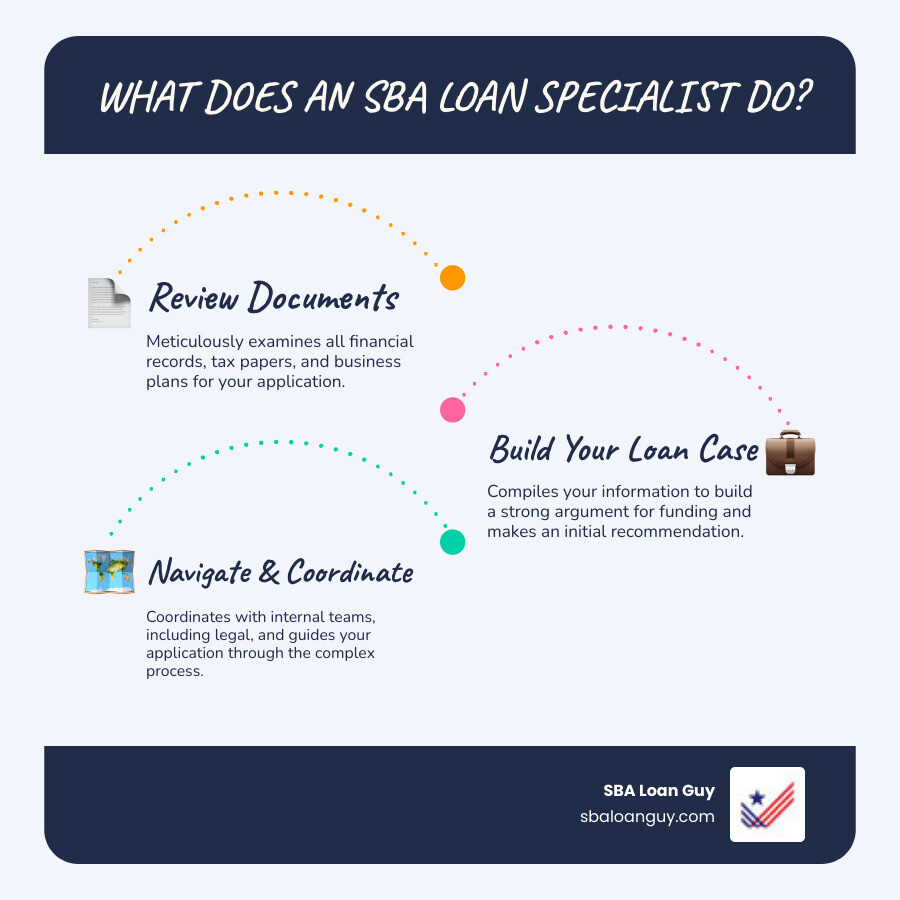
Think of an sba loan specialist as a bridge. On one side is your business, full of dreams and hard work. On the other side is the mountain of money the government has set aside to help businesses grow. The specialist helps you cross that bridge without falling into the "river of paperwork."
Their primary role is to gather every bit of information about your business. They look at your taxes, your bank statements, and your plans for the future. They aren't just checking boxes; they are building a "case" for why you deserve the loan. Once they have everything, they make a recommendation. They might say, "Yes, this business looks strong," or "Wait, we need more proof that they can pay this back."
Working with a specialist is like having a guide in a thick jungle. Without them, you might get lost in the rules. With them, you have someone who knows which path leads to the funding. If you are just starting out, you can even use tools like Find an SBA Lender to see who might be a good fit for your needs.

It is easy to get these two roles mixed up, but they are quite different. Imagine a restaurant: the sba loan specialist is like the waiter who takes your order and makes sure the kitchen has all the right ingredients. The loan officer is like the head chef who actually decides if the meal is ready to be served.
In the SBA world:
Sometimes, roles overlap. During busy times, a specialist might act like an officer, or vice versa. This is why some people feel like the SBA is a "circus"—it's hard to tell who is actually in charge of your file! Whether you are looking for SBA 7(a) loans or other types of funding, knowing these titles helps you know who to ask for when you call.
Getting assigned a specialist can feel like waiting for a letter in the mail. Usually, once you submit an application through a portal or a bank, a specialist is assigned to you automatically. However, if you are dealing with older loans or disaster relief, you might need to reach out yourself.
For help with existing COVID-19 EIDL loans, the best way to get a specialist's attention is to email CESC@sba.gov. When you email, always put your loan or application number in the subject line. This is the "golden rule" of SBA communication. If you don't include that number, your email might get lost in a digital pile of thousands of others.
You can also use the MySBA Loan Portal to send messages directly. It’s much faster than waiting on hold on the phone. If you do call, be prepared to wait. The SBA has different phone numbers for different programs, like the SVOG portal or the RRF hotline, so make sure you are calling the right one for your specific loan.
The SBA is a big government agency with many "rooms." Your application doesn't just sit on one person's desk; it travels through a whole building of different teams. One of the most important places is the PDC department (Processing and Disbursement Center). This is where the real work of moving money happens.
Inside these offices, there are several groups that might touch your file:
If your application gets stuck, it might be at one of the SBA Loan and Guaranty Centers. These centers are located all over the country, from California to Kentucky, and each one handles different parts of the loan process.
If you feel like your application has fallen into a black hole, you might reach out to your local Congressperson for help. When you do this, a Congressional SBA loan specialist gets involved.
These specialists are like "VIP helpers." They have the power to look deep into the SBA’s computer notes to see exactly why your loan is stuck. They can’t always force an approval, but they can upload documents that were "lost" or ask a manager to take a second look. If you are dealing with SBA disaster loans, a congressional inquiry is often the best way to wake up a sleepy specialist.
Sometimes, a loan specialist will tell you, "Your file is with the legal team." This can be scary, but it’s a normal part of the process. The legal review team checks for "red flags." These might be things like:
The lawyers are the only ones who can "lift" these flags. A regular loan officer can't just ignore a legal error. They have to wait for the lawyers to say "okay" before they can send you the money. This is why having a specialist who actually talks to the legal team is so important—they are the ones who push the lawyers to finish their review.
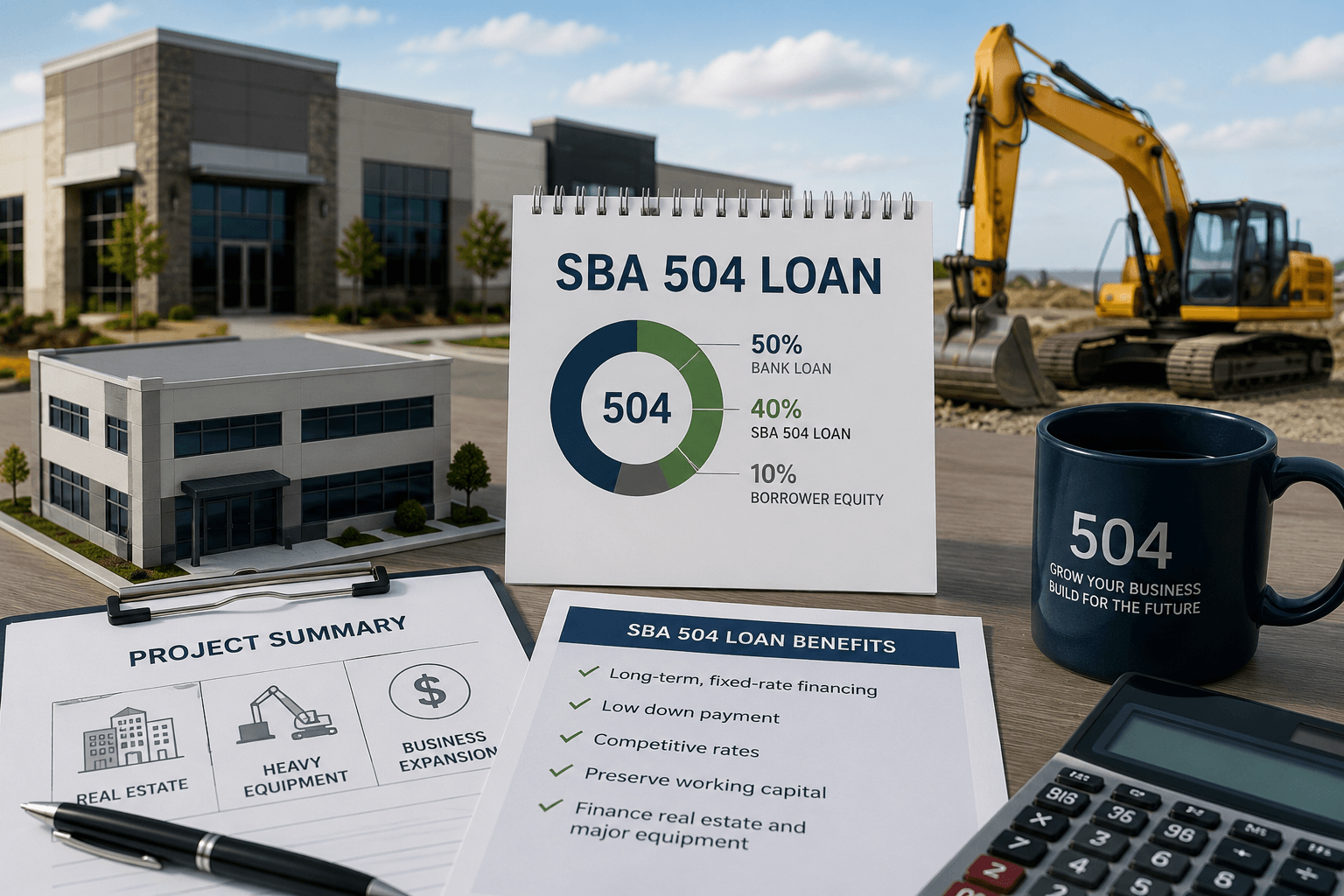
Before you even talk to an sba loan specialist, you need to make sure your business qualifies. The SBA has "size standards," which is just a fancy way of saying your business can't be too big. They also want to see that you are a "for-profit" business and that you have a "sound business purpose"—meaning you have a real plan to use the money to grow.
| Feature | SBA 7(a) Loan | SBA 504 Loan |
|---|---|---|
| Max Loan Amount | $5 million | $15 million |
| Down Payment | Often 10% | Typically 10% |
| Best Use | Working capital, buyouts | Real estate, big equipment |
| Repayment Term | Up to 10-25 years | 10, 20, or 25 years |
You can find more details on these rules at the SBA Financing Basics page.
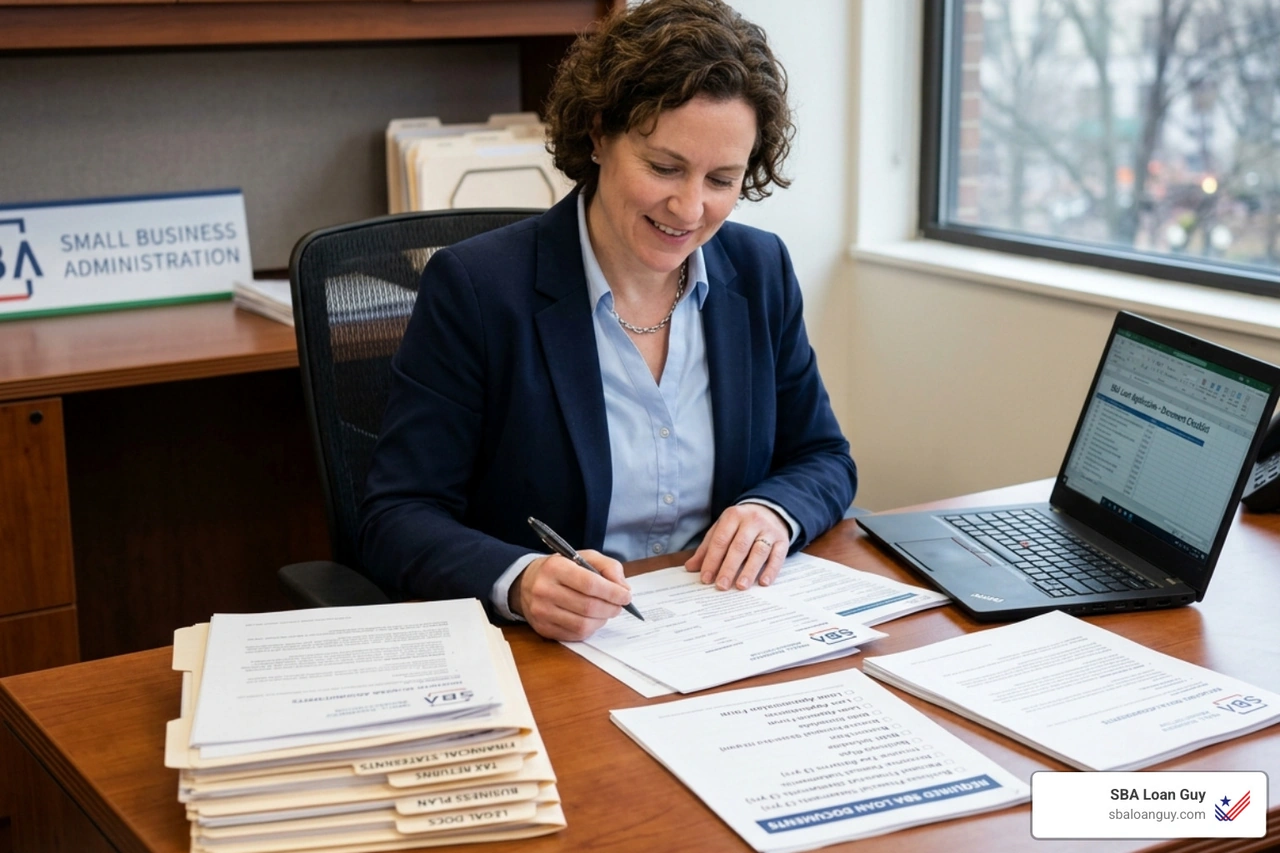
If you want your sba loan specialist to like you, give them a "clean" file. This means all your papers are organized and easy to read. If you send messy photos of napkins, they will probably put your file at the bottom of the pile!
Here is your "Must-Have" list:
Having these ready is especially important for SBA Express loans, which are designed to be faster but still require the same basic "proof" that your business is healthy.
The world of SBA loans changed a lot during COVID-19. Programs like the Paycheck Protection Program (PPP) and the Economic Injury Disaster Loan (EIDL) helped millions of businesses.
Today, most of these programs are closed to new applications, but the sba loan specialist still handles "servicing" (managing the payments).
It is a sad truth: sometimes an sba loan specialist will "ghost" you. You send an email, and nothing happens. You call, and you get a voicemail that is full. This is one of the biggest complaints business owners have.
Because the SBA is a huge government office, some staff members may feel overwhelmed. With $3.4 billion spent on administration, you would think the system would be perfect, but it often feels broken. Applicants have reported being denied for "duplicate applications" that weren't actually duplicates, or having their file passed around to five different people in a single month.
If your specialist isn't replying, don't just sit there! You have to be your own hero. Here are the steps to take:
Some people worry that complaining will make the SBA "mad" and they will deny the loan. While retaliation is rare, it is always best to stay professional and polite, even when you are frustrated.
The SBA learned a lot from the pandemic. They now use more online portals and "self-certification." For example, if you are rebuilding after a disaster and your local city is taking too long with permits (more than 60 days), the SBA might let you "self-certify" to speed things up.
They also use digital signatures much more now. You don't have to mail in giant stacks of paper anymore; you can upload them to a secure portal. This has made things faster for some, but it also means you have to be tech-savvy to keep up with your sba loan specialist.
You don't always have to work directly with the government. In fact, most people get SBA loans through private banks. Some banks are "Preferred Lenders." This is a big deal!
A Preferred Lender has a special "trust" with the SBA. They can approve the loan themselves without waiting for a government employee to check every single page. This can make the process 3 to 4 weeks faster.
When you work with a bank, your sba loan specialist is actually an employee of that bank. They are usually much easier to reach than a government worker. They want you to get the loan because the bank makes money when you succeed!
First, check your "MySBA" portal for any new alerts. If there's nothing there, call the main customer service line and ask for a "status update." If that fails, ask for the specialist's supervisor or start a congressional inquiry. Persistence is key!
No. A specialist can only "recommend" approval. The final decision is made by a loan officer or a bank's credit committee. Anyone who "guarantees" an SBA loan is likely not telling the truth.
It is very hard to "fire" your specialist. Usually, you only get a new one if your file moves to a different department (like moving from "application" to "legal review"). If you have a serious problem, you must escalate to a manager to request a reassignment.
Navigating SBA funding is like a high-stakes game of chess. You have to think several moves ahead, anticipate roadblocks, and know exactly which "piece" to move next. An sba loan specialist can be your most valuable teammate in this game, but you have to know how to work with them effectively.
At SBA Loan Guy, we understand the stress of waiting for a phone call that never comes. Based in The Woodlands, TX, and serving areas like Houston, Chicago, and New York City, we specialize in taking the mystery out of the process. We provide a personalized pre-qualification snapshot and match you with the right lenders so you don't have to "go it alone."
Whether you are looking for a 7(a) loan to buy out a partner or a disaster loan to rebuild, we are here to guide you step-by-step. Don't let a "cesspool" of paperwork stop your business from growing.
See if you pre-qualify for a loan today and let's get your funding moving!

A distilled, 0–100 snapshot of how fundable you are based on credit, cash flow, equity, and documentation. Plus the top fixes to raise your score fast.
A curated shortlist of lenders that fit your profile and use of funds, with why each is a fit and exactly what they’ll want to see.
A tailored, step-by-step list of required docs and forms (formats, who provides them, and common pitfalls to avoid).
A realistic week-by-week path from pre-qual to closing, with milestones, dependencies, and an estimated target funding date.
Hands-on prep and documentation for SBA disaster programs (EIDL and others), including submissions, follow-ups, and guidance through appeals or requests for more info.
We prepare your application, match you with the
right lenders, and guide you until funding.