Discover disaster recovery funding sources like FEMA, SBA, HUD. Learn to apply, overcome barriers, and rebuild resiliently today!
May 5, 2026
Disaster recovery funding is financial help given to people, businesses, and communities after a disaster so they can rebuild and recover. It comes from federal agencies like FEMA, HUD, and the SBA, as well as state and local governments and nonprofits.
Here is a quick look at the main sources:

When a major disaster hits, the damage is fast. The recovery is slow. Homes need repairs. Businesses lose revenue. Workers lose jobs. And communities often have no plan in place — research shows that fewer than one in three communities in disaster-prone parts of the U.S. even had a recovery plan ready.
That gap between need and preparation is exactly why understanding your funding options before disaster strikes matters so much.
I'm Cesar DonDiego, a finance and accounting professional who has helped business owners navigate complex funding decisions, including disaster recovery funding options that overlap with SBA loan programs. My background in financial planning and small business lending means I can help you cut through the confusion and find the right path forward.

Disaster recovery funding vocab explained:
At its heart, disaster recovery funding is about community resilience. Resilience is a fancy word for "bouncing back." When a hurricane hits Houston or a wildfire affects California, the local economy doesn't just stop; it breaks. This funding acts as the glue that puts the pieces back together.
It is important because it doesn't just fix what was broken; it makes things stronger for next time. This is called "pre-disaster planning." If we only spend money after a disaster, we are just waiting for the next one to knock us down again. By using funds for things like elevating houses or improving drainage, we build community strength.
Post-disaster help focuses on the immediate needs:
According to Assistance for Governments and Private Non-Profits After a Disaster | FEMA.gov, these funds are vital for restoring public infrastructure. Without federal and state help, many small towns in places like Illinois or Indiana wouldn't have the budget to repair a bridge or a water treatment plant on their own.
Finding where the money comes from can feel like looking at a giant bowl of alphabet soup. There are many different agencies involved, each with its own set of rules.

The "big three" players in the federal government are FEMA, HUD, and the SBA. However, money also comes from state grants, local city budgets, and non-profit groups like the Red Cross.
| Agency | Primary Program | Best For... |
|---|---|---|
| FEMA | Public Assistance (PA) | Immediate cleanup and fixing public buildings. |
| HUD | CDBG-DR | Long-term housing and helping low-income families. |
| SBA | Disaster Loans | Low-interest loans for businesses and homeowners. |
You can learn more about the full range of options at FEMA Grants | FEMA.gov.
Federal programs are the heavy hitters. They provide the largest amounts of money, but they often have the most paperwork.
Many people think the Small Business Administration (SBA) only helps businesses. But in a disaster, the SBA is actually one of the biggest sources of help for homeowners too!
If you live in a disaster area, like The Woodlands, TX, and your home is damaged, the SBA can offer you a low-interest loan to fix it. These loans are often much cheaper than a regular bank loan.
For more details on how we can help you navigate these, check out More info about SBA disaster loans.
Disasters don't just break buildings; they stop paychecks. If a restaurant in New York City floods, the waiters and cooks can't go to work.
If you lose your job because of a major disaster and you don't qualify for regular unemployment, DUA can help. This is especially important for self-employed people, like Uber drivers or freelance artists, who usually can't get unemployment benefits.
Recovery work is dangerous. The Department of Labor (DOL) and OSHA work hard to make sure people stay safe.
States also have their own programs. For example, the Disaster Grant Assistance - California Department of Social Services provides specific help for people in California who might not qualify for federal aid.
Even with billions of dollars available, recovery isn't always smooth. There are "barriers" that slow things down.
Sometimes, the different agencies don't talk to each other well. This is called a "horizontal" or "vertical" integration challenge. If the city of Indianapolis is trying to fix a road, but the federal government hasn't approved the environmental permit yet, the money just sits there while the road stays broken.
As the world gets warmer, disasters are happening more often. We can't just rebuild things the way they were in 1950. We need sustainable rebuilding. This means using better building codes and planning for higher sea levels.
As we mentioned earlier, most communities don't have a good plan. When a disaster hits, they are "flying by the seat of their pants." Research shows that plans in places like the southeastern U.S. are often poor quality. We need to help cities like Orlando or Houston create better plans before the storm clouds gather.
Programs like the Community Development Block Grant (CDBG) Disaster Recovery are helping by providing funds that cities can use to think ahead and build stronger.
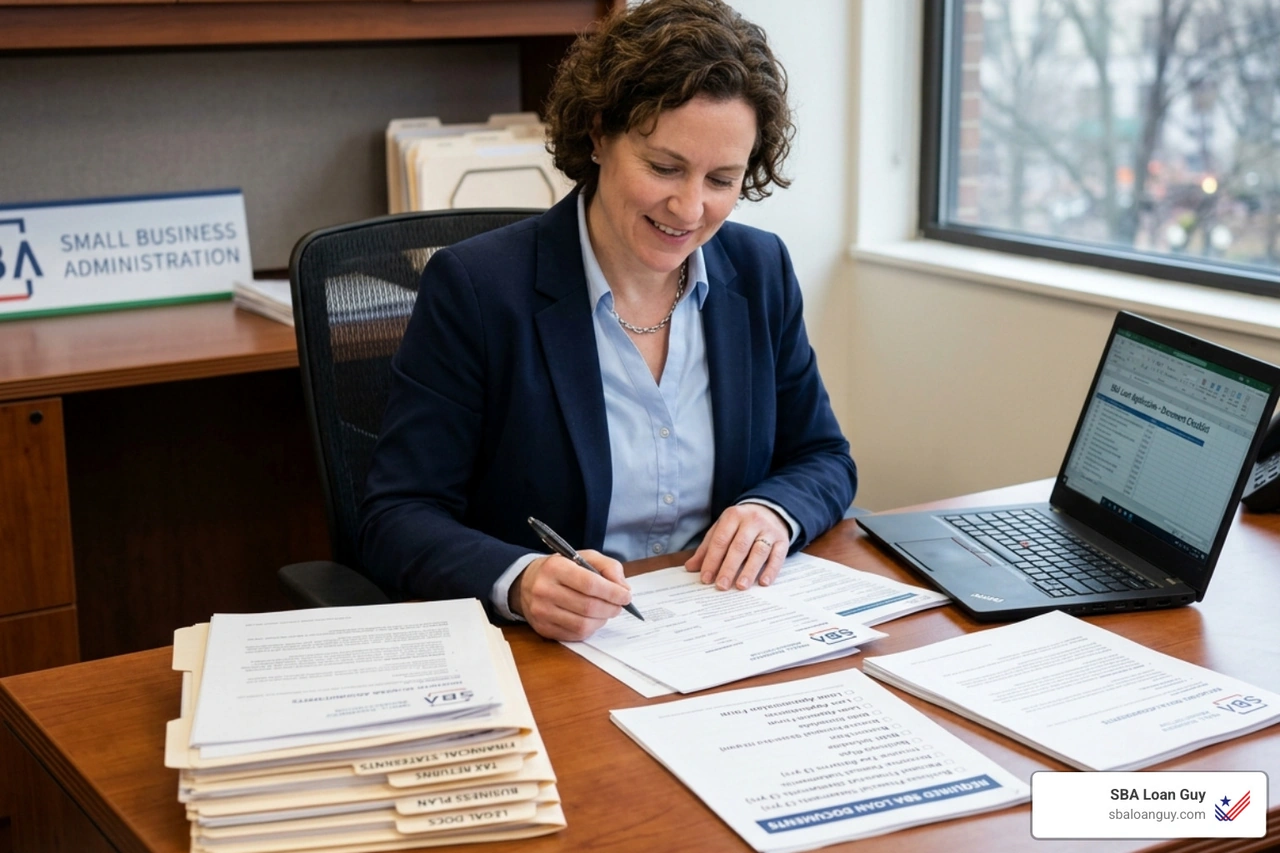
Applying for a grant is a bit like applying for college—there are several steps and a lot of forms.
You can get DUA if your job was lost or interrupted by a presidentially declared disaster. This includes:
Yes! This is a very common question. You should not wait for your insurance company to pay you before you apply for an SBA disaster loan.
Navigating disaster recovery funding is exhausting, especially when you are already dealing with the stress of a damaged home or business. You don't have to do it alone.
At SBA Loan Guy, we specialize in making this process simple. Whether you are in The Woodlands, Houston, Chicago, or San Francisco, we provide the expert guidance you need to get funded. We offer:
Don't let the paperwork stop your recovery. Let us help you unlock the support your community deserves.

A distilled, 0–100 snapshot of how fundable you are based on credit, cash flow, equity, and documentation. Plus the top fixes to raise your score fast.
A curated shortlist of lenders that fit your profile and use of funds, with why each is a fit and exactly what they’ll want to see.
A tailored, step-by-step list of required docs and forms (formats, who provides them, and common pitfalls to avoid).
A realistic week-by-week path from pre-qual to closing, with milestones, dependencies, and an estimated target funding date.
Hands-on prep and documentation for SBA disaster programs (EIDL and others), including submissions, follow-ups, and guidance through appeals or requests for more info.
We prepare your application, match you with the
right lenders, and guide you until funding.