Start here: a five-stage roadmap for buying an established business with an SBA-backed loan, plus a guide to the topics that go deeper.
October 30, 2026
Buying an established business can be one of the more direct paths to ownership, and an SBA-backed loan is one way buyers fund it. It also raises a lot of questions at once: Can I qualify? How much cash do I need? Which documents come first? This post is a short hub for buying a business with an SBA loan. It shows the order of the work and points you to the topics worth reading next.
Nothing here is a promise of approval. Eligibility, lender policy, the strength of the business, and the buyer's own profile all matter, and the lender makes the credit decision. Think of this page as a map, not a forecast.

Most acquisitions that use SBA financing move through the same five stages. The stages overlap, and you may loop back to an earlier one when the lender asks a new question. Still, knowing the order keeps you from spending money or making commitments before you understand the structure.
SBA's 7(a) loan is the program most people mean when they talk about SBA acquisition financing. Under SBA's Standard Operating Procedure (SBA SOP 50 10 (check the current revision)) and each lender's own policy, loans are made by approved lenders with an SBA guarantee. Program rules and lender checklists change, so confirm the current version with your lender and review the SBA 7(a) program page before you rely on any detail.

Underwriting is where the earlier stages are tested. An underwriter does not read each page alone. A revenue figure on the profit and loss statement may be checked against tax returns and bank activity, and an owner adjustment may be traced to a supporting invoice. When the pieces agree, the review is simpler. When they do not, expect questions.
A simple sources-and-uses sketch helps you see the whole deal before the lender does. For example, suppose a buyer is looking at a business priced at $600,000, with $20,000 of closing costs and $30,000 set aside for working capital. The total project is $650,000. A possible funding mix might be $90,000 of buyer cash, a $500,000 loan, and a $60,000 seller note, which also adds up to $650,000. This is an illustration only. The real split depends on the lender, the deal, and current SBA requirements, so ask the lender for the current minimum cash contribution before you plan around any figure.
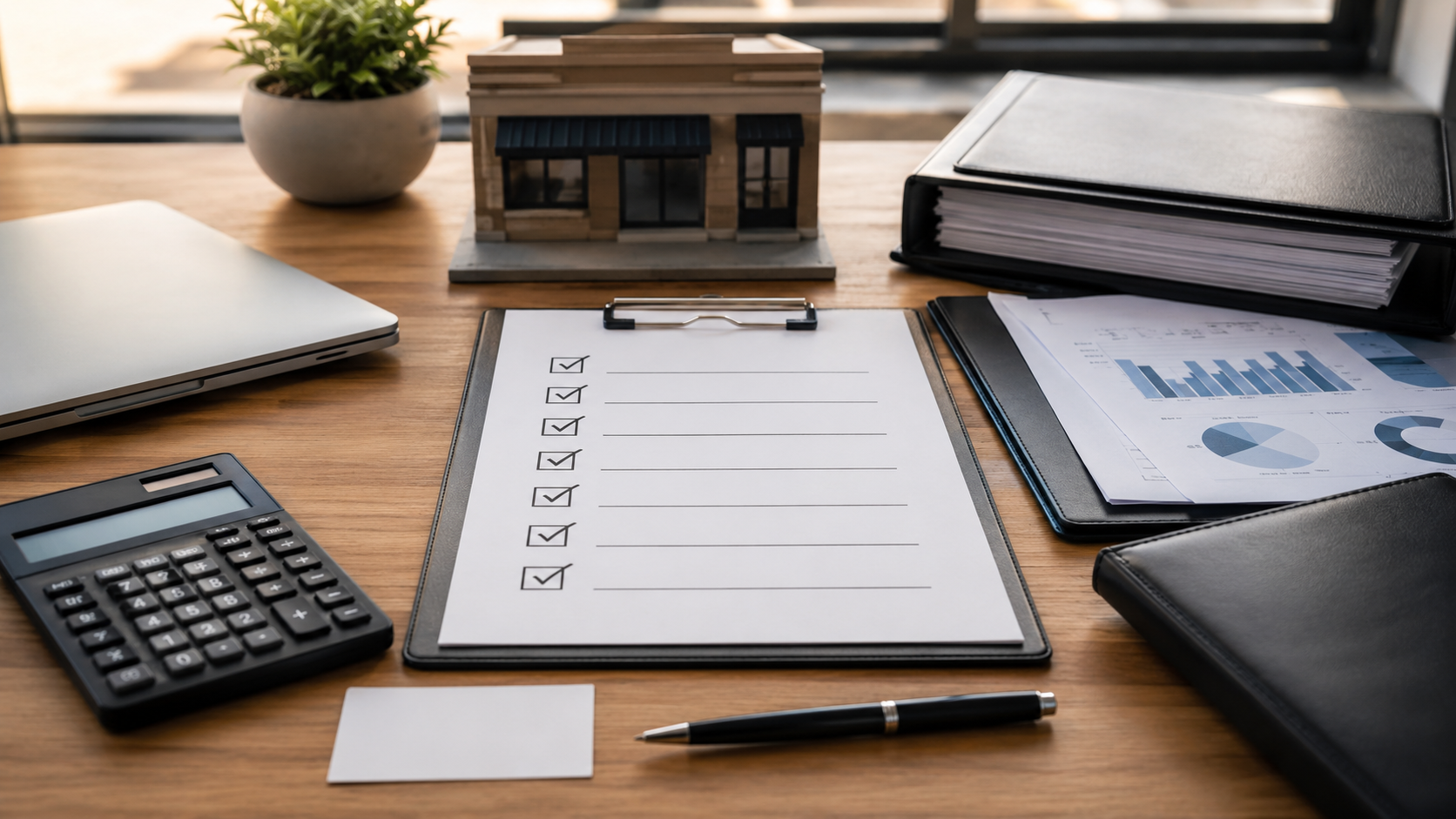
1. Write your acquisition profile. List your industry experience, the size and type of business you want, and the cash and credit you can bring. Be honest about gaps.
2. Sketch sources and uses. Use a simple table like the example above and update it as the price and terms become clearer.
3. Collect your personal documents. Pull recent tax returns, a current personal financial statement, and records showing where your cash is held.
4. Ask early questions. Ask each lender about its experience with acquisitions in your industry, its documentation requests, and its current cash-contribution expectations.
5. Build your advisor team. An accountant, an attorney, and sometimes a valuation professional can catch problems before they reach underwriting.
Each stage has its own detail. As you move through the roadmap, these are the topics worth reading next:
Where should a first-time buyer begin?
Start with the qualify stage: your experience, your credit, and your available cash. Then talk to a lender or advisor early so the structure is built around real requirements, not guesses.
How long does the process take?
It depends on the lender, the complexity of the deal, and how organized your documents are. Ask the lender for a realistic timeline and plan for it to shift if questions come up.
Do I need a business broker?
Not necessarily. Many buyers work with a broker on the purchase itself, and that is separate from SBA financing. Ask any intermediary how they are paid and get the terms in writing.
Can I use an SBA loan for any business?
No. Eligibility depends on the type of business and how the proceeds will be used, and the lender decides whether to move forward. Confirm eligibility with the lender and on sba.gov.
A good acquisition loan request is built one stage at a time: qualify, structure, document, underwrite, close. If you know which stage you are in and what the lender will ask next, you spend less time guessing. No document set guarantees approval, but an organized, consistent file helps the right lender evaluate your deal.
Ready to find out which stage you are in? Start a conversation with SBA Loan Guy to talk through what to prepare first for your business purchase.
This article is general information only. It is not legal, tax, accounting or financial advice. SBA Loan Guy is not a lender and is not affiliated with or endorsed by the U.S. Small Business Administration. Program rules, eligibility and requirements change, so confirm current details with a licensed lender and SBA.gov before you make a decision.

A distilled, 0–100 snapshot of how fundable you are based on credit, cash flow, equity, and documentation. Plus the top fixes to raise your score fast.
A curated shortlist of lenders that fit your profile and use of funds, with why each is a fit and exactly what they’ll want to see.
A tailored, step-by-step list of required docs and forms (formats, who provides them, and common pitfalls to avoid).
A realistic week-by-week path from pre-qual to closing, with milestones, dependencies, and an estimated target funding date.
Hands-on prep and documentation for SBA disaster programs (EIDL and others), including submissions, follow-ups, and guidance through appeals or requests for more info.
We prepare your application, match you with the
right lenders, and guide you until funding.