Discover how to meet income requirements for SBA loan approval with clear guidelines, DSCR targets, and required documents.
June 4, 2026
If you want to get a government-backed loan for your business, you need to know about the income requirements for sba loan programs. If you do not understand these rules, you might waste a lot of time.
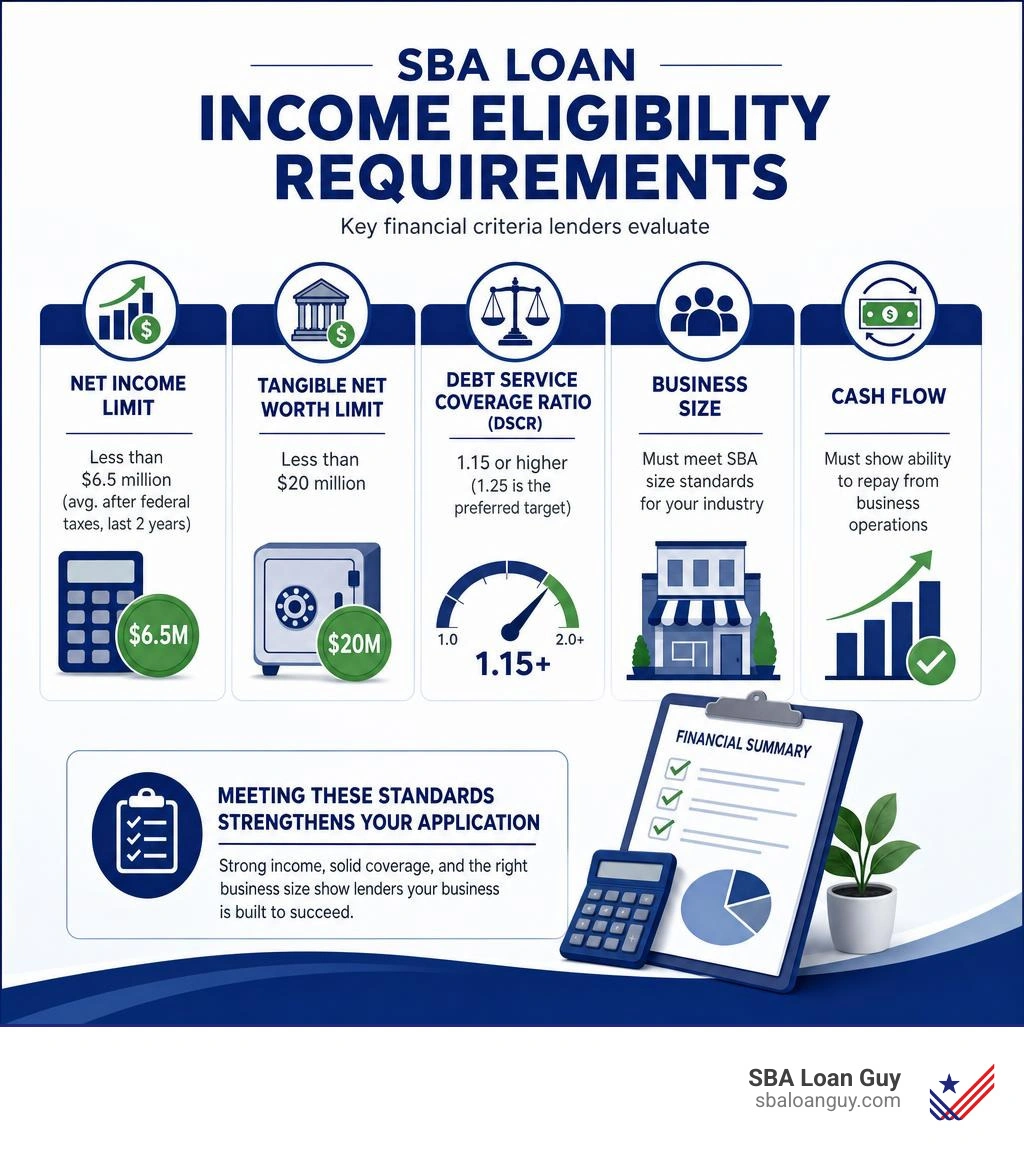
Here is a simple chart showing what lenders look for:
These are the basic rules. But there is more to it.
Many business owners think they just need to show how much money they make. But banks actually want to see how your money comes in, how you pay your bills, and if your personal money is in good shape too.
If you get these things ready before you apply, getting your loan will be much easier.
My name is Cesar DonDiego. I help business owners understand the income requirements for sba loan programs. I work with bookkeeping, taxes, and cash flow every day. I know exactly where people make mistakes and how you can avoid them.
Useful links about income requirements for sba loan:
When you ask the government for a business loan, you might think they have one strict rule for how much money you must make.
But they do not! The Small Business Administration (SBA) does not have a single "minimum income" number. Instead, they want to make sure of two simple things:
It is like the story of Goldilocks. You cannot make too much money (or you are not a small business anymore). But you must make enough money to pay your bills and your new loan.
To check this, the SBA looks at your business size, your net income, and how much your business is worth. If you want to see what else lenders look for, read our guide on SBA Loan Requirements.
To see if your business is small enough, lenders look at your "annual receipts." This is just a fancy word for your total sales.
According to the official rules in 13 CFR § 121.104 - How does SBA calculate annual receipts?, the SBA says "receipts" means all the money your business takes in. Lenders will look at your tax returns to find this.
Here is the simple math they use:
$$\text{Annual Receipts} = \text{Total Income} + \text{Cost of Goods Sold (COGS)}$$
They take this total and subtract any money you refunded to customers.
Lenders do not count some things as income, such as:
How many years of taxes do they look at? Usually, they look at your last three to five years to find the average. If your business is brand new, they will look at what you made so far and estimate what you will make in a full year.
Different loans have different rules. A tiny loan for a local shop is different from a giant loan to buy a big building.
Here is a simple chart to compare them:
| Loan Program | Max Loan Amount | Specific Income / Size Limits | Best Used For |
|---|---|---|---|
| SBA 7(a) Loan | $5,000,000 | Must fit the size rules for your industry. | Buying a business, buying inventory, or general business help. |
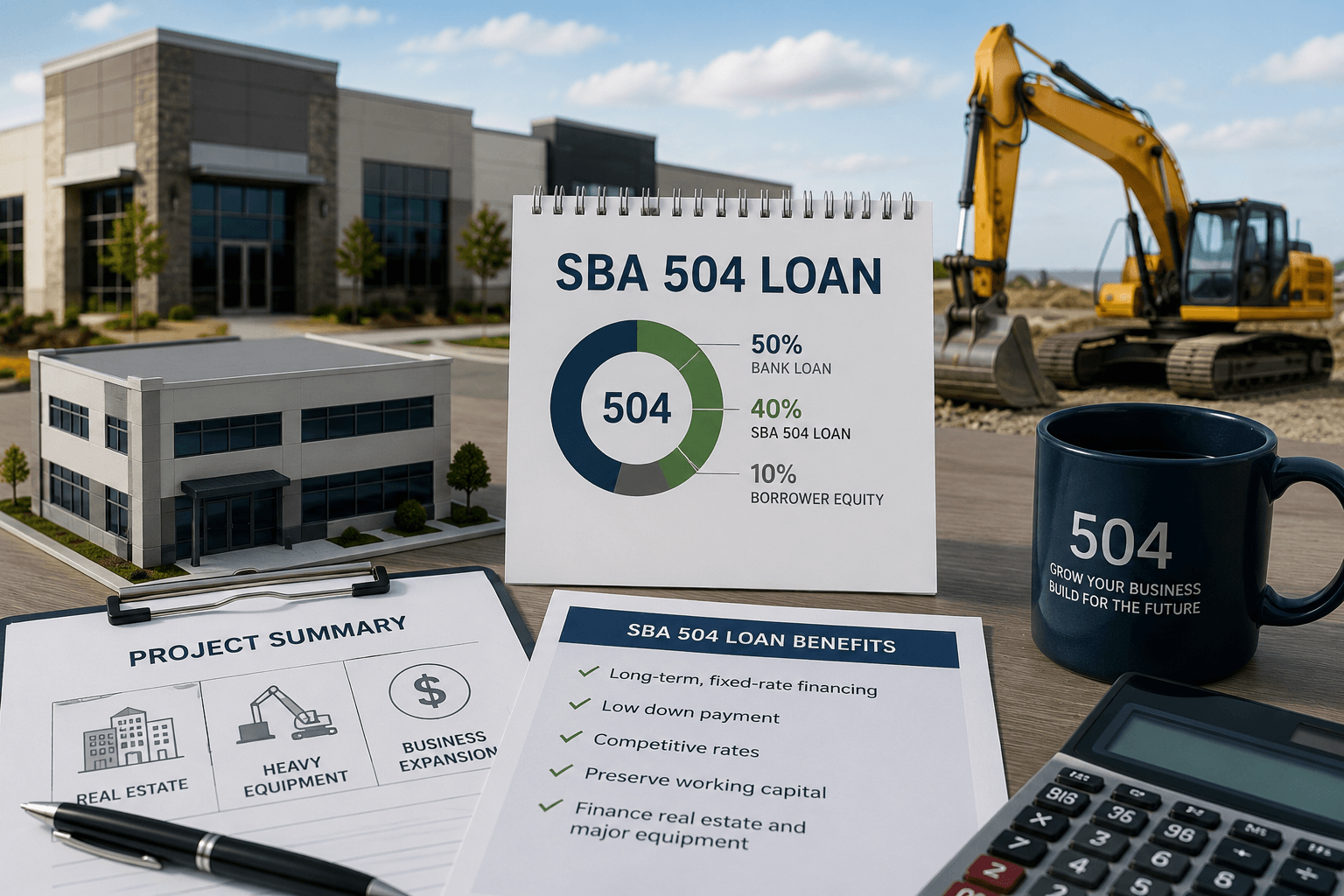
| SBA 504 Loan | $5,500,000 | Business worth must be under $20 million AND average net income under $6.5 million for the last 2 years. | Buying land, buildings, or big machines. |
| SBA Express Loan | $500,000 | Fast approval; uses the same size rules as the 7(a) loan. | Quick cash or a line of credit. |
| SBA Microloan | $50,000 | No strict minimum income; great for brand new or very small businesses. | Small tools, inventory, or starting up. |
If you want a flexible loan, the 7(a) program is the most popular. You can learn all about it in our SBA 7(a) Loans Complete Guide. If you need money fast and want an easier application, check out our SBA Express Loans Complete Guide.

Once a lender knows your business is small enough, they ask: "How do we know you can pay us back?"
To find out, they do not just look at your bank account today. They look closely at your cash flow. Under the rules in Procedural Notice 5000-846607 - Implementation of the Final Rule on Affiliation and Lending Criteria, lenders must check your business cash flow.
Lenders use a number called EBITDA to measure this. It stands for:
EBITDA shows how much cash your business actually makes from its daily work before taxes and other accounting adjustments are made.
Lenders use a tool called the Debt Service Coverage Ratio (DSCR) to test your cash flow.
Think of the DSCR like a test score for your business's piggy bank. It compares the money your business makes to the money your business owes.
Here is the simple formula:
$$\text{DSCR} = \frac{\text{Operating Cash Flow (EBITDA)}}{\text{Annual Debt Service (New Loan Payments + Existing Debt Payments)}}$$
Let's look at an example. Imagine your business makes $125,000 a year (EBITDA). Your total yearly loan payments (including the new SBA loan) will be $100,000.
$$\text{DSCR} = \frac{\$125,000}{\$100,000} = 1.25$$
This means you have $1.25 of cash for every $1.00 of debt.
What if you are starting a brand-new business? You won't have past tax returns to prove your DSCR.
In this case, you must show cash flow projections.
Projections are smart guesses about how much money your business will make in the future. For a startup, lenders want to see month-by-month plans. The SBA rules say new businesses must show they can make a profit and reach the right DSCR within two years.
To make these guesses believable, you must use real facts, industry research, and a solid business plan.

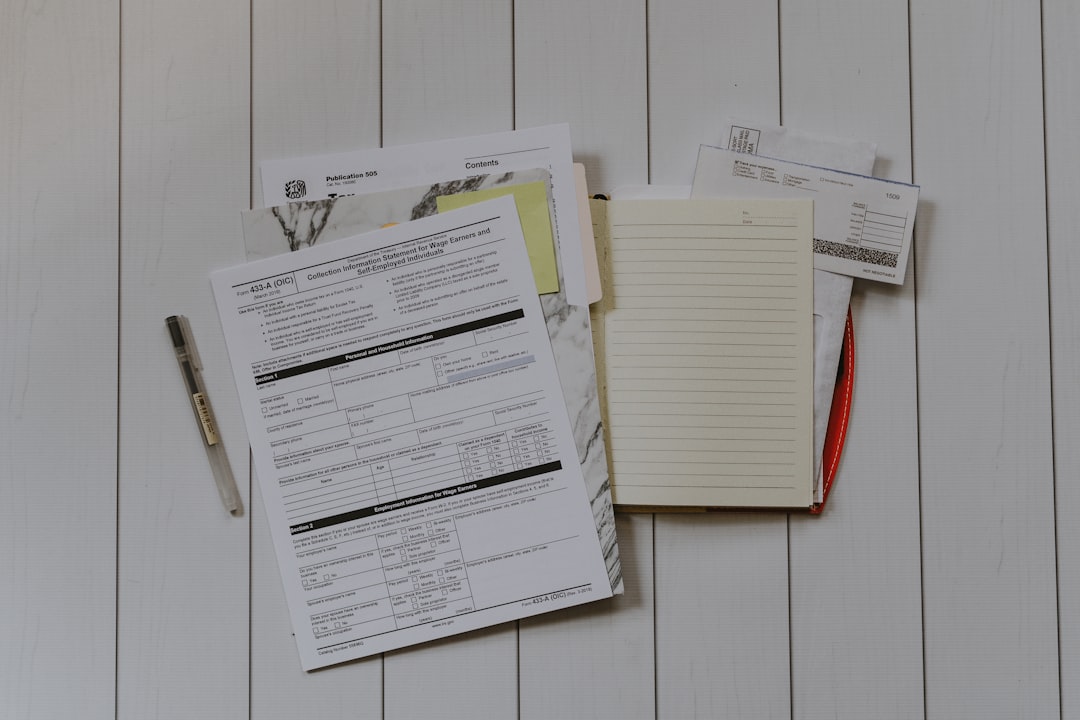
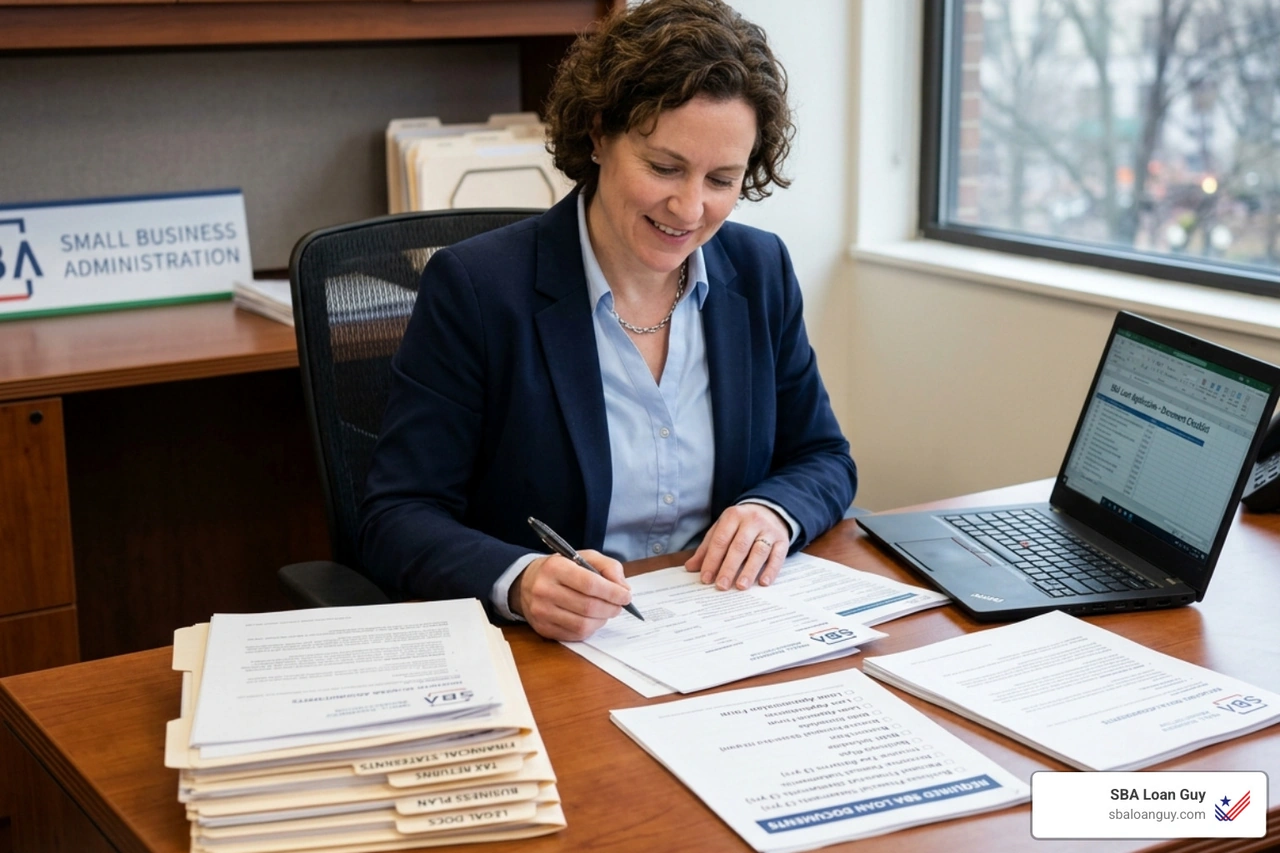
When you apply for an SBA loan, the lender will ask for a lot of paperwork. Most delays happen because business owners forget a document or send in old files!
To keep things moving fast, gather these documents early:
Keeping these papers clean and ready is the best way to get your loan approved in the normal 60-to-90-day window.
Lenders do not just look at your business. They also look at you—the owner.
When you apply for an SBA loan, they will check your personal finances:
For example, if your business is tight on cash, but you make a lot of personal money from another job and have no personal debt, your "global" cash flow looks very strong. But if your business makes great money and you have huge personal debts, that can hurt your chances. To see how your finances look, read about SBA Loan Prequalification.
No, there is no official minimum revenue rule. Whether your business makes $50,000 or $5,000,000 a year, you can still qualify. The most important thing is showing that you make more money than you spend on bills and debt (a healthy DSCR).
To qualify for an SBA 504 loan, your business must have an average net income of less than $6.5 million (after taxes) for the last two years, and your total business worth must be less than $20 million.
Lenders will look out for warning signs that could cause them to say no:
Meeting the income requirements for sba loan programs does not have to be confusing. It is all about showing lenders that your business is stable and makes enough money to pay back what it borrows.
At SBA Loan Guy, we make this process simple. We are based in The Woodlands, TX, and we help business owners in many places, including Houston, California, Orlando (Florida), Chicago (Illinois), Indianapolis (Indiana), New York City (New York), and San Francisco.
We will give you a quick pre-qualification snapshot, match you with the best SBA lenders, and help you every step of the way.
Ready to make your business finances simple? See if you pre-qualify with us today!

A distilled, 0–100 snapshot of how fundable you are based on credit, cash flow, equity, and documentation. Plus the top fixes to raise your score fast.
A curated shortlist of lenders that fit your profile and use of funds, with why each is a fit and exactly what they’ll want to see.
A tailored, step-by-step list of required docs and forms (formats, who provides them, and common pitfalls to avoid).
A realistic week-by-week path from pre-qual to closing, with milestones, dependencies, and an estimated target funding date.
Hands-on prep and documentation for SBA disaster programs (EIDL and others), including submissions, follow-ups, and guidance through appeals or requests for more info.
We prepare your application, match you with the
right lenders, and guide you until funding.