Secure long term SBA loan financing for your business dreams with stress-free repayment terms up to 25 years.
June 30, 2026
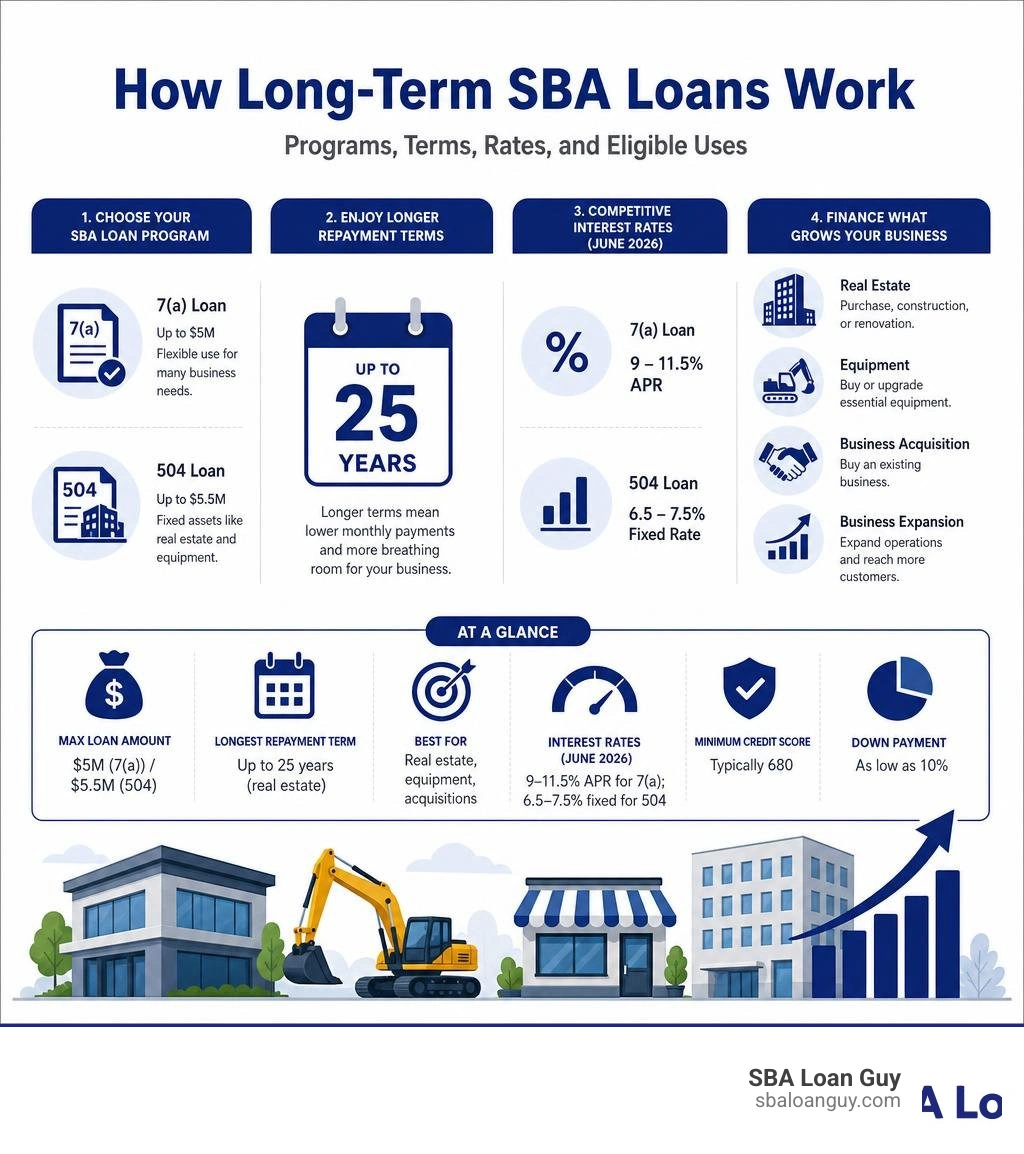
A long term SBA loan gives small business owners access to financing with repayment periods of up to 25 years — far longer than most conventional business loans. Here's a quick snapshot of what you need to know:
Growing a business costs money. A lot of it.
Whether you want to buy a building, purchase equipment, or acquire another business, coming up with the cash — or finding a lender willing to give you a fair deal — can feel overwhelming.
That's where SBA loans shine. The U.S. Small Business Administration backs these loans, which means lenders take on less risk. And less risk for lenders means better terms for you — lower down payments, longer repayment windows, and rates that are capped so lenders can't overcharge you.
The difference between a 5-year loan and a 25-year loan on a $500,000 purchase isn't small. It can mean the difference between a payment that strains your cash flow every month and one that fits comfortably into your budget.
I'm Cesar DonDiego, a finance and accounting professional who has helped business owners navigate complex funding decisions — including structuring and preparing for long term SBA loans — to support sustainable growth. My experience working directly with small business owners gives me a clear-eyed view of what it really takes to qualify, apply, and succeed with SBA financing.
Long term SBA loan vocab to learn:
When we talk about a long-term business loan, we mean a loan that you pay back over a long period. Typically, any business loan with a repayment term of 5 years or more falls into this category. In the business world, having more time to pay back a loan is a massive advantage.
Think of it like buying a house. If you had to pay off your home in 3 years, your monthly payments would be incredibly high. But because home loans are spread out over 15 or 30 years, the monthly payments become affordable. Long-term business loans work the exact same way. They give you the breathing room to pay for big business assets without draining your bank account every single month.
When you take out a short-term loan, you might have to pay it back in 1 to 3 years. This means your monthly payments are huge, which can make it hard to buy inventory, pay your workers, or handle emergencies. By choosing a longer term, your monthly payments shrink. This keeps cash in your business so you can run things smoothly.
There are many Benefits of SBA Loans, but the main one is how they protect your daily business cash flow. Instead of stressing about a massive loan payment next week, you can focus on serving your customers and growing your sales.
You might wonder: "Can't I just get a regular long-term loan from my local bank?"
Yes, you can try. But traditional bank loans are very hard to get. Banks are often scared of losing money, so they make their rules incredibly strict. They might ask you to put down 20% to 30% of the loan amount as a down payment. They might also demand that you pay the whole loan back in just 5 or 10 years, even if you are buying a building that will last for 50 years.
SBA loans are different because of the government guarantee. The Small Business Administration does not actually hand you the cash (except for special disaster loans). Instead, they partner with local banks and lenders. The SBA tells the bank: "If this business owner cannot pay back the loan, we will pay you back a huge part of it (up to 75% or 85%)."
Because the government is backing you up, banks feel much safer. This safety net allows them to offer you:
To see how these official rules protect you, you can read the official SBA loan guidelines.
Not all SBA loans are the same. The government has created different programs to help with different business needs. Depending on what you want to buy, you will choose a specific program.
When choosing a program, the SBA looks closely at the "useful life" of what you are buying. If you are buying a building that will stand for decades, they will give you a very long term. If you are buying a computer that will be outdated in 5 years, the loan term will be shorter. Let's look at the main options available in June 2026.
The SBA 7(a) loan is the most popular and flexible program the government offers. It is the "Swiss Army knife" of business loans. You can use it to buy an existing business, purchase equipment, get working capital to run your daily operations, or buy commercial real estate.
Here are the key facts for an SBA 7(a) loan:
If you are using the loan for multiple things (like buying a building and getting working capital at the same time), the SBA uses the "51% rule." Under the SOP 50 10 7.1 rules, if 51% or more of the loan money is used for real estate, you can get a 25-year term for the entire loan! This is an amazing way to keep your payments low. To learn more about how to use this program, check out our SBA 7(a) Loans Complete Guide.
If you want to buy land, construct a new building, or purchase massive, long-lasting machinery, the SBA 504 loan is usually the best choice.
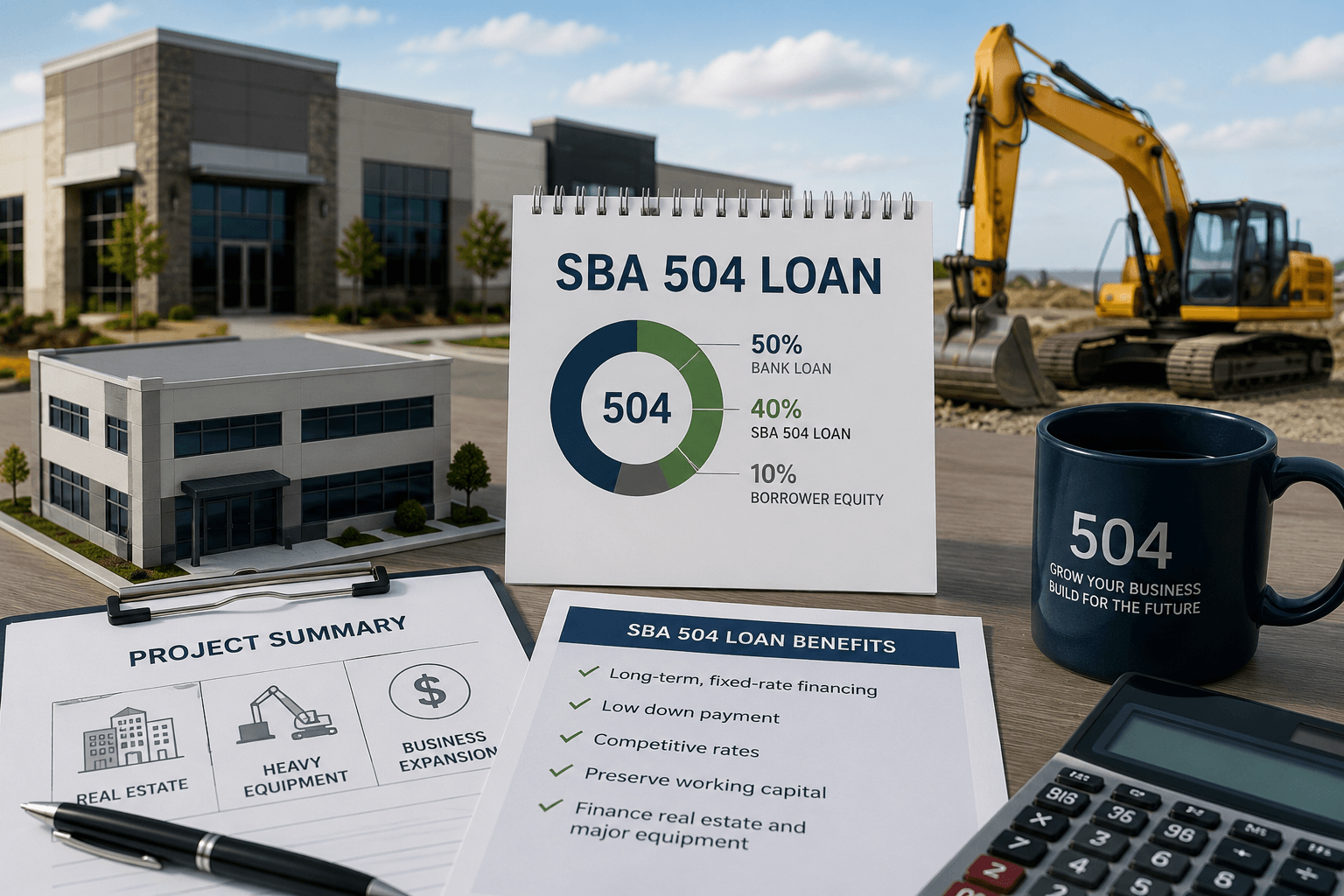
This program works through community-based nonprofit partners called Certified Development Companies (CDCs). The loan is actually split into three parts:
The SBA 504 loan offers fixed-rate financing with terms of 10, 20, or 25 years. The interest rates are tied directly to an increment above current market rates for 10-year U.S. Treasury issues. This makes the rates very stable and often lower than 7(a) rates. To qualify, your business must have a tangible net worth of less than $20 million and an average net income of less than $6.5 million after taxes for the past two years. You can read more about these rules on the SBA 504 loan details page.
Choosing between the 7(a) and the 504 program can be tricky. Both are excellent for long term SBA loan financing, but they serve different purposes.
If your goal is to buy an existing business or you need flexible funds for inventory and daily operations, the 7(a) loan is your only option. But if you are buying a million-dollar building in Houston, Orlando, or Chicago, the 504 loan is almost always the winner because it offers a fixed interest rate that won't change for 25 years. To compare current pricing, take a look at the Current SBA 7(a) Loan Rates.
Getting a long term SBA loan requires some preparation. Because the government is guaranteeing these loans, they want to make sure they are supporting healthy, responsible businesses.
Lenders will look closely at several key factors:
To understand the full list of qualifications, you can read our detailed guide on SBA Loan Requirements.
Additionally, the SBA has strict rules about who owns the business. Under the SBA affiliation rules, if you own other businesses, the SBA will look at all of them together to make sure you still fit their "small business" size standards.
Collateral is something of value (like a building, land, or equipment) that the lender can take if you stop paying your loan.

The SBA has a very fair rule about collateral: Lenders must take all available collateral, but they cannot decline your loan solely because you do not have enough collateral. If you are buying a building, that building will serve as the collateral. If you don't have enough business assets, the lender may put a lien on your personal home to secure the rest of the loan.
Beyond collateral, the SBA requires a personal guarantee from anyone who owns 20% or more of the business. This means you are personally promising to pay back the loan. It is a serious commitment, but it is standard for almost all long-term business loans in the United States.
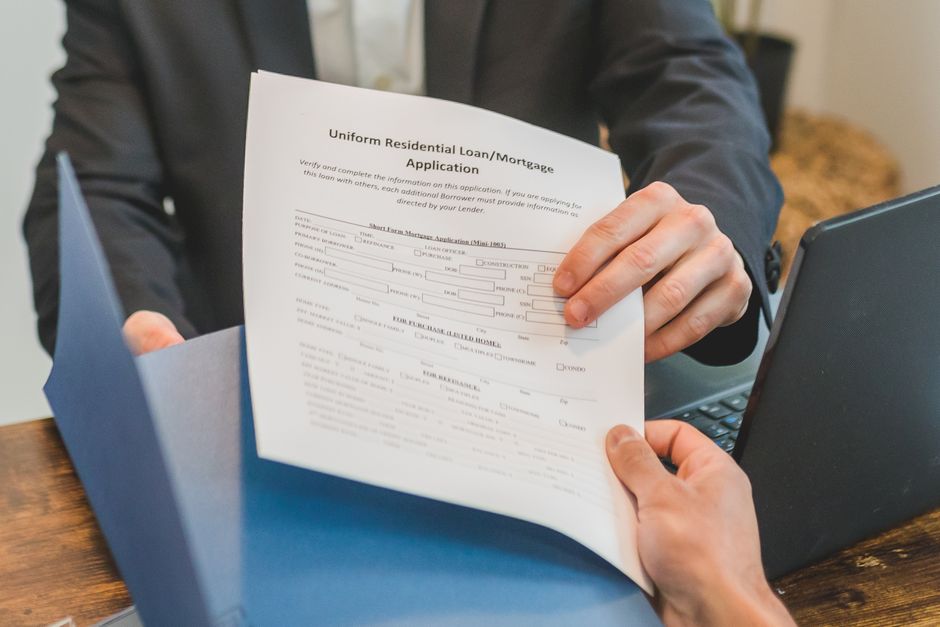
Applying for an SBA loan is famous for requiring a lot of paperwork. You will need to gather tax returns, profit and loss statements, bank statements, and business plans.
Because of this, the process takes time. A typical SBA loan takes 60 to 90 days from the day you apply to the day you get the money. If you work with a "Preferred Lender" (a bank that has special permission to approve loans without waiting for the SBA to review them), you can speed this up to 30 to 45 days.
To make sure you don't hit any roadblocks, it helps to understand the step-by-step SBA Loan Process. Knowing what to expect can significantly reduce your stress and improve your SBA Loan Turnaround Time.
The longest term available is 25 years. This term is strictly reserved for buying, constructing, or renovating commercial real estate. If you are buying a building, spreading the payments over 25 years keeps your monthly costs extremely low. To see how much you could save on your monthly payments with a longer term, try using our SBA loan payment calculator.
Yes, but the term limit is shorter. For daily operational costs, hiring workers, or buying inventory, the maximum term is 10 years. While you cannot get a 25-year term for working capital, a 10-year term is still much longer and more affordable than the 1- to 3-year terms offered by traditional banks or online lenders.
It depends on the program you choose.
Getting a long term SBA loan is one of the best ways to fund your business dreams without putting a massive strain on your monthly cash flow. Whether you want to buy a warehouse in Houston, open a medical practice in California, or acquire a business in New York City, we are here to help.
At SBA Loan Guy, based in The Woodlands, TX, we make the complex loan process simple. We provide a personalized pre-qualification snapshot, match you with the perfect SBA-approved lenders in our network, and guide you step-by-step all the way to funding.
Ready to take the next step? Let our team of SBA Loan Specialists do the heavy lifting for you. Apply for an SBA 7(a) Loan today and let's build your business future together!

A distilled, 0–100 snapshot of how fundable you are based on credit, cash flow, equity, and documentation. Plus the top fixes to raise your score fast.
A curated shortlist of lenders that fit your profile and use of funds, with why each is a fit and exactly what they’ll want to see.
A tailored, step-by-step list of required docs and forms (formats, who provides them, and common pitfalls to avoid).
A realistic week-by-week path from pre-qual to closing, with milestones, dependencies, and an estimated target funding date.
Hands-on prep and documentation for SBA disaster programs (EIDL and others), including submissions, follow-ups, and guidance through appeals or requests for more info.
We prepare your application, match you with the
right lenders, and guide you until funding.