Discover the business loan credit score requirement for SBA loans and learn how to qualify even with lower scores.
July 1, 2026
Understanding the business loan credit score requirement can mean the difference between getting funded and getting turned down flat. Here's a quick-reference breakdown before we dive deeper:
Note: These are general guidelines. Individual lenders set their own minimums.
You've built something real. Your business is growing, and now you're ready to take the next step — a new location, a big equipment purchase, maybe an acquisition. You apply for an SBA loan, confident in what you've built. Then a lender asks for your credit score, and suddenly you're not so sure.
That moment of uncertainty is exactly why this guide exists.
Credit scores are the first filter most lenders use. They won't tell the whole story of your business — but they will open or close doors before anyone looks at anything else. A score that's too low can get you rejected outright. A score in the right range can unlock the cheapest capital available to small businesses anywhere: an SBA-guaranteed loan.
The good news? The requirements are more flexible than most people think. The SBA does not set a single hard minimum score. Your lender does. And with the right preparation, even a less-than-perfect score doesn't have to stop you.
I'm Cesar DonDiego, a finance and accounting professional who has worked directly with small business owners navigating cash flow, financial planning, and the often-confusing world of business loan credit score requirements. My hands-on experience helping business owners structure their finances for loan readiness gives me a clear view of what lenders actually look for — and how to prepare before you ever fill out an application.

Simple business loan credit score requirement word guide:
When we talk about the standard business loan credit score requirement, the first thing to know is that there is no single "magic number" that covers every single loan. Instead, think of it like a ladder. The higher your score, the better the loan options and the cheaper the interest rates become.
For most traditional business loans, including those backed by the government, lenders want to see a personal credit score of at least 650 to 680. If your score is above 720, you are in the golden zone. This is where you get the best terms, the lowest interest rates, and the fastest approvals.
But what if your score is lower? If your score is between 500 and 600, you are not completely out of luck. However, your options will shift away from traditional banks and toward alternative lenders. These loans often come with higher interest rates and shorter payback times because the lender is taking on more risk.
To understand why this is, we have to look at how credit scores are built and evaluated.
Did you know your business can have its own credit score completely separate from your personal one? It is true! Lenders will often look at both when you apply for a loan.
For businesses that are relatively new—especially those under three years old—personal credit carries almost all the weight. This is because your business has not had enough time to build its own strong credit history yet. To get a complete understanding of how this works, read our breakdown on SBA Loan Requirements.
Traditional banks and SBA-approved lenders might seem similar, but they look at credit scores through different lenses.
Conventional bank loans are usually very rigid. If a bank’s policy says they do not lend to anyone with a credit score below 680, and your score is 679, you will likely get a automated "no" from their computer system. Traditional banks often require a minimum credit score of 680 or higher for both SBA and standard bank loans.

SBA lenders, on the other hand, have a safety net. The U.S. Small Business Administration (SBA) guarantees a portion of the loan. This means if your business cannot pay the money back, the government will pay the lender back a large percentage of the loss. Because of this government guarantee, SBA lenders can sometimes be more flexible. They might look at a borrower with a 650 score and say, "Your score is a little low, but your business cash flow is amazing, so we will approve you."
If you want to explore how local state resources can support your search, you can check out the Resources for Obtaining a Business Loan to see how state-level guidelines align with national standards.
The SBA has several different loan programs designed for different business needs. Because the loan amounts and purposes vary, the credit score expectations vary too. Let us break down the most popular programs so you can see where your business fits best.
For a deeper look into the perks of these programs, explore the Benefits of SBA Loans.
The SBA 7(a) loan is the flagship program. It is the most popular option because it is highly flexible. You can use it to buy inventory, purchase a competitor, refinance expensive debt, or keep cash on hand for daily operations.
While the SBA itself does not write a specific minimum credit score into its rulebook, the lenders we partner with typically require a personal credit score of 650 or higher. If you want the smoothest path to approval, aiming for a 680 to 720+ is your best bet.
If you are ready to see what the application looks like, you can review our step-by-step guide on the SBA 7(a) Loan Application.
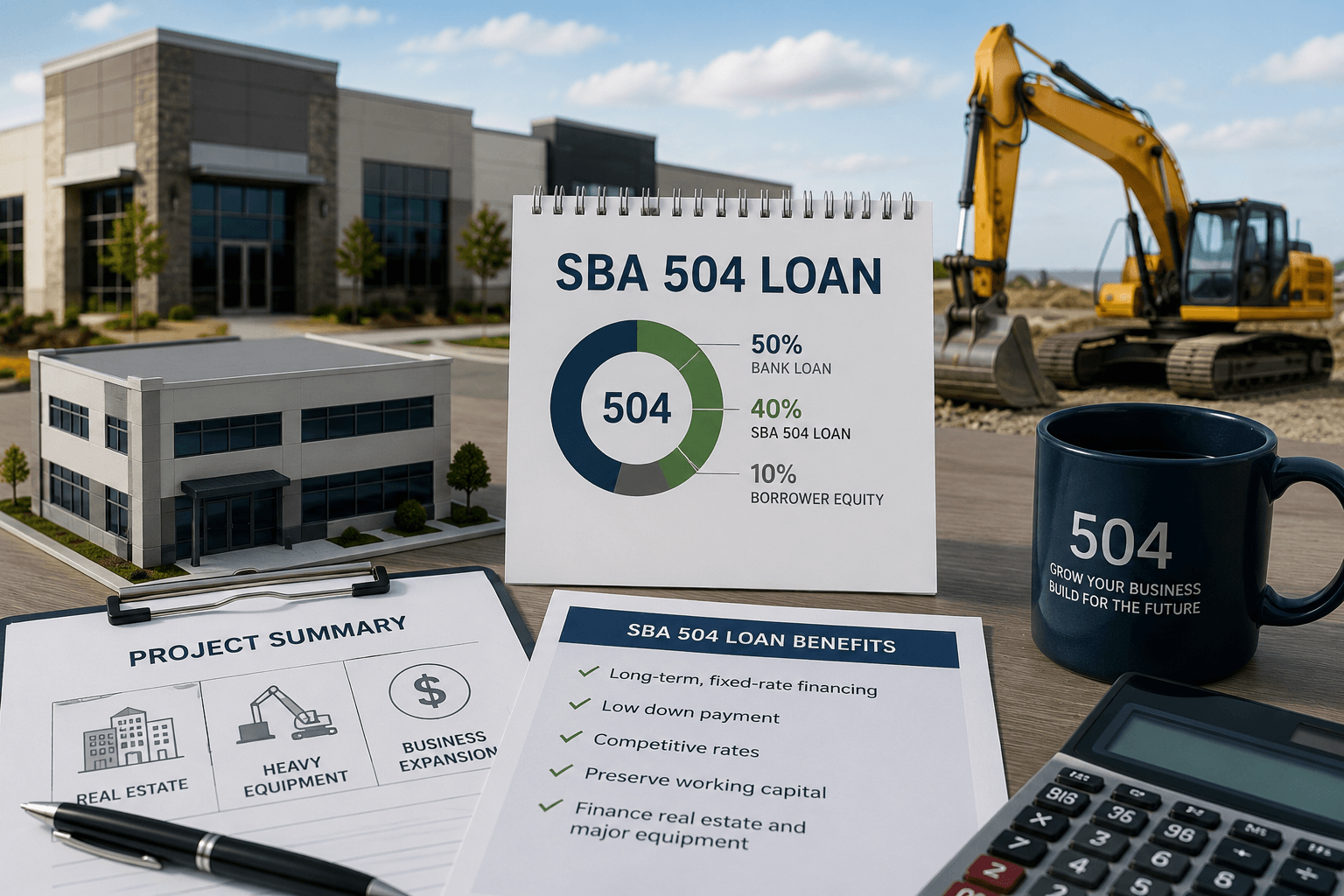
If you are looking to buy a building or purchase very large, expensive machines, the SBA 504 loan is the program for you. Because these loans involve long-term real estate commitments (often 10 to 25 years) and very large sums of money, lenders are more conservative. They generally require a personal credit score of 680 or higher.
On the opposite end of the spectrum is the SBA Microloan program. These are smaller loans capped at $50,000 (with an average loan size of around $13,000). These loans are distributed through local, community-based nonprofit lenders.
Because microloans are designed to help startups, minority-owned businesses, and underserved communities, they are the most forgiving. Many micro-lenders will accept credit scores in the low 600s, and some do not have a strict minimum score requirement at all! Instead, they focus on your business plan and your personal character.
If you have researched SBA loans in the past, you need to throw out your old notes. The rules for how lenders evaluate your credit changed in major ways recently. These updates make it easier for some business owners to qualify, but they also require lenders to look much closer at why you need the loan.
To stay on top of all the latest updates, we keep our SBA Loan Guidance page fully updated with the newest compliance standards.
For years, the SBA required a special tool called the FICO SBSS (Small Business Scoring Service) score for its 7(a) Small Loans. This score ranged from 0 to 300, and if you did not score at least 155 (or 165 as of early 2026), your application was automatically rejected before a human ever looked at it.
As of March 1, 2026, the SBA has officially sunset the SBSS score requirement.
This is huge news! Now, lenders do not have to use this rigid, automated grading system. Instead, they are free to use their own modern credit evaluation models. This gives lenders much more flexibility to look at your entire financial story rather than relying on a single, mysterious score generated by a computer algorithm.
While the credit scoring rules became more relaxed, another rule became much stricter. Under the updated regulations (SOP 50 10 8), the SBA brought back a strict version of the Credit Elsewhere Test.
The law says the SBA is only allowed to help businesses that cannot get a conventional loan on reasonable terms. In other words, if a bank is willing to give you a standard, non-government-backed loan with a fair interest rate, you must take that instead of an SBA loan.
Under these rules, lenders must write a detailed, fact-specific story in your loan file explaining exactly why you do not qualify for a regular bank loan. They can list reasons like:
Lenders can no longer just "check a box" to pass this test. They must prove and document your financial situation thoroughly.
A great credit score is like a golden key, but it is not the only thing that matters. Lenders evaluate your business using a classic framework called the Five Cs of Credit: Character, Capacity, Capital, Collateral, and Conditions.
Even if your credit score is excellent, a lender will turn you down if your business does not make enough money to pay the loan back. Let us look at the two most important factors besides your score.
Cash flow is the lifeblood of your business. To measure your ability to pay back a loan, lenders calculate a math formula called the Debt Service Coverage Ratio (DSCR).
Think of DSCR as a way to answer this question: For every dollar of loan payment you owe, how many dollars of profit does your business make?
To find your DSCR, the lender takes your Net Operating Income and divides it by your Annual Debt Service (the total amount of loan payments you will make in a year).
$$\text{DSCR} = \frac{\text{Net Operating Income}}{\text{Annual Debt Service}}$$
If you want to know more about how your business revenue translates to loan approval, read our guide on Income Requirements for SBA Loan.
What happens if a business closes down and cannot pay back its loan? Lenders want to know they have a backup plan. That backup plan is collateral and personal guarantees.
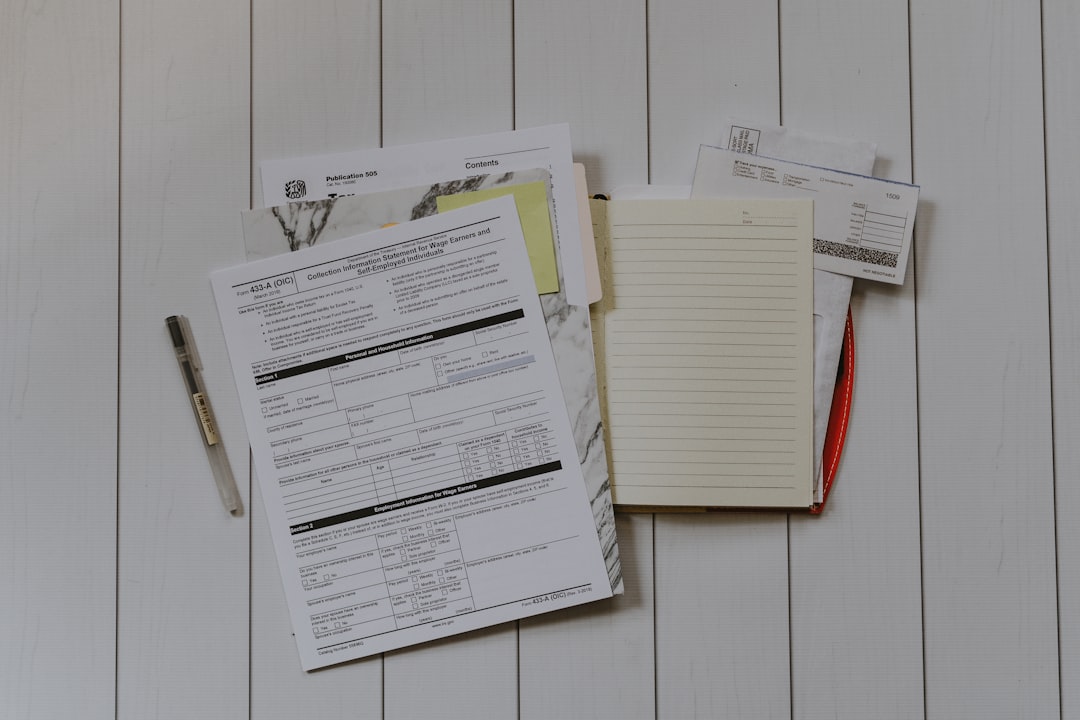
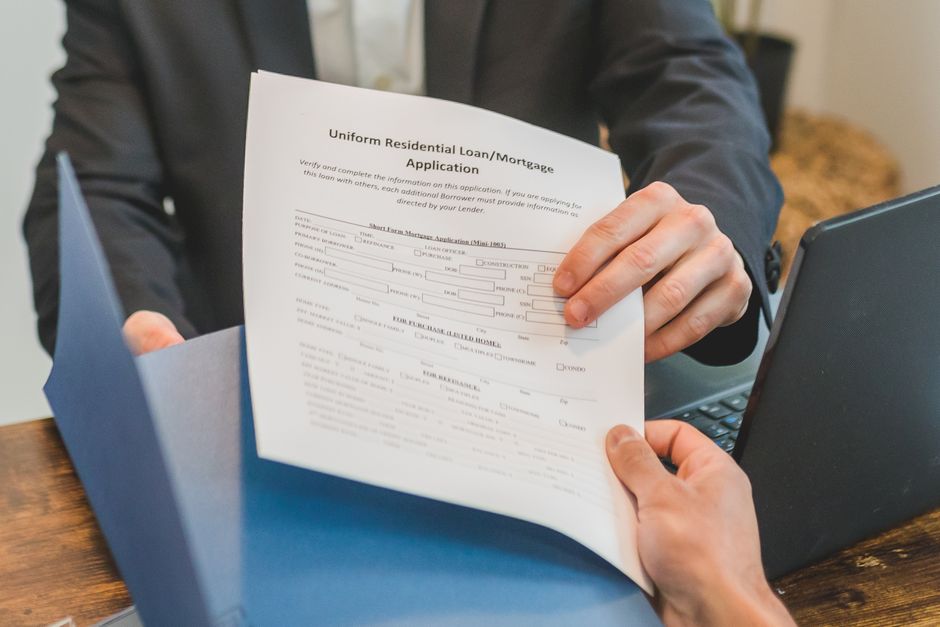
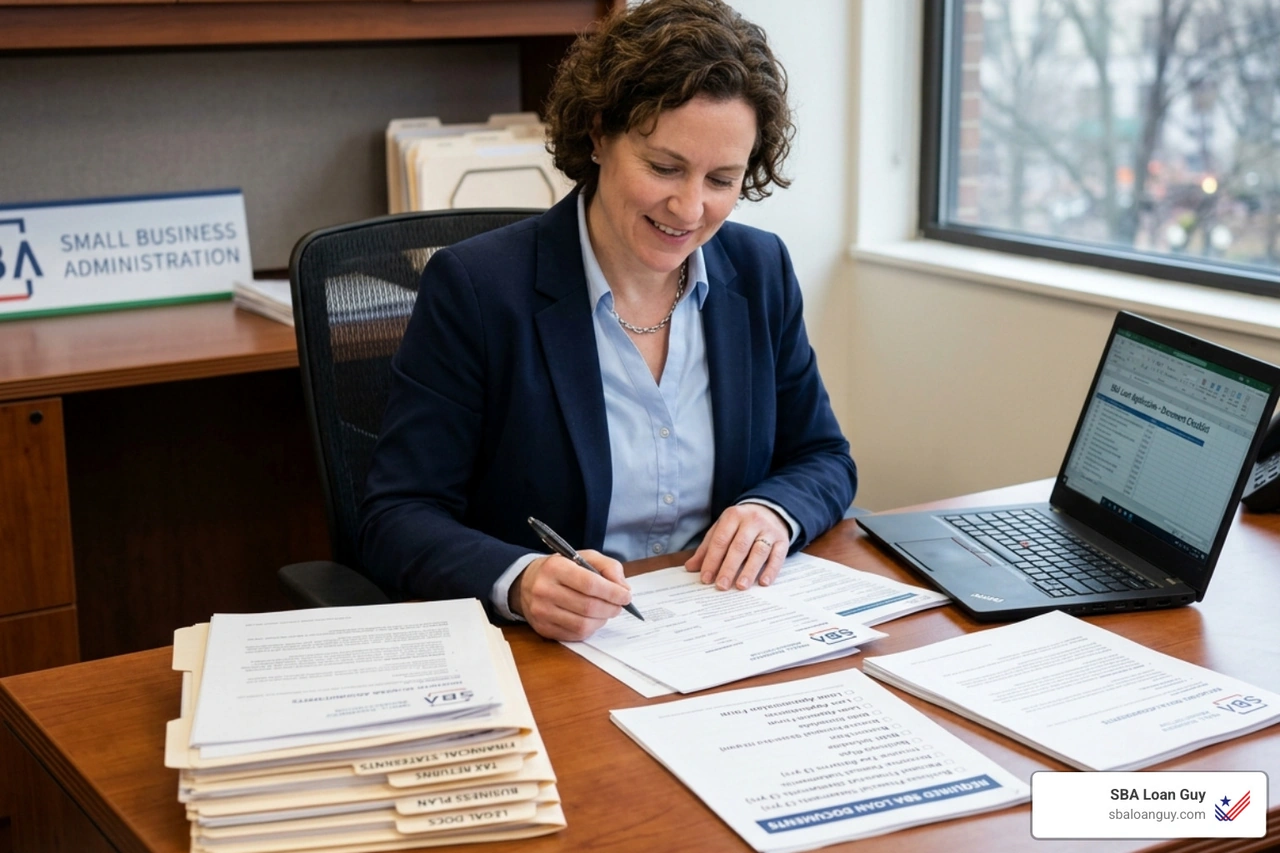
Applying for a business loan can feel like preparing for a tax audit. Lenders will ask for a mountain of paperwork. Being organized from day one makes you look professional and helps get your loan approved much faster.
Here is a quick checklist of the files you should gather:
To make sure you do not miss a single form, check out our complete breakdown of the Documents Needed for an SBA Loan.
If your credit score is not quite where you want it to be, do not panic. There are practical steps you can take to polish your credit profile before you apply.
First, check both your personal and business credit reports for mistakes. According to industry studies, about one in five credit reports contains a material error that can drag down your score. If you find a mistake—like a debt you already paid that is still showing as unpaid—dispute it immediately with the credit bureaus.
Second, pay down your credit card balances. Lenders look closely at your credit utilization rate. This is the percentage of your available credit limit that you are currently using. If you have a credit card with a \$10,000 limit and a \$9,000 balance, your utilization is 90%, which hurts your score. Try to keep this rate below 30% (and ideally below 10%) on every single card.
To see where your credit stands today and get a clear picture of your options, you can start our simple SBA Loan Pre-Qualification process.
If you need funding immediately and cannot wait 3 to 6 months to build your credit score, you still have paths forward:
Technically, the SBA itself does not set an official minimum personal credit score. However, because the loans are issued through private lending partners (like banks and credit unions), practical minimums exist.
For the standard SBA 7(a) loan, most lenders require a personal FICO score of at least 650. If you apply for an SBA Microloan, you can often qualify with a score in the 600 to 620 range, and some community-based microlenders do not enforce a strict credit score floor at all.
Yes, but it is highly unlikely you will qualify for a traditional bank or SBA loan with a 500 credit score. At this level, your options will consist of alternative financing, such as revenue-based financing or merchant cash advances.
These alternative options care more about your daily bank deposits and consistent monthly revenue (usually requiring at least \$150,000 in annual sales) than your credit score. However, be aware that these products carry much higher interest rates and very short repayment terms.
When you first shop around for a loan, many lenders can "pre-qualify" you using a soft credit pull, which does not affect your credit score at all.
However, once you submit a formal application, the lender will perform a hard credit inquiry to pull your full report. A hard inquiry will typically drop your credit score by 2 to 5 points temporarily. If you apply with multiple lenders for the same type of loan within a short window (usually 14 to 45 days), credit bureaus will treat them as a single inquiry to protect your score.
Navigating the business loan credit score requirement does not have to be a solo journey. Your credit score is a major piece of the puzzle, but it is only one part of your business's financial story. With the recent 2026 rule changes—including the end of the rigid SBSS score requirement—lenders have more freedom than ever to look at your business as a whole.
At SBA Loan Guy, we specialize in helping small business owners in Houston, California, Florida, Chicago, NYC, and beyond prepare their finances, understand their options, and secure the funding they deserve. We offer a personalized pre-qualification snapshot, connect you with the right lenders from our trusted network, and walk you through every step of the SBA 7(a), Express, or Disaster Loan process.
Ready to find your magic number and unlock the capital your business needs to grow? Connect with our SBA Loan Specialists today, or take the first step right now and Get started with SBA Loan Guy.

A distilled, 0–100 snapshot of how fundable you are based on credit, cash flow, equity, and documentation. Plus the top fixes to raise your score fast.
A curated shortlist of lenders that fit your profile and use of funds, with why each is a fit and exactly what they’ll want to see.
A tailored, step-by-step list of required docs and forms (formats, who provides them, and common pitfalls to avoid).
A realistic week-by-week path from pre-qual to closing, with milestones, dependencies, and an estimated target funding date.
Hands-on prep and documentation for SBA disaster programs (EIDL and others), including submissions, follow-ups, and guidance through appeals or requests for more info.
We prepare your application, match you with the
right lenders, and guide you until funding.