Learn how to apply SBA loans step by step with this complete guide covering eligibility, documents, and approval tips.
June 26, 2026
How to apply SBA loans is one of the most searched topics among small business owners — and for good reason. The SBA loan program gives you access to up to $5 million in funding, with lower down payments and longer repayment terms than most traditional bank loans.
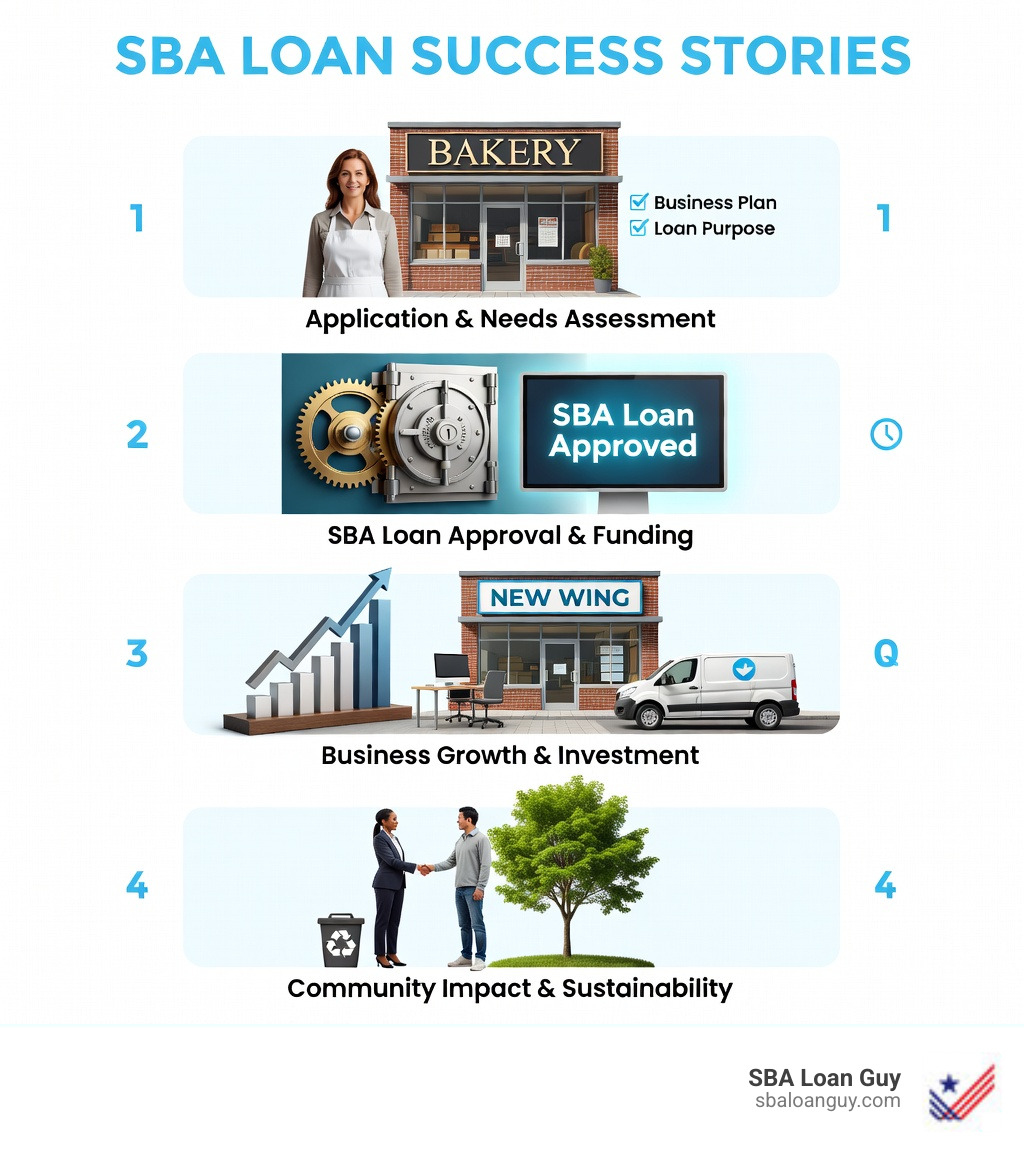
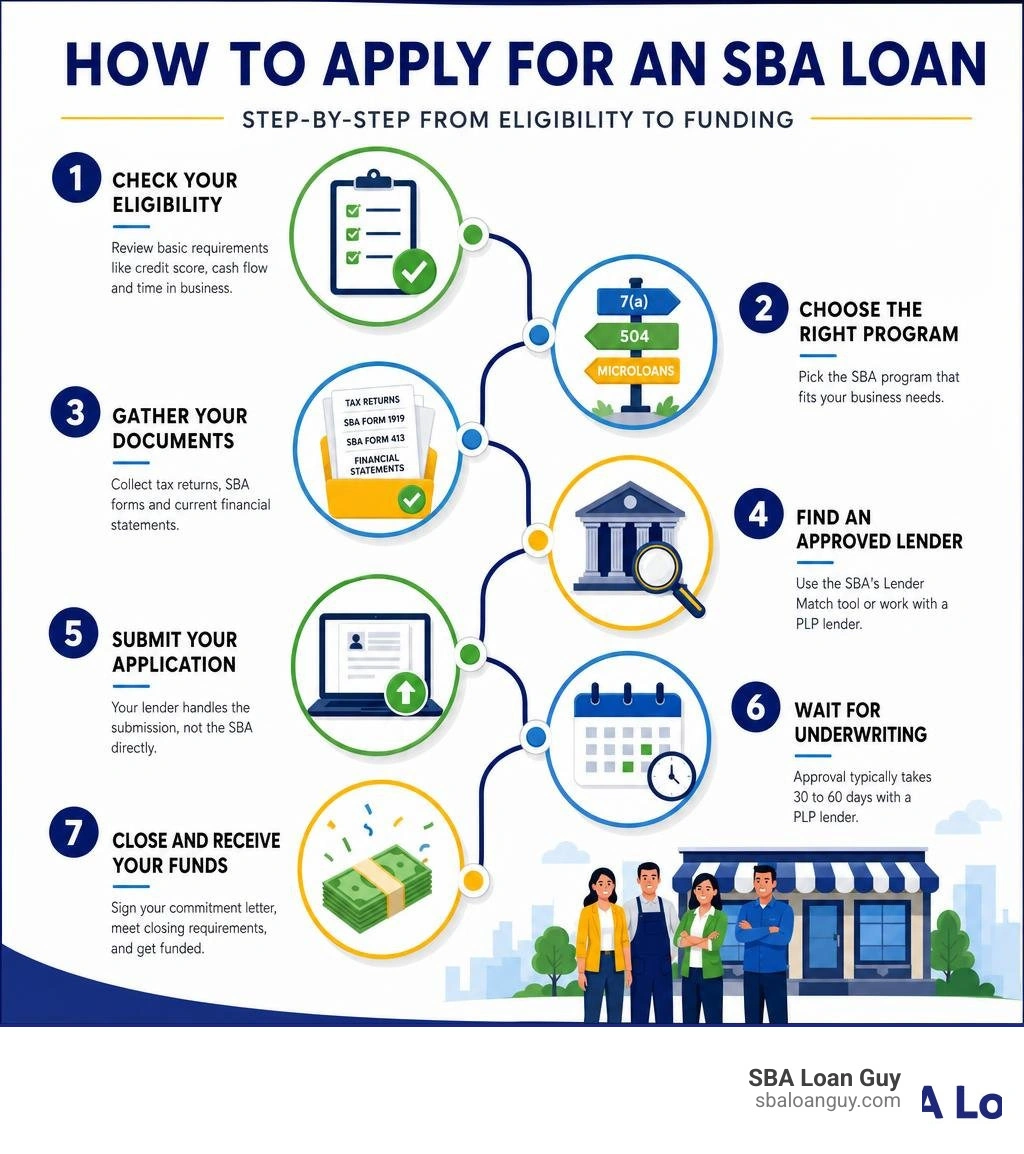
Here is a quick overview of how to apply for an SBA loan:
The process sounds simple. But in practice, thousands of applications are denied every year — most often because of missing documents, weak cash flow, or choosing the wrong lender.
This guide walks you through every step so you can apply with confidence and avoid the most common mistakes.
I'm Cesar DonDiego, a finance and accounting professional who has spent years helping small business owners manage cash flow, structure their finances, and understand exactly how to apply SBA loans to fund growth the smart way. Let's break it all down.
How to apply SBA terms you need:
To understand how to apply SBA loans, you first need to know what they actually are. A very common myth is that the government lends you the money directly. This is not how it works!
Instead, the Small Business Administration (SBA) acts like a helpful co-signer. They partner with private lenders—like local banks and credit unions—to make loans less risky. The SBA promises the bank that if you cannot pay the money back, the government will cover a large part of the loss (usually 75% to 85% of the loan amount).
Because the government reduces the bank's risk, the bank is much more willing to give you a loan with great terms. This means you get lower interest rates, smaller down payments, and more time to pay the money back.
When you start the SBA Loan Process, you will deal directly with an SBA-approved bank or lender. You will not submit your application directly to the government. The bank will review your business, and if they like what they see, they will ask the SBA to guarantee the loan. This teamwork between banks and the government is what makes Loans | U.S. Small Business Administration - SBA so powerful for small businesses.
Before you learn how to apply SBA loans, you must choose the right program. The SBA has different loan "flavors" for different business needs. If you apply for the wrong one, the bank might say no, or you might end up with a loan that does not fit your goals.
Here is a simple comparison of the three most popular SBA loan programs:
| Feature | SBA 7(a) Loan | SBA 504 Loan | SBA Microloan |
|---|---|---|---|
| Best Used For | Working capital, inventory, buying a business, debt refinance | Buying land, buildings, or very large machinery | Startups, small equipment, inventory, quick cash |
| Maximum Amount | $5 million | $5.5 million (SBA portion) | $50,000 |
| Repayment Terms | Up to 10 years (working capital) or 25 years (real estate) | 10 to 25 years | Up to 6 years |
| Typical Down Payment | 10% to 20% | 10% (15% for startups or special properties) | Varies (often low or none) |
| Who Lends the Money | SBA-approved banks | CDCs (nonprofit partners) + Banks | Nonprofit community lenders |
The SBA 7(a) loan is the most popular choice for business owners. It is extremely flexible. You can use it to buy inventory, get working capital, refinance high-interest debt, or even buy an existing business.
With a maximum limit of $5 million, it can handle large business goals. If you use the money for working capital or equipment, you get up to 10 years to pay it back. If you use it to buy commercial real estate, you get up to 25 years. Because this loan is so popular, we highly recommend reading our detailed guide on the SBA 7(a) Loan Application to understand its specific rules.
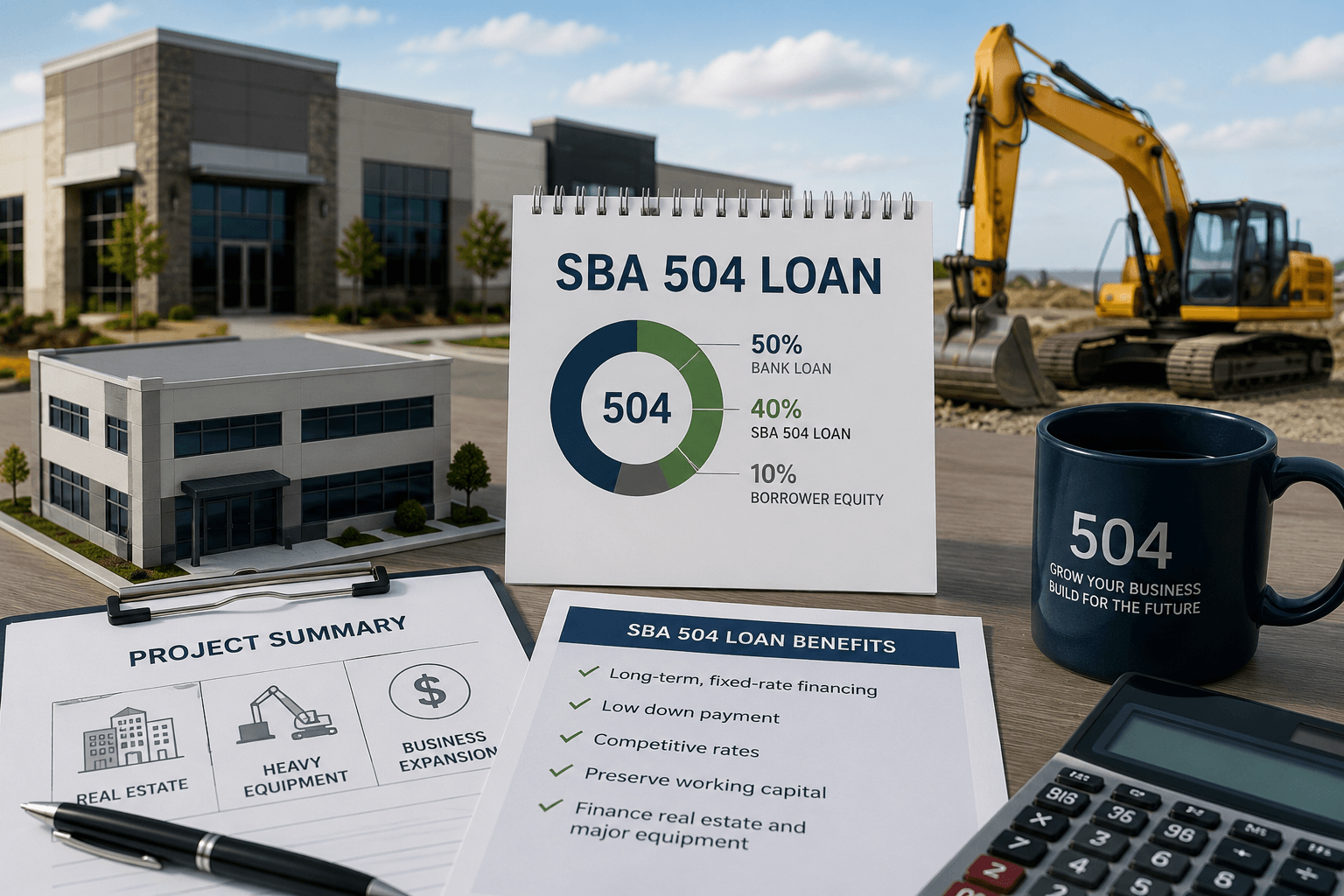
If your business needs to buy a building, build a new facility, or purchase giant, expensive machinery, the SBA 504 loan is your best bet.
This program uses a unique structure. It brings together three parties:
This 10% down payment is much lower than the 20% to 30% that traditional banks usually ask for. However, keep in mind that if you are a brand-new startup or if the property is highly specialized (like a hotel or gas station), the down payment requirement will rise to 15%.
Are you a brand-new startup? Or do you only need a small amount of cash to get over a hump? If so, the SBA Microloan program is perfect for you.
This program has a maximum limit of $50,000, but the average loan size is actually around $13,000. These loans are not offered by big banks. Instead, they are managed by local, nonprofit community lenders who want to help small businesses grow. Microloans are much easier to qualify for, making them the best option for business owners with limited credit history or those who are just starting out.
To qualify for an SBA loan, your business must meet some basic rules set by the government. First, your business must operate for-profit. It must also be physically located and doing business in the United States (or its territories).
Additionally, you must show that you cannot get the money from other non-government sources first. In other words, if you have millions of dollars sitting in a personal bank account, the SBA expects you to use your own money before asking for a government-backed loan.

When you apply, banks will look closely at your personal and business creditworthiness. For standard SBA loans, most lenders require a personal credit score of 680 or higher. If your score is 720 or above, you will get the best interest rates and a much faster approval process.
Lenders also want to see that your business makes enough money to pay back the loan. They measure this using a math formula called the Debt Service Coverage Ratio (DSCR).
$$\text{DSCR} = \frac{\text{Net Operating Income}}{\text{Annual Debt Service}}$$
Most SBA lenders require a DSCR of at least 1.25. This means that for every $1.00 of monthly loan payments you owe, your business must make at least $1.25 in clean cash flow. They will look at your historical business tax returns and your global cash flow (which includes your personal income and personal debts) to make sure you can easily afford the payments.
SBA rules change over time, and 2026 has brought some very important updates that you must know:
Collateral is something of value—like real estate, equipment, or inventory—that the bank can take if you stop paying your loan.
The SBA says that a loan must be "fully secured" if possible. This means the bank will put a legal lien on all the assets you are buying with the loan, plus any other business assets you own. If you do not have enough business collateral, the bank might ask to put a lien on your personal home.
However, do not panic! The SBA has a rule that lenders cannot deny your loan only because you lack collateral, as long as your cash flow and credit are very strong. Also, the SBA does not require any collateral for loans of $50,000 or less.
No matter what, anyone who owns 20% or more of the business must sign a personal guarantee. This is a legal promise that you will personally pay the loan back if your business fails.
For down payments (often called equity injection), you will typically need to bring at least 10% of the total project cost in cash. For startups or business buyouts, this down payment is usually 10% to 15%.

Now that you know the rules, let's look at the exact step-by-step process of how to apply SBA loans. Preparing properly can save you months of waiting!
The number one reason SBA loans get delayed or rejected is missing paperwork. You must build a highly organized digital folder with all your files.
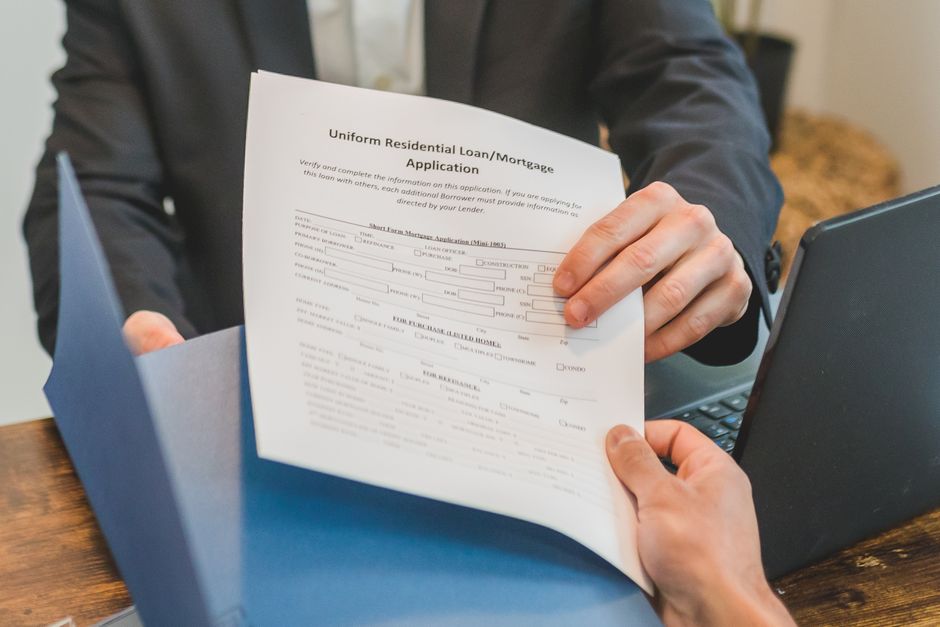
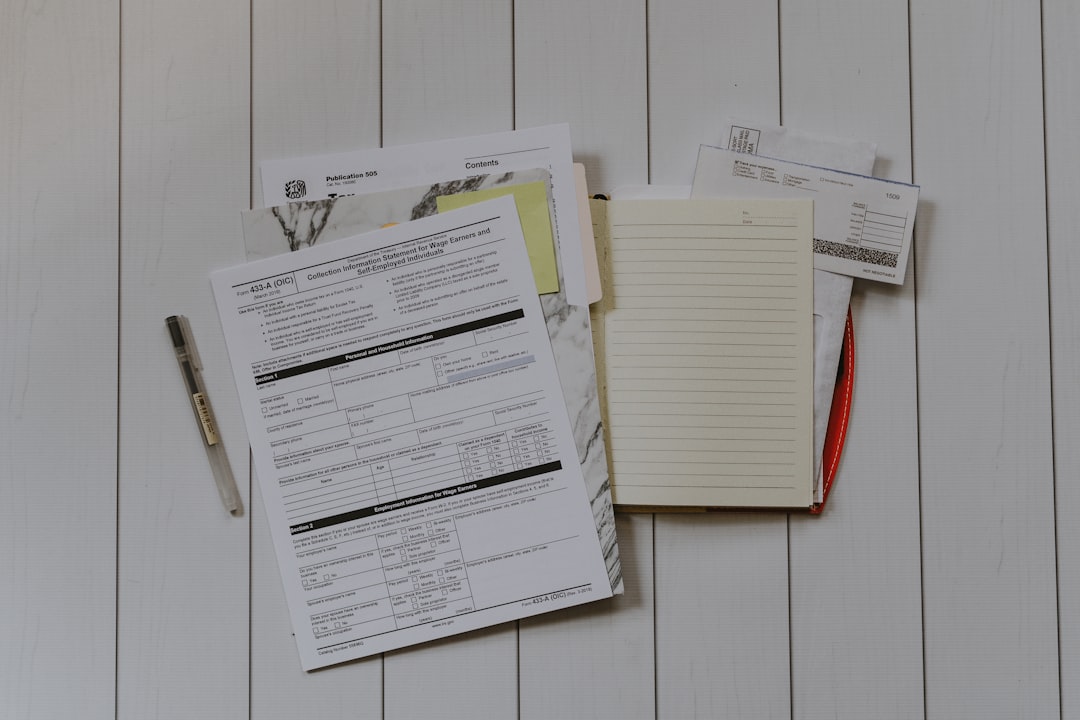
The core forms you will need to fill out include:
You will also need to gather your core business documents, including three years of business and personal tax returns, a year-to-date profit and loss (P&L) statement, a balance sheet, and a current business debt schedule. To make sure you do not miss a single item, check out our complete checklist of Documents Needed for an SBA Loan.
You cannot apply directly to the government. You must find an SBA-approved bank or lender.
You have two main paths:
Working with SBA Loan Specialists can help you find the absolute best PLP bank for your specific industry and location.
Once you choose a lender, you will submit your complete package. The bank's underwriting team will then verify all your numbers. They will double-check your tax returns, run credit reports, and calculate your DSCR.
If you are using a PLP bank, this underwriting process usually takes about 2 to 3 weeks. If you are buying real estate, this step will take longer because the bank must order a professional appraisal and an environmental study. If the underwriters are happy, they will issue a formal commitment letter or Letter of Intent (LOI) for you to sign.
Closing is the final finish line. During this step, you will sign the final loan documents, pay any closing costs or SBA guarantee fees, and show proof of your down payment (equity injection).
Once all the legal documents are signed and the bank verifies that your business licenses and entity documents are up to date, they will disburse the funds directly to your bank account or to the seller.
Applying for an SBA loan is a big project, and banks are very careful. Some of the most common reasons banks say "no" include:
To avoid these traps, we highly recommend getting professional SBA Loan Guidance before you submit your file.
To give yourself the absolute best chance of success, follow these expert tips:
Yes! Startups can absolutely qualify, but the rules are stricter. Since you do not have years of business history, lenders will look closely at your personal credit score (720+ is preferred) and your professional industry experience. You will also need a highly detailed business plan with CPA-reviewed cash flow projections, and you will need to bring a larger down payment (usually 20% to 25% of the startup costs).
The typical timeline is 45 to 90 days from your first application to getting the cash. However, if you work with a Preferred Lender Program (PLP) bank, you can often close a clean file in 30 to 60 days. If you are in a rush, SBA Express loans can receive an initial credit decision from the SBA in as little as 36 hours, though full bank underwriting will still take a few weeks. To learn more about how to speed up this timeline, read our guide on How Long Does SBA Loan Process Take.
Yes, the SBA offers low-interest disaster relief loans directly to businesses affected by declared natural disasters. For example, California businesses affected by the devastating Pack Fire can access specialized relief through the SBA Relief Still Available to California Businesses, Private ... .
Similarly, business owners in Illinois affected by severe storms can apply for disaster assistance through the SBA Offers Disaster Relief to Illinois Businesses, Private Nonprofits ... program. These programs are managed directly by regional offices like the Illinois | U.S. Small Business Administration district office.
Applying for an SBA loan can feel like trying to solve a giant puzzle with a thousand tiny pieces. One wrong document or a single mismatched number can cause your application to get stuck at the bottom of a bank's pile.
You do not have to do this alone. At SBA Loan Guy, we are here to help you navigate the entire process from start to finish. We serve business owners in our home base of The Woodlands and Houston, Texas, as well as in San Francisco, California, Orlando, Florida, Chicago, Illinois, Indianapolis, Indiana, and New York City.
We provide expert SBA Loan Application Assistance by preparing your paperwork, analyzing your cash flow, and matching you with the absolute best PLP lenders for your specific business.
Ready to take the first step? Head over to our SBA Loan Prequalification page to get a personalized pre-qualification snapshot in just minutes, or apply directly for an SBA 7(a) Loan to fund your business growth today!

A distilled, 0–100 snapshot of how fundable you are based on credit, cash flow, equity, and documentation. Plus the top fixes to raise your score fast.
A curated shortlist of lenders that fit your profile and use of funds, with why each is a fit and exactly what they’ll want to see.
A tailored, step-by-step list of required docs and forms (formats, who provides them, and common pitfalls to avoid).
A realistic week-by-week path from pre-qual to closing, with milestones, dependencies, and an estimated target funding date.
Hands-on prep and documentation for SBA disaster programs (EIDL and others), including submissions, follow-ups, and guidance through appeals or requests for more info.
We prepare your application, match you with the
right lenders, and guide you until funding.