Learn sba eidl hazard insurance requirements to stay compliant with SBA rules and protect your business assets.
July 8, 2026
SBA EIDL hazard insurance requirements apply to any Economic Injury Disaster Loan over $25,000 that is secured by collateral — and missing this requirement can put your loan in default.
Here is a quick summary of what you need to know:
| Key Requirement | Details |
|---|---|
| Loan threshold | Required for EIDL loans over $25,000 |
| Minimum coverage | At least 80% of the loan amount |
| Coverage type | Commercial property insurance (not personal) |
| Policy must be in | Your business name (or DBA) |
| Duration | For the full life of the loan (up to 30 years) |
| Flood insurance | Required separately if in a FEMA flood zone |
Many borrowers only discover this requirement months or even years after their loan is approved — often after receiving a warning letter from the SBA. By then, the clock is already ticking.
The good news is that if you already have a commercial property policy, you may already be covered. But there are specific rules around coverage amounts, policy types, and documentation that trip up even experienced business owners.
I'm Cesar DonDiego, a finance and accounting professional who has worked directly with small business owners navigating SBA compliance, including SBA EIDL hazard insurance requirements. My work helping business owners manage cash flow, loan obligations, and regulatory compliance gives me a clear picture of where borrowers tend to go wrong — and how to fix it fast.

Key terms for sba eidl hazard insurance requirements:
When you run a business, you own a lot of "stuff." This stuff might be a physical building, computers, desks, inventory, or specialized tools. In the insurance world, this stuff is called business property.
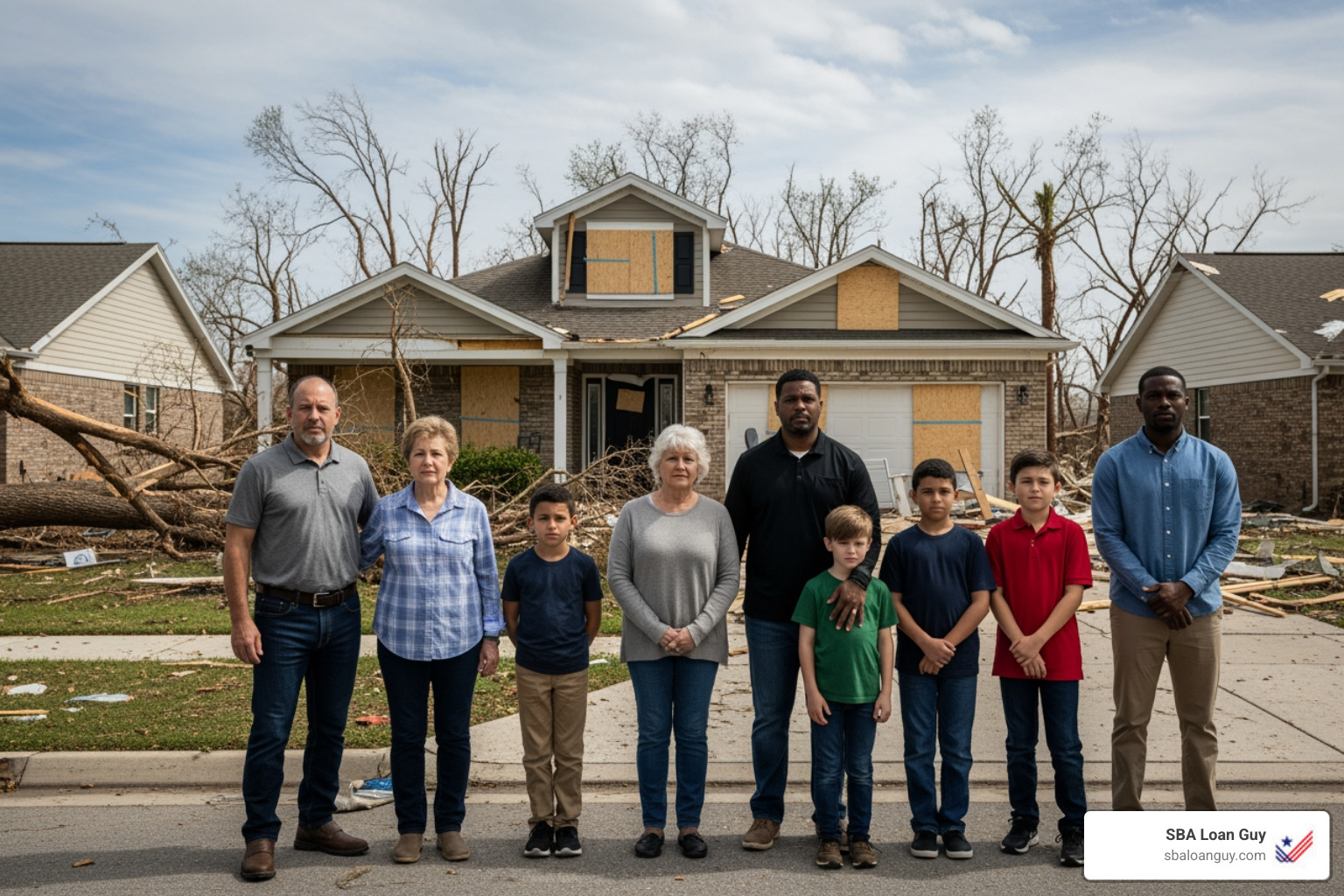
But what happens if a fire breaks out, a bad storm rips off the roof, or someone breaks in and steals your equipment? That is where hazard insurance comes in.
Hazard insurance is a specific type of coverage that protects your physical business assets from sudden, unexpected damage. It covers events like:
It is very important to know that hazard insurance is different from general liability insurance. Think of general liability insurance as your shield against lawsuits. If a customer slips on a wet floor in your office and breaks their arm, your liability insurance pays for their medical bills. But liability insurance will not pay to replace your computer if a lightning strike fries it. For that, you need hazard insurance.
So, why does the government care if you have this insurance?
When the Small Business Administration (SBA) gives you an Economic Injury Disaster Loan (EIDL) over $25,000, they do not just hand over the money on a handshake. They want to make sure they will get paid back. To do this, they take a legal interest in your business assets. This is called "collateral."
An EIDL is a long-term commitment. In fact, these loans can have a 30-year term! A lot of things can happen in 30 years. If a fire burns down your shop and you do not have insurance, your business might have to close down forever. If your business closes, you cannot pay back the loan.
By requiring you to keep hazard insurance, the SBA is protecting its collateral. If a disaster strikes, the insurance company will pay to repair or replace your business property. This keeps your business open, protects the SBA's security interest, and ensures you can keep making your monthly loan payments.
If you want to understand more about how these disaster loans work from start to finish, you can read our sba disaster loans complete guide. For a deeper dive into the specific insurance rules, you can also check out this helpful article on EIDL Hazard Insurance Explained: SBA Requirements, Costs, and How to Stay Compliant - USASEOIT.
Now let's look at the exact rules. The SBA does not require every single EIDL borrower to get hazard insurance. It all depends on how much money you borrowed.

The magic number is $25,000.
If your EIDL loan is $25,000 or less, you are in the clear. The SBA considers these loans to be unsecured. This means you do not have to pledge your business assets as collateral, and you do not have to show proof of hazard insurance.
However, if your loan is over $25,000, the SBA requires you to secure the loan with collateral. This collateral includes all of your business personal property—things like your inventory, equipment, furniture, and computers. Because these assets are now securing the loan, the SBA mandates that you carry hazard insurance on them.
Here are the specific rules you must follow for loans over $25,000:
To make this super easy to understand, we put together a simple table:
| Loan Amount | Collateral Required? | Hazard Insurance Required? | Minimum Coverage Amount |
|---|---|---|---|
| $25,000 or Less | No | No | None |
| Over $25,000 | Yes (Business Personal Property) | Yes | At least 80% of the value of your business assets |
If you want to learn more about what counts as business personal property under these rules, read our guide on sba disaster loan personal property. You can also find great details on collateral protection in the Shopify article on Hazard Insurance for EIDL Loans: Why It’s Required (2025) - Shopify.
Buying the right insurance can feel like trying to read a book in a different language. But satisfying the sba eidl hazard insurance requirements is actually pretty straightforward once you know what to look for.

First, you need to make sure the policy is set up correctly. The most important detail is the name on the policy.
The insurance policy must be in the exact legal name of your business. If your business is an LLC named "Green Valley Consulting LLC," the policy cannot be in your personal name, "John Smith." If you are a sole proprietor and you use a DBA (Doing Business As) name, like "John's Handyman Services," your policy must list your legal name and your DBA clearly.
If you want to make sure your business is set up correctly to qualify for these loans without any insurance issues, take a look at our article on eidl loan qualification.
Let's break down the types of policies that work and how home-based businesses can stay compliant.
You do not need to buy a policy that is literally called "EIDL Hazard Insurance." In the insurance industry, hazard insurance is simply a feature built into standard commercial property policies.
There are two main types of policies that will satisfy the SBA's requirements:
Please note that standard personal insurance policies—like basic homeowners or renters insurance—will not satisfy the SBA's requirements for a standard commercial business. Personal policies are designed to cover your personal clothes, furniture, and appliances, not your commercial inventory or heavy-duty business machinery.
If you run your business out of your spare bedroom or garage, you might be wondering, "Do I really need a commercial policy? My homeowners insurance already covers my house!"
This is one of the biggest traps for home-based business owners.
Standard homeowners and renters insurance policies have very strict limits on "business property." Most personal policies will only cover up to $2,500 for business equipment kept in your home. If you have $15,000 worth of computer gear, cameras, or inventory for your online store, your homeowners insurance will not cover it if your house burns down.
To satisfy the SBA when you work from home, you have two options:
Getting the policy is only half the battle. You also have to prove to the government that you have it!
When your EIDL loan is approved and disbursed, the clock starts ticking. The SBA gives you a 12-month window from the date of your loan agreement to submit proof of your hazard insurance.
If you are wondering what steps to take right after your loan gets the green light, our article sba disaster loan approved now what is a perfect roadmap for you.
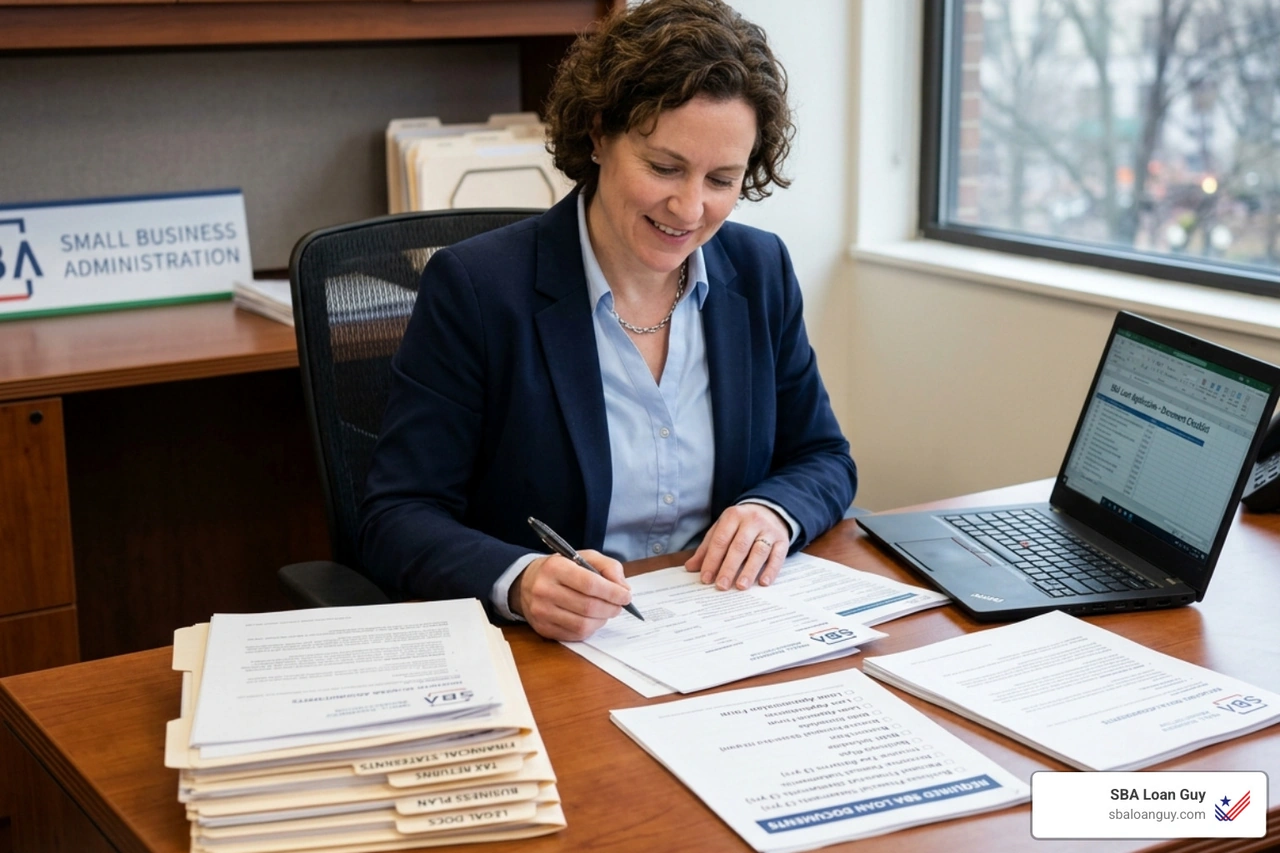
To prove you are compliant, you must submit specific documents to the SBA. Here is a list of exactly what you need to provide:
When you list the SBA, make sure your insurance agent uses the exact address provided in your EIDL loan documents. This ensures the SBA receives automatic notifications if your policy is ever cancelled or modified.
We get it—running a business is busy, and paying for insurance premiums every month can feel like a chore. But letting your hazard insurance policy lapse is a very bad idea.
Because keeping hazard insurance is a legal requirement written directly into your EIDL promissory note, failing to maintain it is considered a loan default.
If the SBA finds out your policy has lapsed (and they will, because insurance companies notify them), here is what can happen:
If you are struggling to keep up with your loan requirements or need help managing your debt, read our guide on sba disaster loan mitigation to learn about your options.
To make things as simple as possible, we have gathered the most common questions business owners ask us about EIDL hazard insurance.
For most small businesses, hazard insurance is very affordable. If you only need to cover business personal property (like computers, desks, and inventory) up to $50,000, a standard policy or BOP typically costs between $20 and $80 per month (or about $250 to $1,000 per year).
Your exact premium will depend on a few simple factors:
Yes, for EIDL loans over $25,000, the SBA must be named on your policy to protect their legal claim to the collateral.
If you are insuring business personal property (equipment, inventory, furniture), they must be listed using a Lender's Loss Payable Clause. If you are pledging real estate (like a commercial building) as collateral, they must be listed using a Mortgagee Clause.
Always ask your insurance agent to add the SBA to your policy using the exact wording and address found in your EIDL closing documents.
Standard hazard insurance policies do not cover damage from floods or earthquakes.
However, if your business is physically located in a FEMA-designated Special Flood Hazard Area (such as high-risk flood zones in coastal California, Florida, or low-lying areas of Houston, TX), the SBA will require you to carry separate flood insurance. This is a mandatory federal rule.
Earthquake insurance is generally not mandatory unless your specific loan agreement or local regulations require it due to extreme seismic risks.
Staying compliant with sba eidl hazard insurance requirements is not just about checking a box for the government—it is about protecting the dream you have worked so hard to build. Having the right coverage ensures that a single bad storm, fire, or break-in won't wipe out your business and leave you personally responsible for a massive unpaid loan.
At SBA Loan Guy, we help small business owners across our service locations—including The Woodlands, Houston, California, Orlando, Florida, Chicago, Illinois, Indianapolis, Indiana, New York City, and San Francisco—navigate the complex world of federal funding. Whether you need a personalized pre-qualification snapshot, tailored lender matches, or step-by-step guidance to secure and maintain SBA 7(a), Express, or Disaster Loans, we are here to help you every step of the way.
Ready to secure your business's financial future? Visit our SBA Disaster Loans page today to see how we can guide you to funding and keep your business safe and compliant for years to come.

A distilled, 0–100 snapshot of how fundable you are based on credit, cash flow, equity, and documentation. Plus the top fixes to raise your score fast.
A curated shortlist of lenders that fit your profile and use of funds, with why each is a fit and exactly what they’ll want to see.
A tailored, step-by-step list of required docs and forms (formats, who provides them, and common pitfalls to avoid).
A realistic week-by-week path from pre-qual to closing, with milestones, dependencies, and an estimated target funding date.
Hands-on prep and documentation for SBA disaster programs (EIDL and others), including submissions, follow-ups, and guidance through appeals or requests for more info.
We prepare your application, match you with the
right lenders, and guide you until funding.