Secure your buy existing business loan with SBA 7(a) options—get funded fast and own your proven venture today.
June 1, 2026
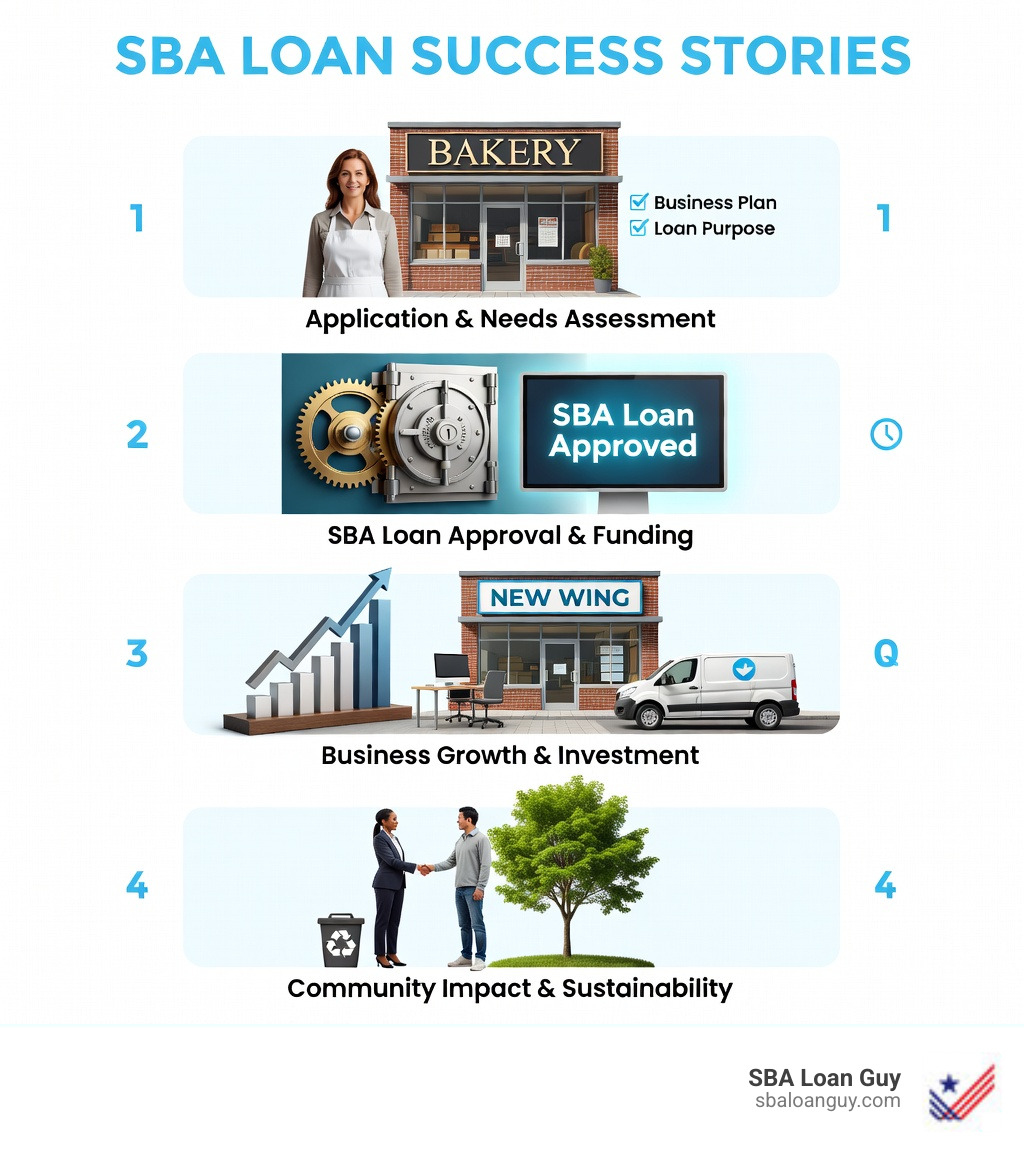
Getting a buy existing business loan is one of the fastest ways to become a business owner — without starting from zero.
Instead of building a customer base, hiring staff, and proving your model, you step into something that already works. But most buyers quickly discover the same challenge: figuring out which loan to use, how much to put down, and what lenders actually want to see.
Here is a quick answer to what you need to know:
The SBA 7(a) loan is the most common choice for buying a small business. It covers up to 90% of the purchase price, offers 10-year repayment terms, and works even when the deal includes goodwill — something most conventional lenders won't touch.
The numbers back it up. The SBA facilitated over $56 billion in small business financing in fiscal year 2024. And with U.S. mergers and acquisitions surging more than 20% recently, more buyers than ever are using these tools to close deals.
But nearly 53% of small businesses seeking capital fall short of securing the funding they need. The difference usually comes down to preparation, deal structure, and choosing the right lender.
I'm Cesar DonDiego, a finance and accounting professional with hands-on experience helping business owners navigate funding decisions — including advising clients on how to structure a buy existing business loan to close deals efficiently. In this guide, I'll walk you through every step, from choosing the right loan type to closing day and beyond.
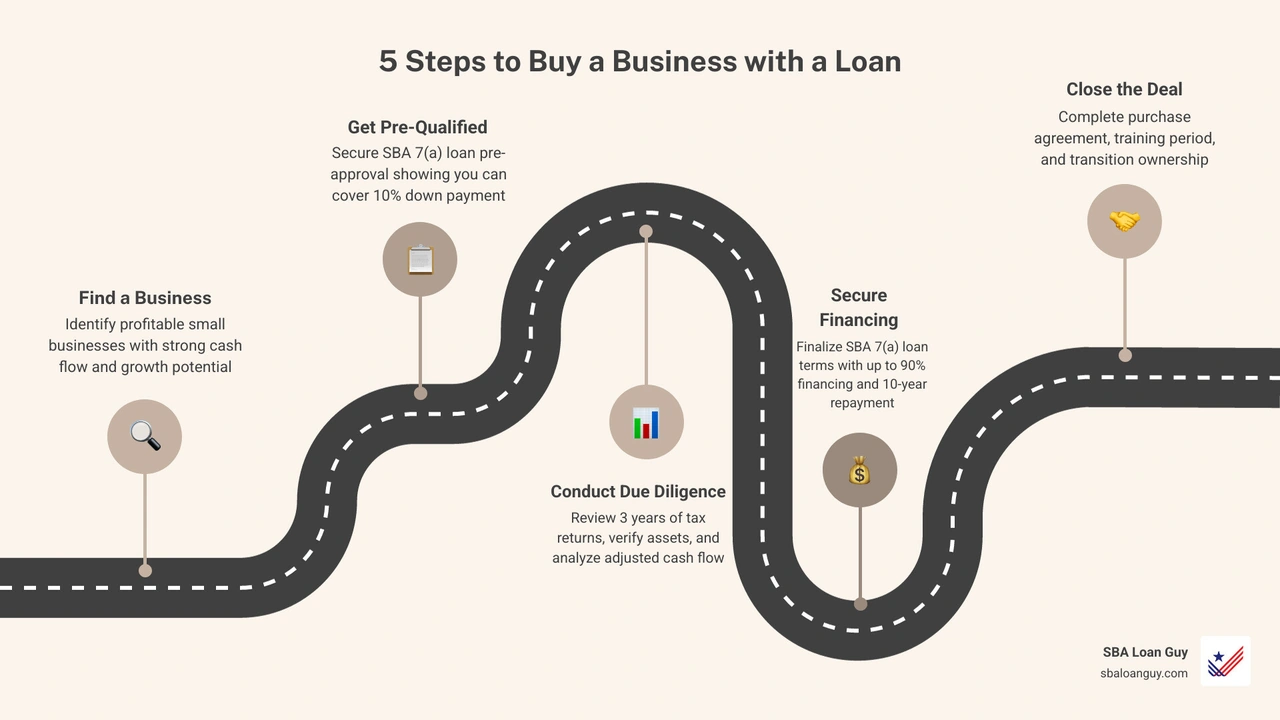
Quick Buy existing business loan terms:
When you start looking for a buy existing business loan, you will see a few different paths. Each path has its own rules about how much money you need to bring to the table and how long you have to pay it back. At SBA Loan Guy, we help you look at these options to find the one that fits your dream.
Starting a business from scratch is like planting a seed and waiting years for fruit. Buying an existing business is like buying the whole orchard. You get:
Most people use an asset purchase structure. This means you buy the things the business owns—like the equipment, the name, and the customer list—without taking on the old owner's hidden debts. To learn more about how this works, check out our guide on buying a business.
Why do so many people pick SBA loans? It comes down to "leverage." Leverage is a fancy word for using a little bit of your money to borrow a lot of the bank's money.
For most of our clients in places like Houston, Chicago, or New York, the SBA 7(a) is the winner because it doesn't have "balloon payments" (giant bills at the end) and lets you keep more cash in your pocket.

Lenders aren't just looking at the business; they are looking at you. They want to make sure you have the skills to keep the business running. Think of it like a job interview where the prize is a multi-million dollar loan.
To get the green light, you generally need to meet these marks:
We always suggest getting an SBA Loan Pre-qualification before you start shopping. It’s like a "fast pass" that tells sellers you are a serious buyer. You can see the full list of SBA Loan Requirements on our blog.
Lenders will perform a "financial physical" on the business you want to buy. They look at the last three years of tax returns to see the real story. They calculate something called the Debt Service Coverage Ratio (DSCR).
Ideally, the business should have a DSCR of 1.25x. This means for every $1 you owe the bank, the business makes $1.25 in profit. Lenders also look for "add-backs"—these are personal expenses the old owner ran through the business (like a personal car or a one-time repair) that you won't have to pay. This helps show the business is actually more profitable than it looks on paper. Experts in Houston emphasize that getting these numbers right is the key to a "yes."
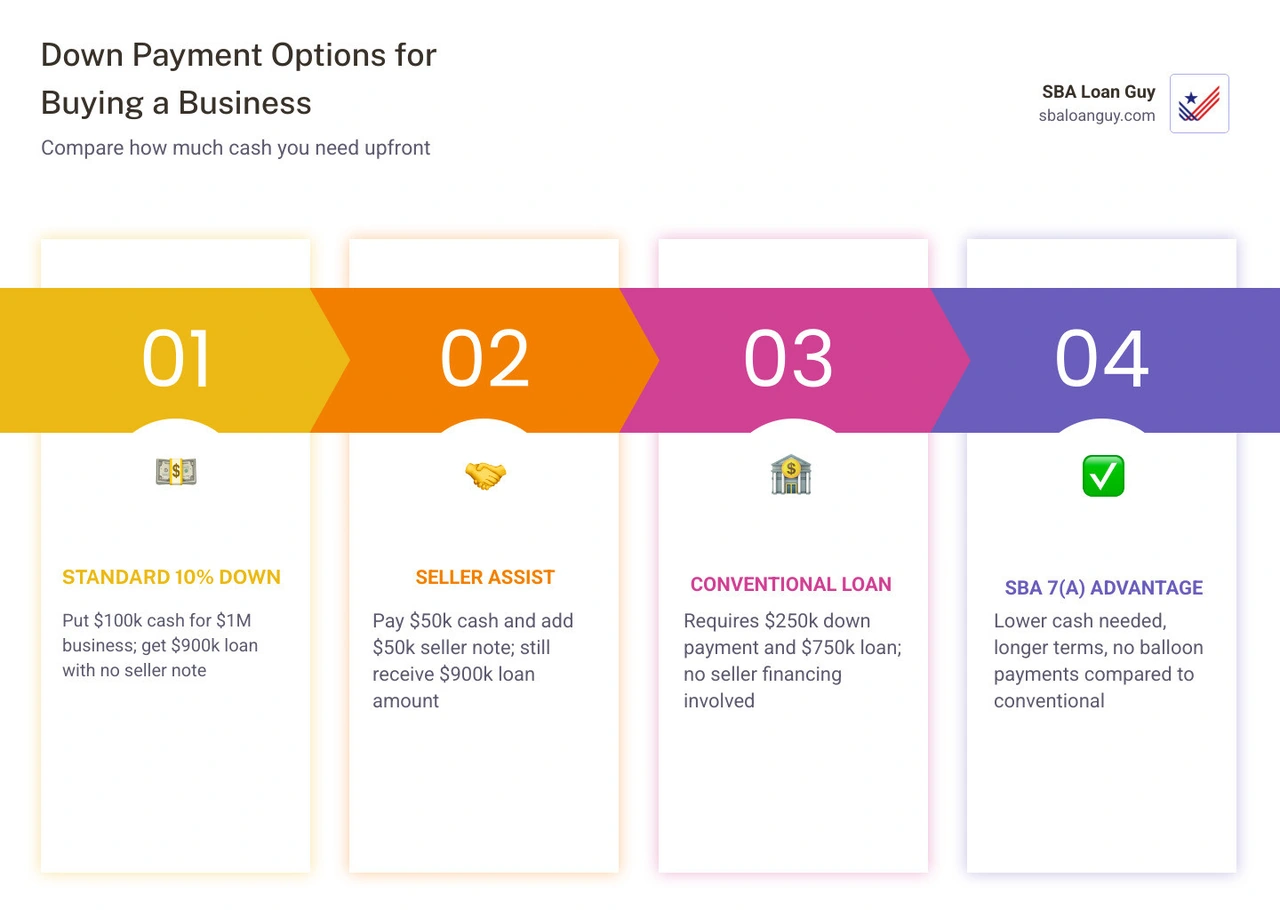
One of the biggest questions we hear is: "How much cash do I actually need?" In the past, some people tried to buy businesses with $0 down, but the rules changed in 2025.
| Scenario | Buyer Cash | Seller Note | Loan Amount |
|---|---|---|---|
| Standard 10% | $100,000 | $0 | $900,000 |
| Seller Assist | $50,000 | $50,000 (Standby) | $900,000 |
| Conventional | $250,000 | $0 | $750,000 |
As of July 2025, the SBA requires the buyer to bring at least 5% of the total project cost in their own cash. But wait—there’s a trick! You can use "Seller Financing" to cover the other 5%.
A seller note is when the person selling the business lets you pay them over time instead of all at once. For this to count toward your down payment, the SBA requires a Full Standby. This means you don't pay the seller any principal or interest for the entire 10-year term of the SBA loan. While that sounds tough for the seller, many agree to it because it helps the deal close and gives them tax benefits. Our SBA Loan Specialists can help you explain this to a seller or their broker in The Woodlands.
Where does the cash come from?
Lenders also like to see "post-closing reserves." This is a "rainy day fund" you have left over after the deal is done. If you spend every last penny on the down payment, the bank might worry you can't handle a surprise repair.
Buying a business isn't an overnight thing. It usually takes 45 to 90 days from the moment you say "I want this" to the moment you get the keys.
Once you and the seller agree on a price, you sign a Letter of Intent (LOI). Then, the real work begins. This is called "due diligence." You will need to check:
We guide you through this SBA loan acquisition process so you don't miss any steps. Whether you are in Chicago or San Francisco, having a clear SBA Loan Process map is essential.
The final stage is "Closing." This is where you sign a mountain of paperwork, the bank sends the money, and the business becomes yours. Most deals include a training period where the old owner stays for a few weeks to show you how to run the machines and introduce you to the customers.
Don't forget to plan for working capital. This is the money you need to pay bills in the first month before the new profits start hitting your bank account.
Every investment has risks. The trick is knowing how to spot them. Two big ones are Customer Concentration (if one customer is 50% of the sales, what happens if they leave?) and Key-Person Risk (if the business only works because the owner is a genius, what happens when they retire?).
You might be considering a franchise. The SBA loves franchises! They even have a Franchise Directory of pre-approved brands.
To protect yourself, we recommend:
As of May 2026, the short answer is no. The SBA requires at least a 10% equity injection for most acquisitions, and at least 5% of that must be your own cash. However, you can use seller financing to cover the other 5%.
With a Preferred Lender (PLP), it usually takes 45 to 90 days. Working with us at SBA Loan Guy can speed this up because we make sure your application is perfect before the bank even sees it.
We recommend a score of 680 or higher. If your score is lower, you might still get approved if the business has amazing cash flow or if you have a lot of experience in that industry.
Buying an existing business is a life-changing move. It’s the path to freedom, building wealth, and being your own boss. But you don't have to walk that path alone.
At SBA Loan Guy, we are more than just a paperwork service. Whether you are in The Woodlands, TX, or any of our locations like New York, Chicago, or Florida, we provide the personalized roadmap you need. We match you with the right lenders, help you structure your down payment, and stay by your side until the keys are in your hand.
Ready to see if you qualify? Start your SBA 7(a) loan journey today and let's get your deal funded.

A distilled, 0–100 snapshot of how fundable you are based on credit, cash flow, equity, and documentation. Plus the top fixes to raise your score fast.
A curated shortlist of lenders that fit your profile and use of funds, with why each is a fit and exactly what they’ll want to see.
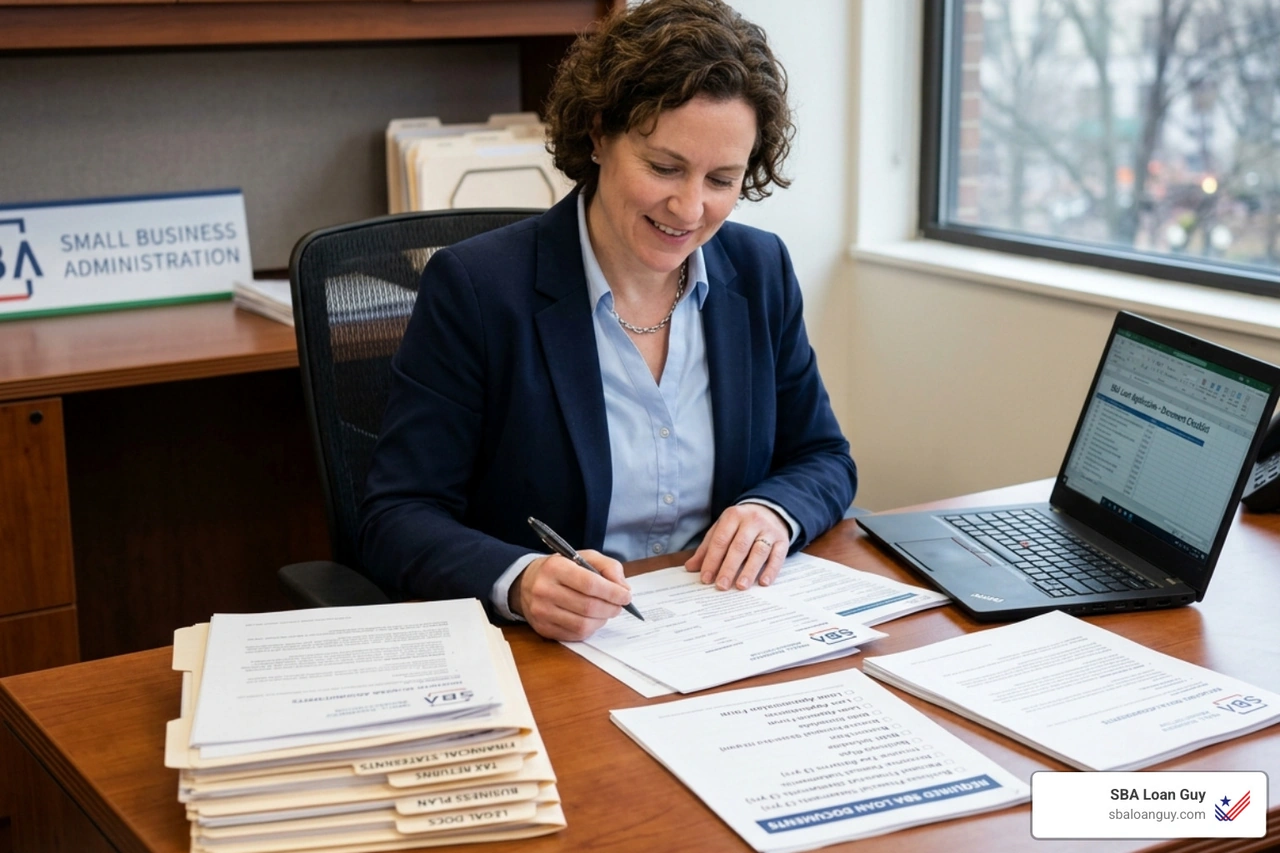
A tailored, step-by-step list of required docs and forms (formats, who provides them, and common pitfalls to avoid).
A realistic week-by-week path from pre-qual to closing, with milestones, dependencies, and an estimated target funding date.
Hands-on prep and documentation for SBA disaster programs (EIDL and others), including submissions, follow-ups, and guidance through appeals or requests for more info.
We prepare your application, match you with the
right lenders, and guide you until funding.