Get your sba 7a loan application approved with this step-by-step SBA 7(a) guide covering eligibility, documents, and closing.
June 5, 2026
The SBA 7(a) loan application is the gateway to one of the most powerful small business funding programs in the United States — and understanding how it works can save you weeks of confusion and costly mistakes.
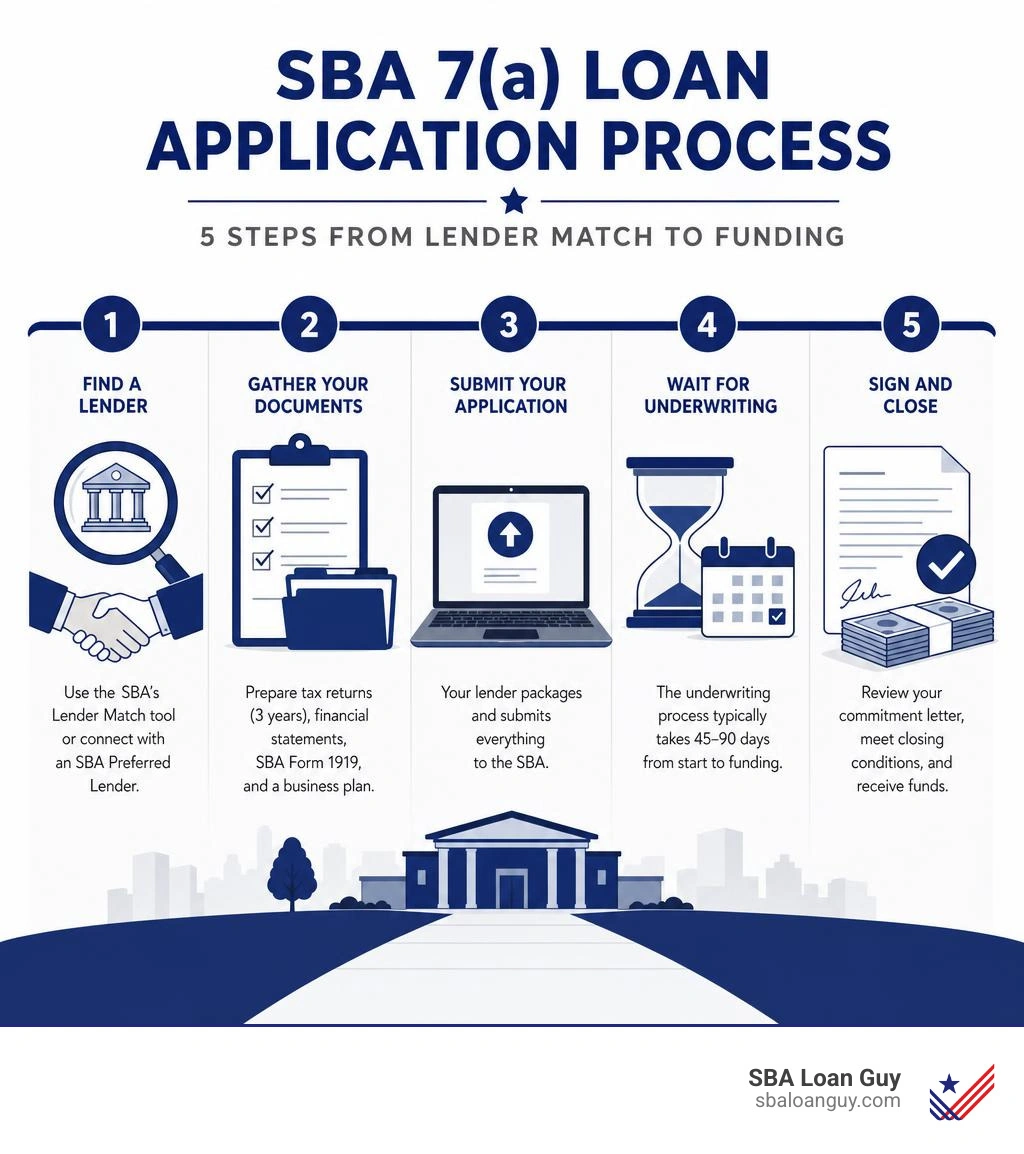
Here's a quick overview of the SBA 7(a) loan application process:
The SBA doesn't lend money directly. Instead, it guarantees a portion of loans made by approved private lenders — which makes lenders more willing to say yes, even when a traditional bank might not.
The maximum loan amount is $5 million, and funds can go toward real estate, equipment, working capital, debt refinancing, or even buying an existing business.
This guide walks you through every step — from eligibility to closing — so you know exactly what to expect.
I'm Cesar DonDiego, a finance and accounting professional with hands-on experience helping business owners navigate complex funding processes, including the SBA 7(a) loan application. My background in financial analysis, cash flow planning, and working directly with small business owners gives me a clear view of what it takes to get approved.
Quick look at sba 7a loan application:
Think of the SBA 7(a) loan program as having a wealthy, supportive co-signer when you apply for a loan. We like to explain it simply: the U.S. Small Business Administration (SBA) acts as your guarantor. They do not hand you a check directly. Instead, they tell your bank, "If this business owner cannot pay you back, we will cover up to 75% or 85% of the loss."
Because the government takes on most of the risk, banks in our service areas—from Houston and The Woodlands, TX, all the way to California, Chicago, Indianapolis, Orlando, and New York City—are much happier to approve your sba 7a loan application.
This program is incredibly flexible. You can use the funds for almost anything that helps your business grow. The maximum loan amount is a generous $5 million.
Here is what you can do with the money:
For a deeper dive into how these funds can transform your company, check out our SBA 7(a) Loans Complete Guide or read the official 7(a) loans overview.
Before you start filling out your sba 7a loan application, you need to make sure your business fits the SBA's basic checklist. The rules are designed to help real, independent small businesses succeed.
To qualify, your business must meet these core requirements:
If you are unsure whether your business meets these standards, you can read our complete breakdown of SBA Loan Requirements or review the government's official SBA eligibility rules.

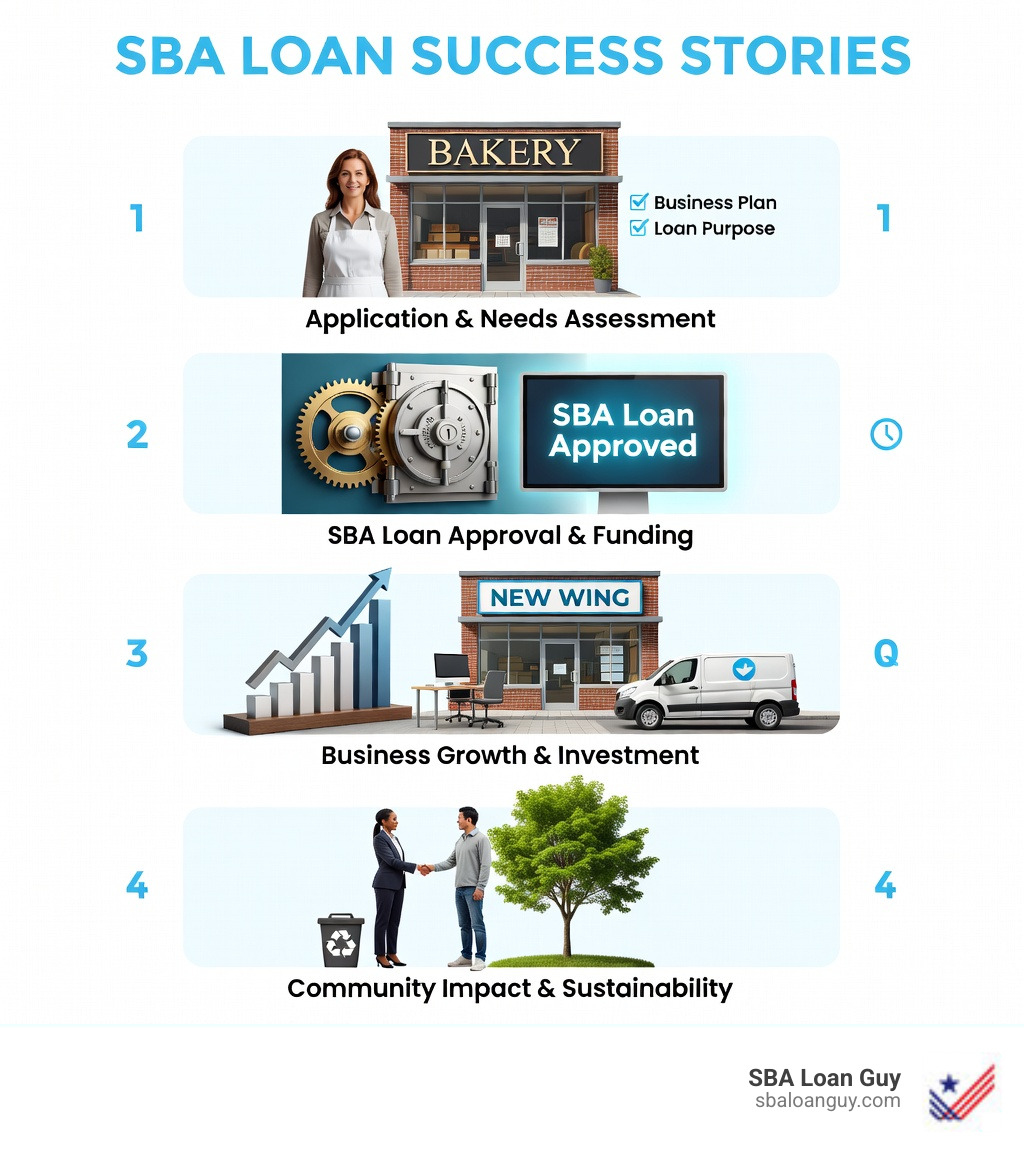
Applying for an SBA loan can feel like climbing a mountain of paperwork, but it does not have to be scary. When we break it down into small, simple steps, the path to funding becomes incredibly clear. Let's look at the four main stages of the SBA Loan Process.
Your first step is finding a bank or credit union that participates in the SBA program. There are over 800 active lenders across the country, but they do not all treat applications the same way. Some prefer real estate deals, while others love funding retail shops or service businesses.
We highly recommend working with an SBA Preferred Lender (PLP). The SBA gives these trusted lenders "delegated authority." This means the bank can make the final credit decision themselves without sending your entire package to the SBA for a slow, manual review. This simple choice can shave weeks off your wait time!
Before you start talking to banks, it is wise to get a clear picture of where you stand. You can use our SBA Loan Pre-Qualification tool to quickly see if you are ready.
Once you have a lender, it is time to gather your paperwork. Think of this as building a storybook that shows the bank exactly how healthy your business is.
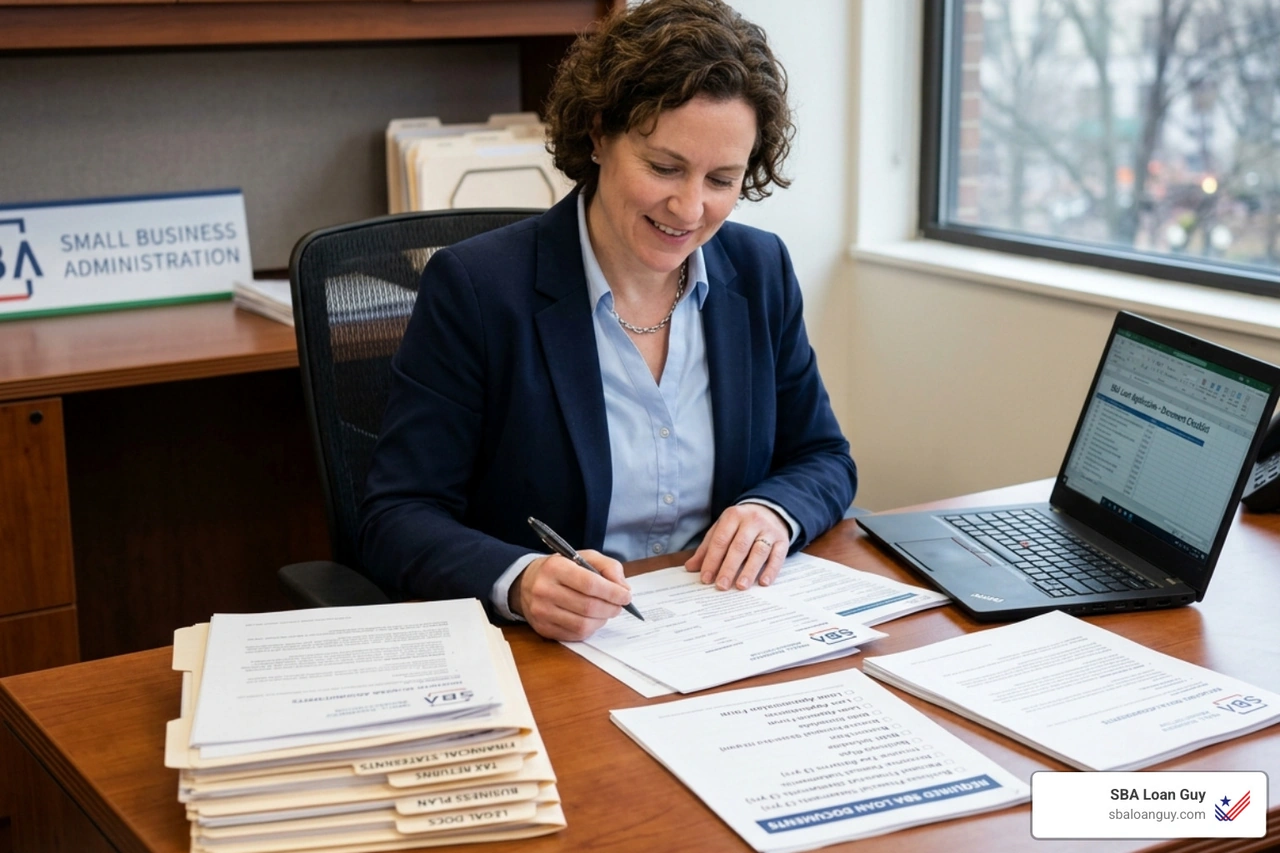
Here are the key documents you will need to collect:
For a complete checklist of everything you need to print out or scan, read our guide on SBA Loan Required Documents.
After you submit your complete package, your lender's underwriting team goes to work. They will analyze your financial health to make sure your business can easily support the new debt.
Underwriters look closely at your Debt Service Coverage Ratio (DSCR). Ideally, they want to see a ratio of 1.25x or higher. This means that for every $1.00 of loan payment you owe, your business makes at least $1.25 in net operating income.
This stage is a conversation. The underwriter might ask you questions about your business model, your industry experience, or your financial projections. Having a clean, professional SBA Loan Business Plan ready will help you answer these questions with absolute confidence. The entire underwriting process typically takes between 45 to 90 days from the day you submit your documents to the day the bank approves the deal.
Congratulations! Once the underwriter approves your loan, you will receive a commitment letter (or Letter of Intent). This is the bank's official promise to fund your business, as long as you meet a few final closing conditions.
During the closing phase, you will work through a final checklist:
Once these final boxes are checked, the bank will wire the funds directly to your business account!

The SBA 7(a) program is not a "one-size-fits-all" loan. It actually features several different variations, each designed to solve a specific business problem. Choosing the right one can make your application process much smoother.
Here is a quick comparison table to help you understand your options:
If you run a seasonal business or need a flexible line of credit, the CAPLines program is an excellent choice. If you are a manufacturer or exporter, programs like the Export Express offer up to a 90% guarantee, making lenders highly enthusiastic about approving your application.
Let's talk about the actual cost of the loan. SBA loans are famous for being highly affordable because the government puts strict limits on what banks can charge you.
To see what current interest rates look like today, check out our guide on Current SBA 7(a) Loan Rates.
On average, the entire process takes 45 to 90 days from the time you submit your paperwork to the day the cash arrives in your bank account. If you work with an SBA Preferred Lender (PLP), the process is much faster because they do not have to wait for the government to review your file. If you need money in a hurry, the SBA Express loan can get you a decision in as little as 36 hours.
As of early 2026, the SBA officially eliminated the strict FICO SBSS (Small Business Scoring Service) credit score requirement for loans of $350,000 or less. This is fantastic news for small business owners! Instead of using a rigid, automated scoring system, lenders can now use their own standard credit checks, making it much easier for great businesses with minor credit hiccups to get approved.
The most common reasons for denial include:
Securing an SBA 7(a) loan can completely transform your business, but navigating the sba 7a loan application process requires patience, organization, and the right partner.
At SBA Loan Guy, based in The Woodlands, TX, we make this complex process incredibly simple. We serve passionate business owners in Houston, California, Orlando, Chicago, Indianapolis, and New York City. We offer a personalized pre-qualification snapshot, match you with the perfect preferred lenders for your specific industry, and provide step-by-step guidance to ensure your loan closes smoothly.
Not sure where to start? An SBA loan consultant can review your file before you submit, match you with the right lender, and keep your application moving from pre-qual to close
Ready to take the first step toward funding your business dreams? See If You Pre-Qualify with us today!

A distilled, 0–100 snapshot of how fundable you are based on credit, cash flow, equity, and documentation. Plus the top fixes to raise your score fast.
A curated shortlist of lenders that fit your profile and use of funds, with why each is a fit and exactly what they’ll want to see.
A tailored, step-by-step list of required docs and forms (formats, who provides them, and common pitfalls to avoid).
A realistic week-by-week path from pre-qual to closing, with milestones, dependencies, and an estimated target funding date.
Hands-on prep and documentation for SBA disaster programs (EIDL and others), including submissions, follow-ups, and guidance through appeals or requests for more info.
We prepare your application, match you with the
right lenders, and guide you until funding.