Get SBA disaster loan application help filling out forms quickly with step-by-step guidance and avoid common mistakes.
July 3, 2026
If you need SBA disaster loan application help filling out the right forms, here is a quick overview of how it works:
How to apply for an SBA disaster loan — quick steps:
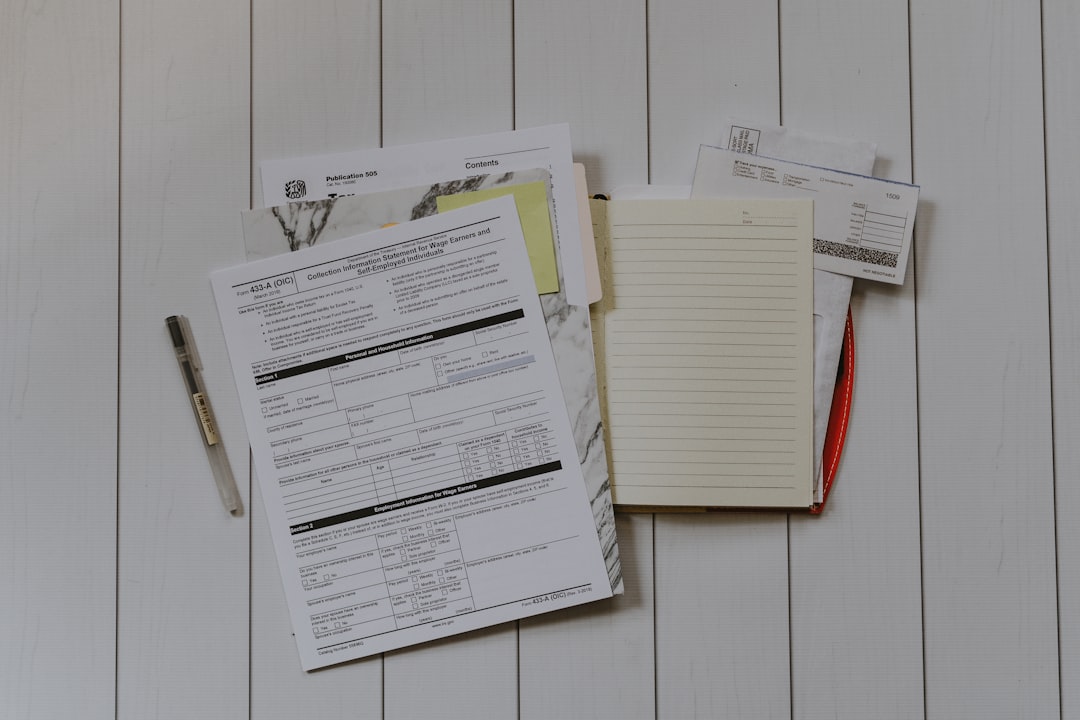
A disaster is already stressful enough. Then you open the SBA loan application — and suddenly you're staring at Form 5, Form 5C, IRS Form 4506-T, SBA Form 413, and a pile of financial documents you may not have touched in months.
You're not alone. Many business owners, homeowners, and renters miss out on low-interest disaster loans simply because the paperwork feels overwhelming. These loans can go up to $2 million for businesses and $500,000 for homeowners — with interest rates as low as 2.875% — so getting it right matters.
The good news? The process is manageable once you know exactly what to do and in what order.
I'm Cesar DonDiego, a finance and accounting professional who has helped business owners navigate complex financial processes — including SBA disaster loan application help filling out the required forms accurately and on time. In the sections below, I'll walk you through every step so you can focus on rebuilding, not paperwork.

Explore more about sba disaster loan application help filling out:
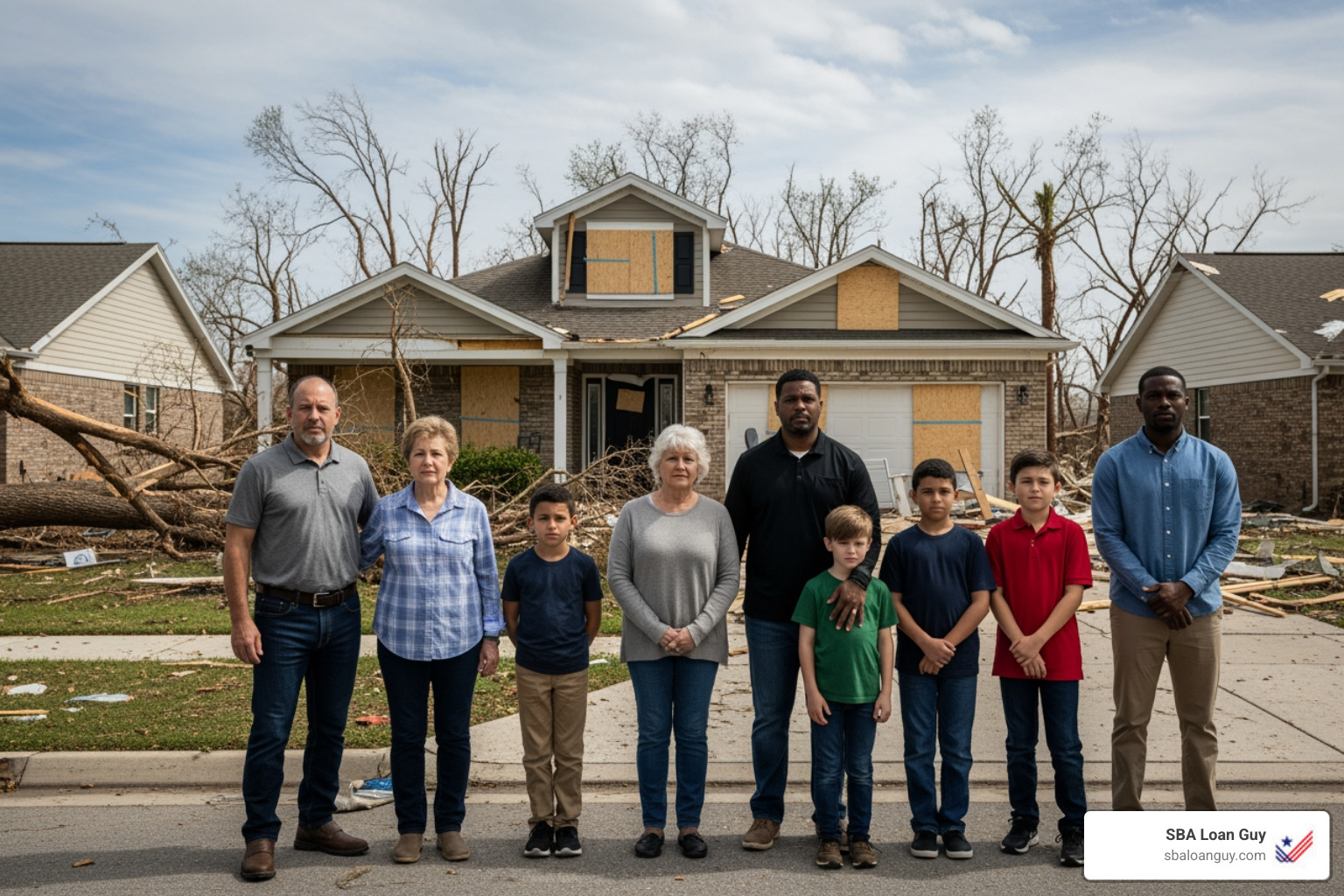
When a bad storm, flood, or fire hits your neighborhood, the government can declare it a disaster area. When this happens, the Small Business Administration (SBA) offers special low-interest loans to help people rebuild. These are not just for businesses. They are also for regular people who own homes or rent apartments.
Let us look at the main types of help you can get:
To learn more about these options, you can read our SBA Disaster Loans Complete Guide.
The terms on these loans are very friendly because the government wants you to recover. For example, interest rates can be as low as 2.875% for homeowners and renters, 3.625% for private nonprofits, and 4% for businesses. Even better, you can get up to 30 years to pay the loan back.
Plus, interest does not start to build up, and you do not have to make any payments, for the first 12 months after you get your first check.
If you need to check your eligibility or want a deeper look at the rules, the Step-by-Step Guide to Applying for an SBA Disaster Relief Loan | CO- by US Chamber of Commerce is a great place to start.
For security, the SBA might ask for collateral. This means you pledge something of value, like real estate, to secure the loan. Usually, loans under $25,000 do not require any collateral. If you do not have enough collateral for a larger loan, the SBA will not say "no" just for that reason. They will ask you to pledge what you do have.
That business loans will require a personal guarantee, which means you promise to pay the loan back yourself if the business cannot.
Filling out government forms can feel like trying to read a book in a different language. If you make a small mistake, the SBA might put your application at the bottom of the pile, or even deny it.
One of the biggest reasons to get sba disaster loan application help filling out your forms is to avoid simple errors that cause long delays. You must make sure all the names, addresses, and social security numbers you write down match your official tax records exactly.
You also have to keep an eye on strict filing deadlines. For example, in past declarations like the spring storms in Texas or the late storms in California, the SBA set specific deadlines for physical damage and economic injury. If you miss these dates, you might lose your chance to get help.
Another big mistake is waiting for your insurance company to pay you before you apply. The SBA actually tells you to apply right away. If you wait for your insurance settlement, you might miss the application deadline.
According to the official advice in Don’t Wait for Insurance Settlement to Apply for SBA Low Interest Loans: Physical Damage Deadline to Apply is Approaching | U.S. Small Business Administration , the SBA can give you a loan for your total loss before your insurance pays out. Once your insurance company sends you a check, you simply use that money to pay down or pay off your SBA loan.
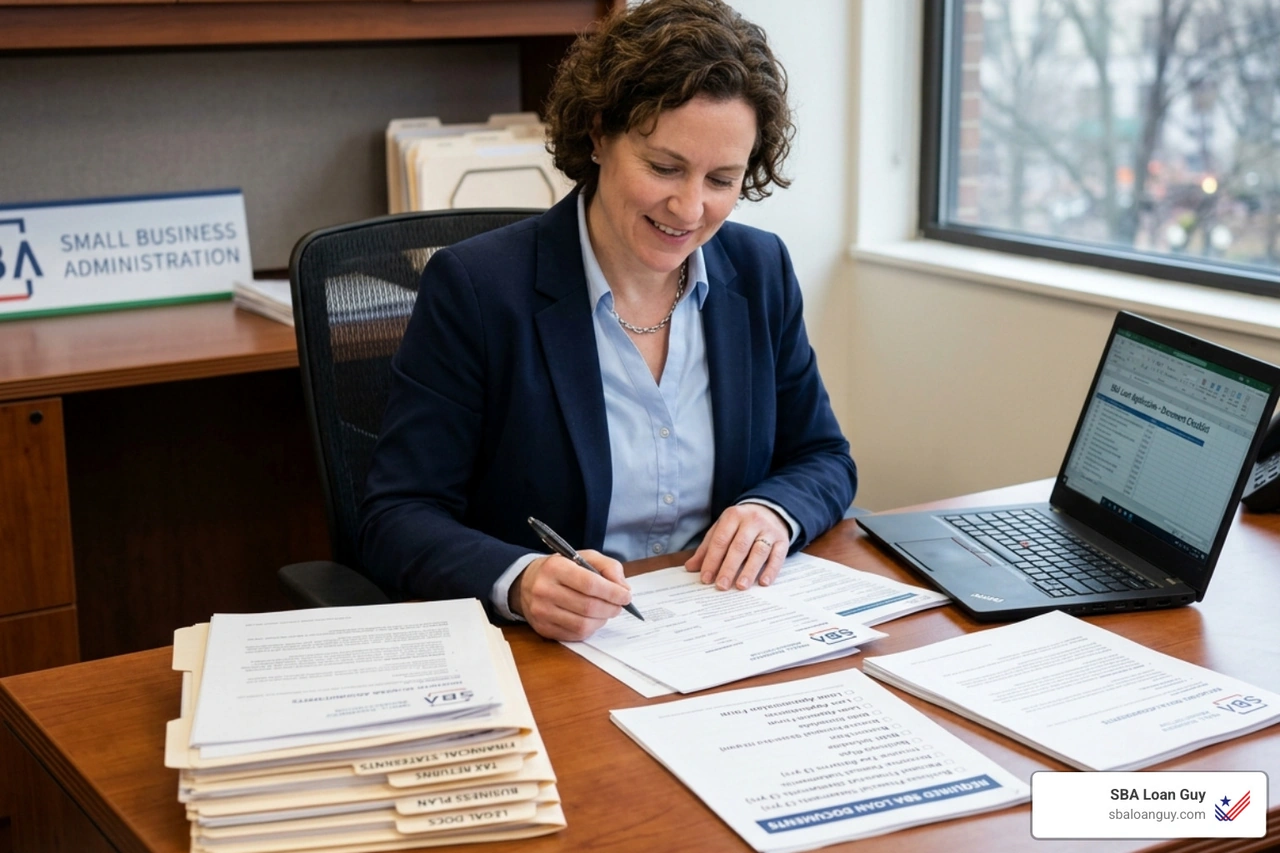
Applying online is the fastest way to get your money. The SBA uses an online portal called the MySBA Loan Portal. Before you log in, you should gather all your information so you do not have to stop and search for papers while filling out the forms.
Here is a simple checklist of what you will need:
If you are ready to start, you can visit our page on the SBA Disaster Loan Application to get guided help. You can also view the official U. S. Small Business Administration DISASTER BUSINESS LOAN APPLICATION to see what the paper version looks like.

The form you fill out depends on how your business is set up.
If your business is a corporation, partnership, LLC, or private nonprofit, you will use SBA Form 5. If you are a sole proprietor (which means you own the business by yourself and report business taxes on your personal tax return), you will use SBA Form 5C.
Here is how to fill them out without getting a headache:
If you need more help gathering these papers, check out our guide on the Documents Needed for an SBA Loan.
Once you click "Submit," your application goes to the SBA processing center. Here is what happens next:
If your application is approved, you will sign the closing documents electronically. Your first check (disbursement) is usually sent to your bank within 5 business days of signing.
What if your application is denied? Do not panic. If the SBA denies your request, they will send you a letter explaining why. You have six months to ask them to look at your application again. This is called a reconsideration request. You will need to write a letter and send new evidence that fixes the issues they mentioned in the denial letter.
To avoid getting denied in the first place, make sure you do not make common mistakes like leaving signature lines blank, guessing your financial numbers instead of using real tax records, or failing to list all your business debts.
For a complete walkthrough of the post-submission process, you can read our Apply SBA Disaster Loan Complete Guide.
The SBA tries to make a decision within 2 to 3 weeks after you submit your application. However, if your forms are missing signatures or if you did not upload your tax documents correctly, it can take much longer. Keeping your documents organized is the best way to speed things up.
No! You should apply for your SBA disaster loan right away. Do not wait for your insurance company to finish their review. If you wait, you might miss the SBA's strict application deadlines. If you get approved, the SBA can give you the money to start rebuilding, and you can repay the loan later with your insurance check.
If your application is denied, you will receive a letter explaining the reasons. You have up to six months from the date of the denial letter to request a reconsideration. You must submit your request in writing and provide documents that address the SBA's concerns, such as updated financial statements or proof of corrected credit issues.
Recovering from a disaster is hard, but getting the money to rebuild should not be. By taking it step by step, gathering your papers early, and filling out the forms carefully, you can secure the low-interest funding you need.
At SBA Loan Guy, we make this process easy. We are based in The Woodlands, TX, and we help clients in Houston, California, Florida, Chicago, and New York City. We provide a personalized pre-qualification snapshot, match you with the right lenders, and give you step-by-step guidance to secure SBA 7(a), Express, and Disaster Loans.
Let us handle the stressful paperwork so you can focus on getting back on your feet. Contact us today to get started on your SBA Disaster Loans journey.

A distilled, 0–100 snapshot of how fundable you are based on credit, cash flow, equity, and documentation. Plus the top fixes to raise your score fast.
A curated shortlist of lenders that fit your profile and use of funds, with why each is a fit and exactly what they’ll want to see.
A tailored, step-by-step list of required docs and forms (formats, who provides them, and common pitfalls to avoid).
A realistic week-by-week path from pre-qual to closing, with milestones, dependencies, and an estimated target funding date.
Hands-on prep and documentation for SBA disaster programs (EIDL and others), including submissions, follow-ups, and guidance through appeals or requests for more info.
We prepare your application, match you with the
right lenders, and guide you until funding.