A grouped checklist of the documents lenders commonly request and why mismatched tax returns and interim financials slow review.
October 30, 2026
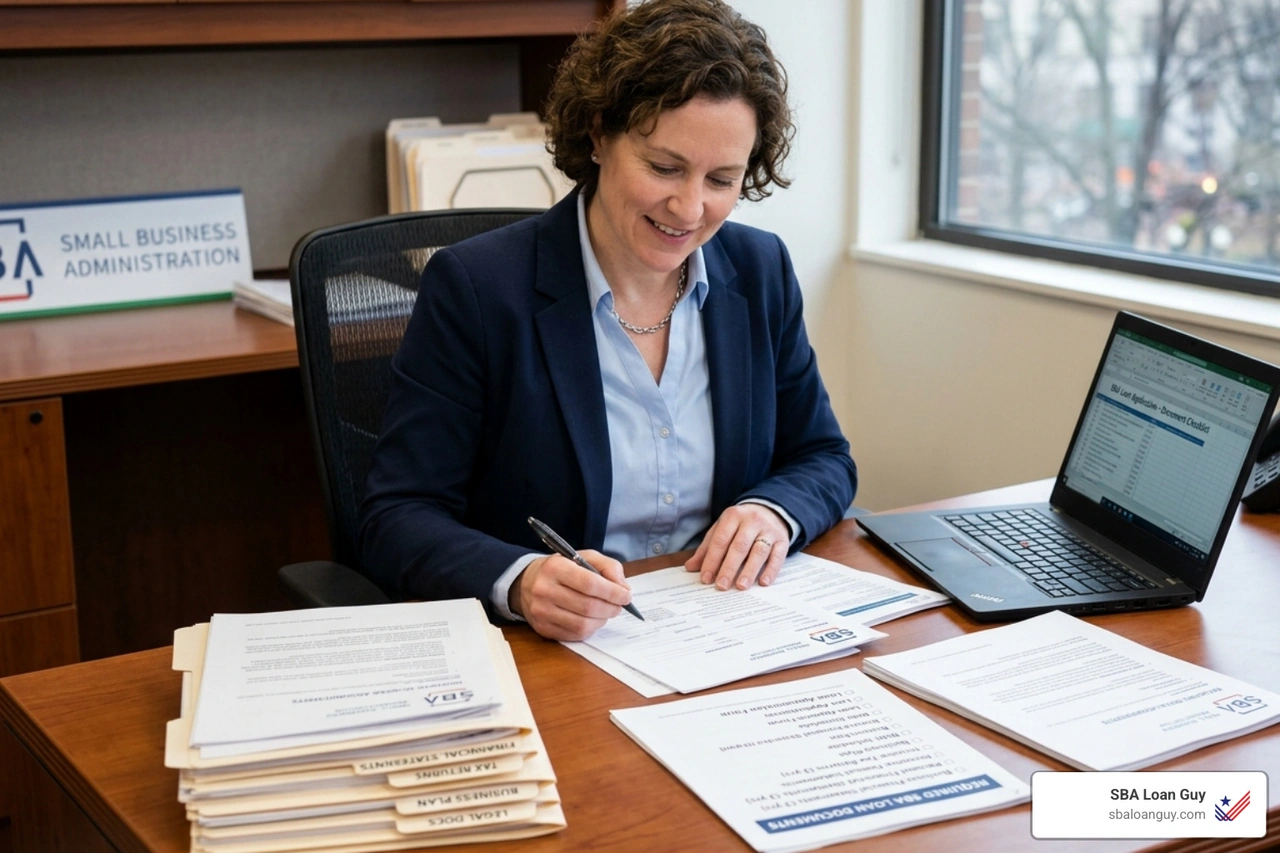
Most delays in an SBA loan review start with paperwork: a missing schedule, a statement that does not match a tax return, or a form that was never signed. A good checklist will not decide the outcome, but it can help you hand a lender a complete, consistent file. This guide lists the documents lenders commonly ask for, grouped by type, and explains how underwriters reconcile tax returns with interim financials.
Every lender has its own checklist, and requirements change. Treat this as a starting list, then ask your lender for its current one before you start gathering.

The exact list depends on the lender, the loan, and whether you are buying a business, expanding, or refinancing. Most requests draw from four groups.
Business documents
Personal documents
Acquisition documents (if buying a business)
Forms
Which forms apply to your request is set by the program and the lender, so confirm the current list in SBA SOP 50 10 (check the current revision) and with your lender. Our SBA 7(a) loan overview and the SBA 7(a) program page give more background.
Tax returns show what was reported to the IRS for completed years. Interim financials, usually a year-to-date profit and loss statement and balance sheet, show what has happened since. Underwriters read them together and look for whether the story is consistent.
For example, last year's tax return shows revenue of $812,000, while the business's own profit and loss statement for the same year shows $845,000. The difference is $33,000, or about 4 percent. There may be a simple reason, such as accrual accounting or timing, but the underwriter will ask for a short written explanation and support. The same applies to growth: if year-to-date revenue is $430,000 against $395,000 for the same months last year, a gain of $35,000, or about 9 percent, the lender may ask what drove it.

Every unexplained difference becomes a question, and every question needs an answer and often more documents. Until the numbers reconcile, the underwriter cannot finish the cash flow analysis, and the file can sit while you respond. No one can promise a timeline, but a clean, consistent package leaves fewer open items.
The most common sources of mismatches are statements prepared from different data, interim periods that do not tie to the prior balance sheet, add-backs that the books do not support, and personal and business expenses mixed together. Fixing these before you submit is almost always easier than fixing them during review.
1. Get the lender's current list. Ask which documents, years, and forms it wants for your request.
2. Collect the basics first. Tax returns, interim statements, bank statements, and the debt schedule take the longest to pull together.
3. Tie the numbers. Compare revenue and balances across returns, statements, and bank deposits, and write a short note on any difference.
4. Complete and sign the forms. Read each form fully and make sure signatures, dates, and ownership percentages are right.
5. Name and organize the files. Use clear names and consistent periods so the lender can find each item.
Borrowers who want a sense of the process can read how SBA Loan Guy works before approaching lenders.
How many years of tax returns will I need?
It depends on the lender and the loan. Ask for the current requirement instead of assuming a number, and have complete copies with all schedules ready.
Why does a lender ask for Form 4506-C?
It allows the lender to request tax transcripts from the IRS and compare them with the returns you provide. Lenders commonly use transcripts to confirm what was filed.
What if my interim statements are not professionally prepared?
Many small businesses prepare their own. Lenders may accept them, but they will test them against tax returns and bank statements, so accuracy and consistency matter more than polish.
What should I do if I find a mismatch?
Find the cause, document it, and tell the lender before it asks. A short, supported explanation is usually better than silence.
A documentation checklist works best when it is grouped, current, and consistent. Gather business, personal, acquisition, and form documents in an organized way, tie your tax returns to your interim financials, and explain anything that does not match. That can reduce avoidable questions, but approval depends on the lender and SBA requirements.
Want help organizing your documents before you apply? Contact SBA Loan Guy to walk through what to gather for your request and where mismatches may show up.
This article is general information only. It is not legal, tax, accounting or financial advice. SBA Loan Guy is not a lender and is not affiliated with or endorsed by the U.S. Small Business Administration. Program rules, eligibility and requirements change, so confirm current details with a licensed lender and SBA.gov before you make a decision.

A distilled, 0–100 snapshot of how fundable you are based on credit, cash flow, equity, and documentation. Plus the top fixes to raise your score fast.
A curated shortlist of lenders that fit your profile and use of funds, with why each is a fit and exactly what they’ll want to see.
A tailored, step-by-step list of required docs and forms (formats, who provides them, and common pitfalls to avoid).
A realistic week-by-week path from pre-qual to closing, with milestones, dependencies, and an estimated target funding date.
Hands-on prep and documentation for SBA disaster programs (EIDL and others), including submissions, follow-ups, and guidance through appeals or requests for more info.
We prepare your application, match you with the
right lenders, and guide you until funding.