Learn how to secure business acquisition funding in 2026 with SBA 7(a) loans, seller financing, and capital stacks that close deals fast.
June 15, 2026
Business acquisition funding is the money you borrow — or structure from multiple sources — to buy an existing business instead of starting one from scratch.
Here are the most common ways to fund a business purchase in 2026:
| Funding Type | Best For | Typical Down Payment | Max Loan Amount |
|---|---|---|---|
| SBA 7(a) Loan | Deals under $5M | ~10% | $5 million |
| Conventional Bank Loan | Deals over $5M, fast close | 20-30% | Varies |
| Seller Financing | Bridging funding gaps | Flexible | 10-30% of price |
| Mezzanine Debt | Middle-market deals | N/A | 1-2x EBITDA |
| Equity / Search Fund | Larger or complex deals | 25-55% | Varies |
| ROBS (Retirement Funds) | Debt-free option | N/A | Your savings |
Buying an existing business is one of the smartest moves a small business owner can make. You skip the startup phase entirely. You get real cash flow, real customers, and a team that already works — on day one.
And the market is moving fast. Global merger and acquisition activity rose 10% in the first nine months of 2025 compared to the year before. More sellers are listing. More buyers are competing. Having the right funding structure in place is no longer optional — it's the difference between closing the deal and losing it.
The challenge? Most buyers go to one bank, get one answer, and either accept bad terms or walk away. The truth is, most acquisitions are funded through a mix of sources — a capital stack — and knowing how to build that stack is what separates buyers who close from buyers who don't.
I'm Cesar DonDiego, a finance and accounting professional with hands-on experience helping business owners navigate complex financial decisions, including business acquisition funding strategies that are both efficient and sustainable. In this guide, I'll walk you through every major funding option, how to qualify, and how to structure a deal that actually closes.
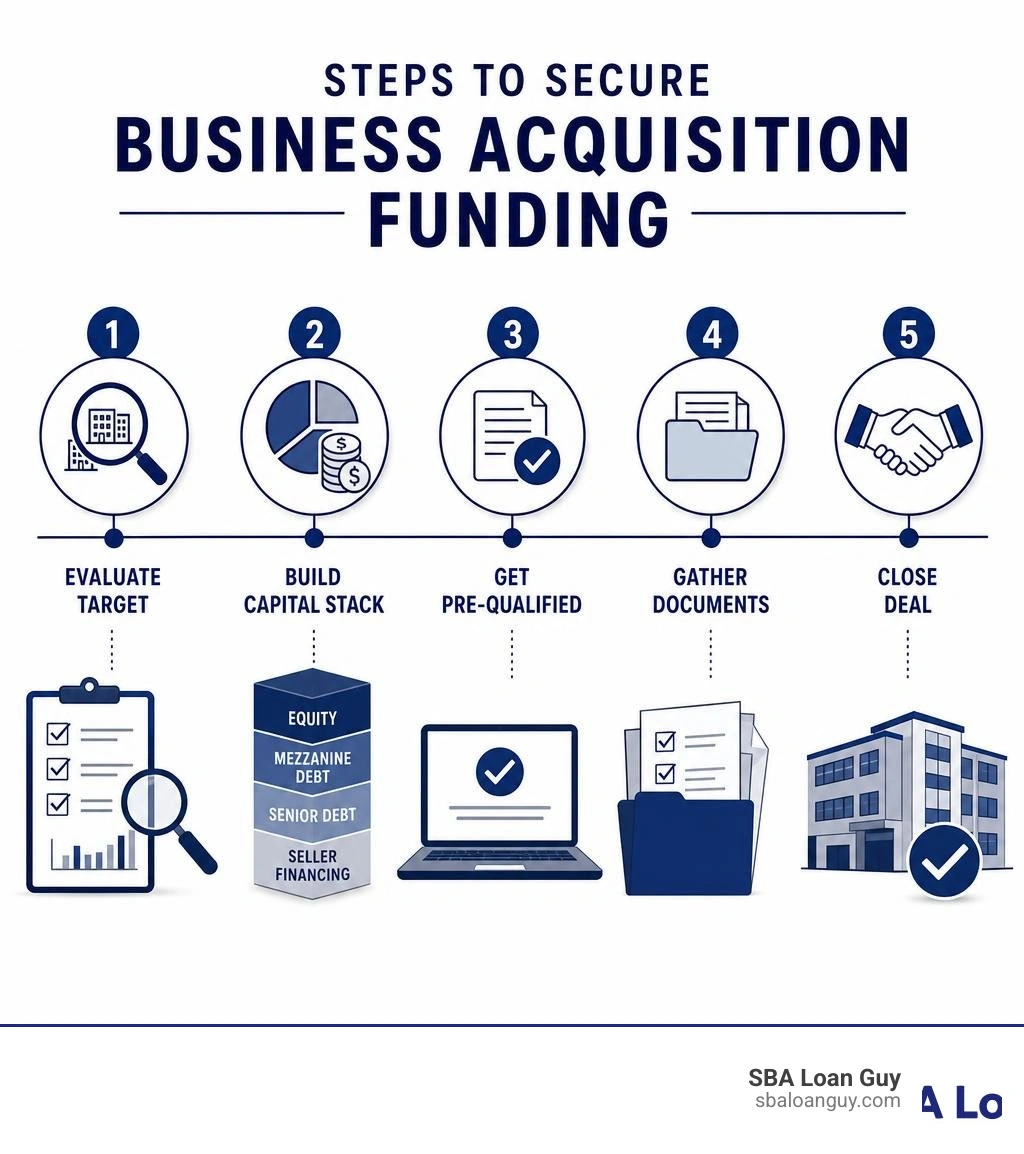
Key Business acquisition funding vocabulary:
At its simplest, a business acquisition loan is a big bucket of money that a lender gives you so you can buy a company that is already running.
Think of it like buying a house. When you buy a house, you do not build it from the ground up. You buy a finished home that already has walls, a roof, and plumbing. A business acquisition loan is the mortgage for a business. It allows you to take over a company that already has products, customers, and employees.
To learn more about how this works, check out our guide on how to secure a Buy Existing Business Loan.
When you use this type of funding, the lender looks closely at the business you want to buy. They want to make sure the business makes enough money to pay back the loan. This is very different from starting a brand-new business, where there is no history of sales. Lenders love history because it proves the business actually works. To understand the wider landscape of how these structures work, you can read more about Acquisition financing: how it works and funding options .
It is easy to get confused by all the different business loans out there. Let us break down how acquisition loans are different from other common types of financing:
In short, acquisition financing is a complete package. It is designed to hand you the keys to an entire, fully functioning business.
In 2026, the way we buy businesses is smarter and more creative than ever. Buyers are no longer relying on just one giant bank loan. Instead, they are mixing different funding types together like ingredients in a recipe. To understand the big picture of this modern landscape, take a look at How to Finance a Small Business Acquisition (2026) .
If you want to see how these pieces fit together, read our detailed breakdown on Financing a Small Business Acquisition.
Let’s look at the best ways to fund your purchase this year.
For most small to medium business purchases, the SBA 7(a) loan is the gold standard.
The "SBA" is the U.S. Small Business Administration. They do not actually lend you the money. Instead, they act like a rich, helpful friend who promises the bank: "If this buyer cannot pay you back, we will pay back up to 75% to 85% of the loan."
This promise is called a government guarantee. Because the bank knows they will not lose all their money, they are much happier to say "yes" to your loan request.
We specialize in helping buyers prepare these packages. Learn more about how we can guide you through SBA Loans for Business Acquisition. If you want to see how top-tier lenders structure these deals, you can read about Business Acquisition Loans | Buying a Business with Live Oak Bank .
If you are buying a very large business, or if you need to close the deal incredibly fast, a conventional bank loan might be the path you choose.
Conventional loans do not have a government guarantee. This means the bank is taking on 100% of the risk. Because of this, they are much stricter. They will want to see that you have a perfect credit score, years of experience running a similar business, and a large down payment (usually 20% to 30%).
However, if you qualify, conventional loans can sometimes close faster than SBA loans because there is less government paperwork to fill out. For buyers in our home state, you can explore options like a Houston Small Business Loan | TBCU - Texas Bay Credit Union to see how local institutions handle conventional business financing.
Imagine buying a business where the person selling it agrees to let you pay them back over time. That is seller financing.
Instead of demanding all the cash on day one, the seller accepts a "seller note." For example, if the business costs $1 million, you might pay $800,000 using a bank loan and your own cash, and pay the remaining $200,000 to the seller over the next five years with interest.
This is an incredibly powerful tool because:
For a deeper dive into structuring these deals, read How to Finance a Business Acquisition: SBA Loans, Seller Financing & More (2026) | Acquisition Stars or check out our guide on how to Buy a Business.
What if you do not want to take on a mountain of bank debt? Or what if the deal is too big for a standard bank loan? This is where alternative funding comes in.
For more creative ideas on structuring these alternative options, read our guide on Small Business Acquisition Financing.
Choosing between an SBA 7(a) loan and a conventional bank loan is one of the biggest decisions you will make. Let us compare them side-by-side:
| Feature | SBA 7(a) Loan | Conventional Bank Loan |
|---|---|---|
| Max Loan Amount | $5,000,000 | No official limit (often $10M+) |
| Typical Down Payment | 10% to 15% | 20% to 30% |
| Repayment Term | Up to 10 years (25 years with real estate) | 5 to 7 years |
| Interest Rates | Variable (often Prime + 2.25% to 3.0%) | Fixed or Variable (highly dependent on credit) |
| Collateral Required | Flexible (SBA will not deny solely for lack of collateral) | Strict (must fully cover the loan value) |
| Personal Guarantee | Required for all 20%+ owners | Required in almost all cases |
| Closing Time | 45 to 90 days | 30 to 60 days |
To understand the exact steps required to get through the SBA underwriting process, read about the SBA Loan Acquisition Process.
The SBA has clear rules about who can qualify for their 7(a) program. To get approved, you and the business you want to buy must meet these key underwriting criteria:
Patience is a virtue, especially when dealing with business acquisitions.
An SBA 7(a) loan typically takes 45 to 90 days from the moment you submit a completed application to the day the money is wired. Here is what that timeline looks like:
Conventional bank loans can sometimes shave 15 to 30 days off this process because they do not require government approval steps. For an in-depth look at how regional banks handle these timelines, check out Business Acquisition and Loans: A Guide from Seacoast Bank .
A capital stack is just a fancy way of describing how you layer different types of money to buy a business. Think of it like building a tower with Lego blocks. You do not use just one giant block; you stack different blocks on top of each other until you reach the top.
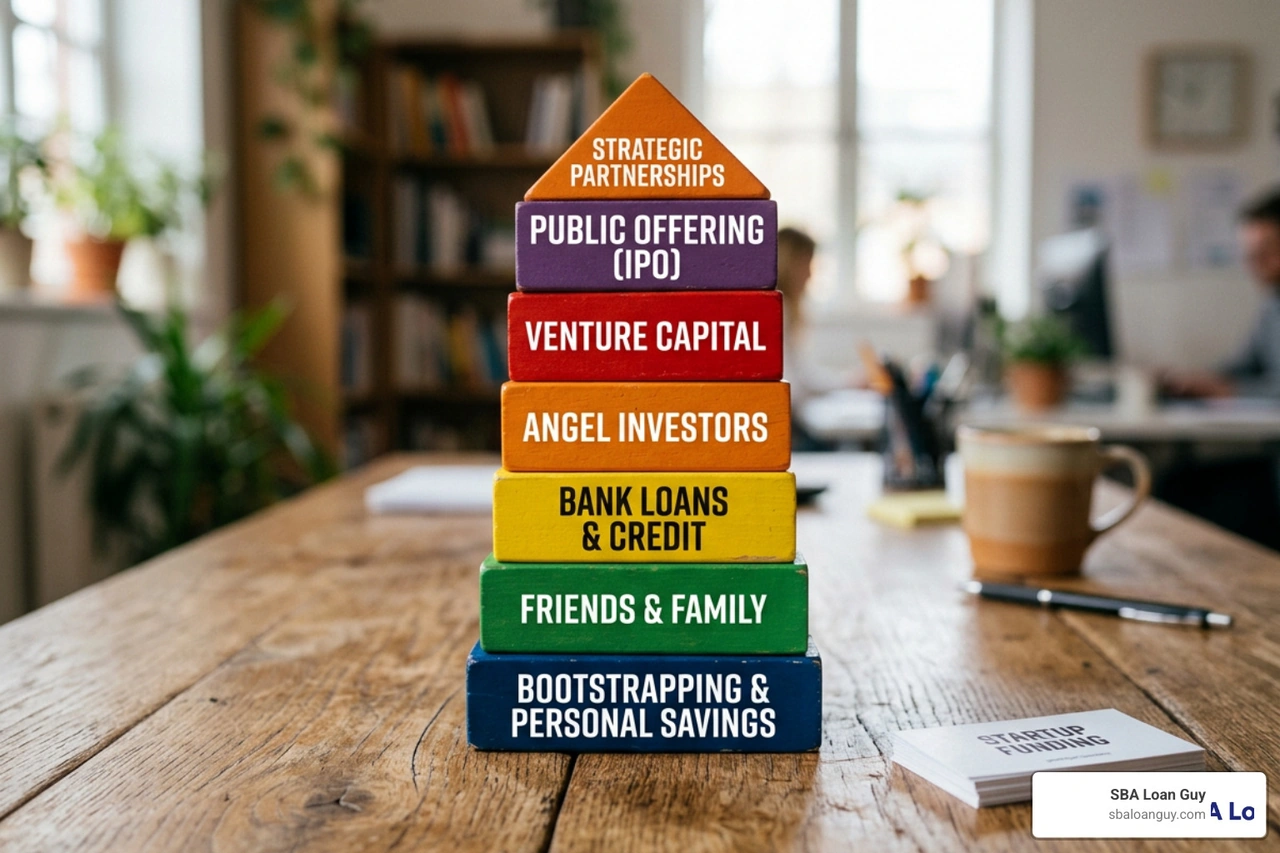
When structuring your deal, you want to combine different funding sources to get the best interest rates, protect your cash, and satisfy the lenders. To learn more about how to design this stack, you can read our guides on Small Business Acquisition Financing and Financing a Small Business Acquisition.
For acquisitions under $5 million, the capital stack is usually simple and highly efficient. It typically looks like this:
This stack is incredibly popular because it allows you to buy a multi-million dollar business while only putting down a fraction of the cost in cash. For small business buyers in Illinois, you can also look into state-specific support programs like the Low Interest Loan Programs to help fill out your stack.
Once a deal crosses the $5 million mark, it exceeds the maximum limit of an SBA 7(a) loan. This is where capital stacking gets creative and highly technical. To see how larger regional banks structure these bigger deals, read about Acquisition Financing - California Bank & Trust .
A larger capital stack might look like this:
By stacking these blocks, you can successfully fund a $10 million or $20 million acquisition. Learn more about managing these larger structures with our guide on SBA Loans for Business Acquisition.
Getting approved for business acquisition funding is like preparing for a major exam. If you show up with your homework done, the bank will love you. If you try to wing it, your deal will fall apart.
Let’s look at how to prepare and what traps to avoid. If you want to make sure your search is on the right track, read our guide on how to Buy a Business.
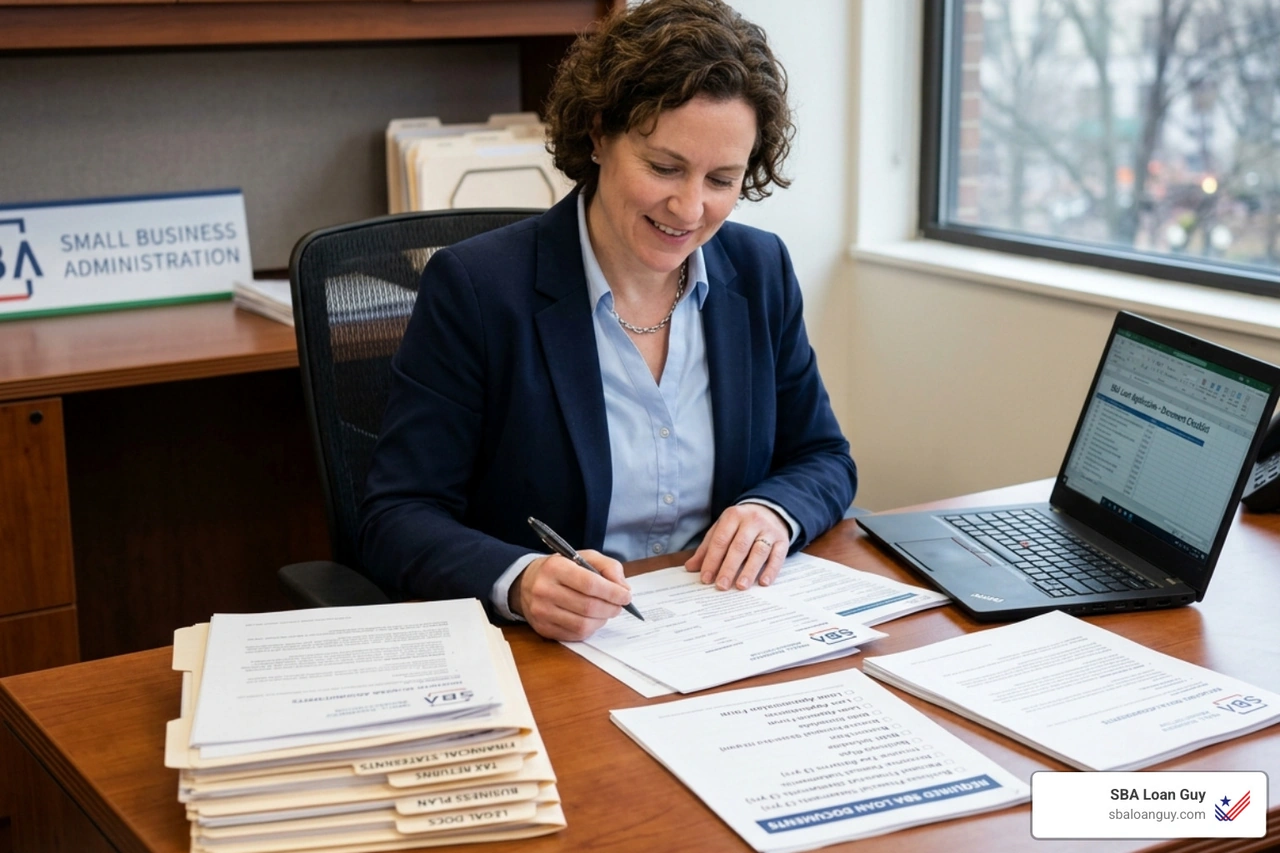
When you apply for a loan, the lender will ask for a mountain of paperwork. You should gather these documents before you even speak to a bank:
Even smart buyers make simple mistakes that kill their deals at the last minute. Keep these traps in mind:
While it is incredibly rare to buy a business with absolutely zero dollars of your own, you can get very close using creative financing. By combining a seller note on full standby with equity partners or a ROBS program, you can significantly reduce your out-of-pocket cash. To see how creative deal-makers stack these options, read 11 Ways to Finance a Deal with Nothing Out of Pocket: How Roland Frasier Stacks "Lego Blocks" to Creatively Fund Acquisitions .
Most acquisition lenders require a minimum DSCR of 1.25x. This means the business's historical annual net operating income must be at least 1.25 times larger than your annual debt payments, providing a 25% safety buffer for unexpected business expenses.
Yes. The SBA strictly requires a personal guarantee from anyone who will own 20% or more of the business being acquired. There are no exceptions to this rule for major owners. For buyers looking at Florida lenders, you can read more about local expectations in Orlando SBA Loans and Florida Small Business Lending .
Securing the right business acquisition funding is the most important step on your journey to becoming a successful business owner. The right capital structure protects your personal assets, keeps your business healthy, and gives you the cash you need to grow from day one.
At SBA Loan Guy, based in The Woodlands, TX, we make this complex process simple. We don't believe in a one-size-fits-all approach. We provide you with a personalized pre-qualification snapshot, match you with the absolute best lenders for your specific deal, and guide you step-by-step through the funding process. Whether you need an SBA 7(a) loan, an Express loan, or help structuring a complex multi-lender deal, we are here to help.
Ready to take the first step toward buying your business? Apply for an SBA 7(a) Loan with us today, and let's build your perfect capital stack together.

A distilled, 0–100 snapshot of how fundable you are based on credit, cash flow, equity, and documentation. Plus the top fixes to raise your score fast.
A curated shortlist of lenders that fit your profile and use of funds, with why each is a fit and exactly what they’ll want to see.
A tailored, step-by-step list of required docs and forms (formats, who provides them, and common pitfalls to avoid).
A realistic week-by-week path from pre-qual to closing, with milestones, dependencies, and an estimated target funding date.
Hands-on prep and documentation for SBA disaster programs (EIDL and others), including submissions, follow-ups, and guidance through appeals or requests for more info.
We prepare your application, match you with the
right lenders, and guide you until funding.