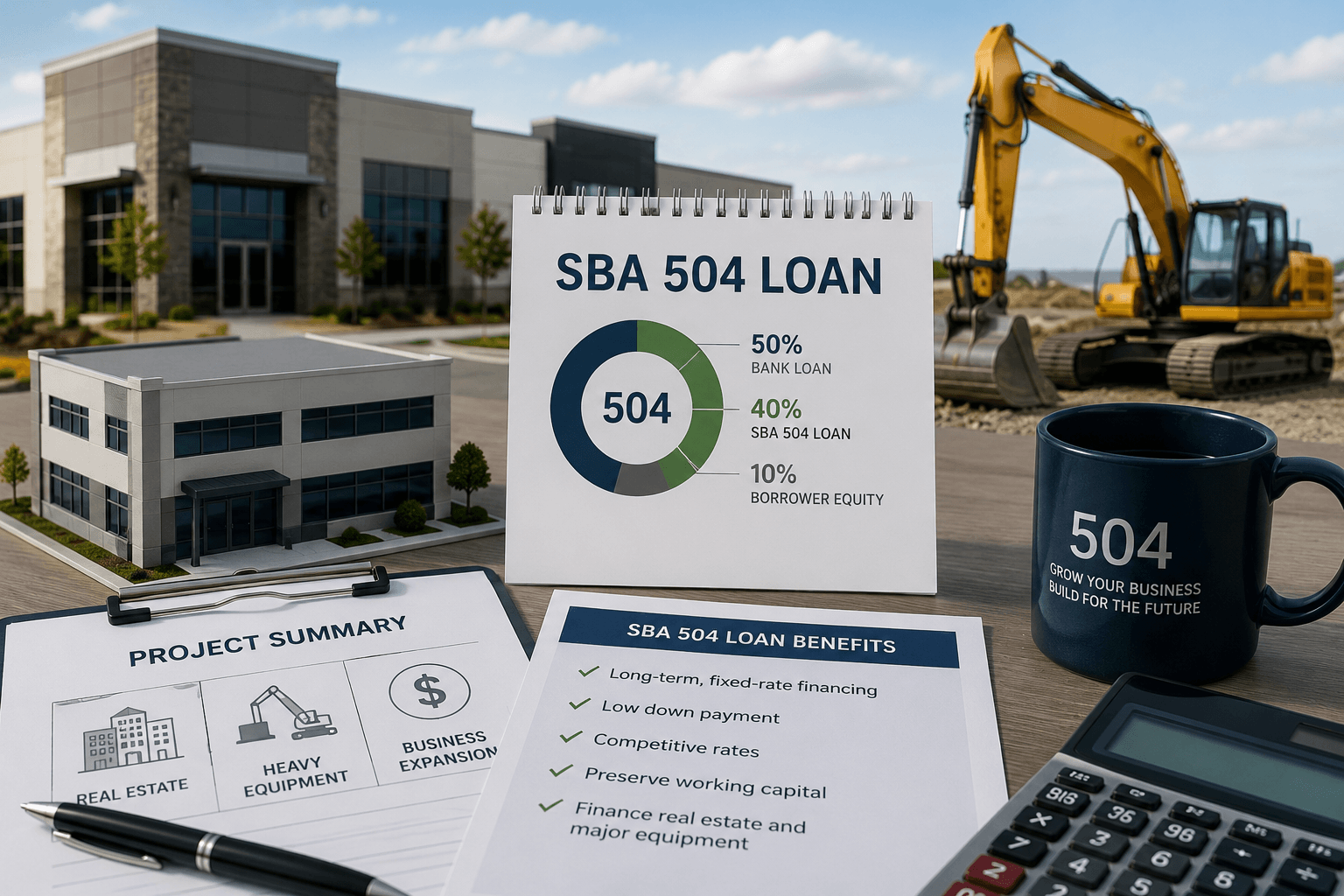
Weighing 7(a) against 504 to buy your business property? See how each is structured and what lenders review before closing.
October 30, 2026
Buying the building your business operates in is a different financing question than buying equipment or another company. A property is a large, long-lived asset, and two SBA programs are commonly discussed for it: the 7(a) loan and the 504 loan. They are built differently, and which one fits depends on the project, the lender and your plans for the business.
This guide compares the two programs in general terms, then covers what lenders typically review when a business buys commercial real estate, including occupancy, appraisals and environmental reviews. It is general information, not a recommendation of either program. Approval is never automatic and depends on the lender.

The right program is not always the one that looks cheaper at first glance. Lenders think about the whole project and how the loan will fit the business over time. When you ask about owner-occupied real estate, expect conversations about:
Program rules come from SBA's Standard Operating Procedure (SOP 50 10) and the lender's own policy; confirm the current version with your lender before relying on any general description.
The comparison below is structural. It deliberately leaves out rates, terms, fees and equity requirements, because those depend on the lender and on SBA's current rules. Ask each lender for the current figures.

Beyond the program choice, a lender evaluating a property purchase looks at both the building and the business that will occupy it. Common items include a third-party appraisal of the property, a review of its condition, an environmental review when the property type or history calls for one, title and insurance, and your occupancy plan. Ask the lender early who orders and pays for each report and how long they usually take.
Lenders also test whether the business can carry ownership costs. For example, suppose you pay $7,000 a month in rent, or $84,000 a year. Owning might involve a loan payment of $5,200, property taxes of $1,100, insurance of $400 and a maintenance reserve of $600 each month. That adds up to $7,300 a month, or $87,600 a year, about $300 a month more than renting before you count the equity you build. These numbers are hypothetical and for illustration only. A lender will want to see that your cash flow can absorb the difference.
Program-level requirements are set out in SBA SOP 50 10 (check the current revision) and then applied through each lender's own credit policy, so lender experience with real estate loans matters.
1. Define the whole project. List the property price, improvements, equipment, closing costs and any working capital you expect to need.
2. Confirm your occupancy plan. Be ready to explain how much space your business will use and whether you plan to lease any part to others.
3. Ask lenders how they would structure it. Ask whether they offer both programs, whether they work with a CDC and why they would recommend one over the other.
4. Compare total cost and timeline. Look past the headline rate to fees, equity, payments and the steps involved. Ask each lender for current figures in writing.
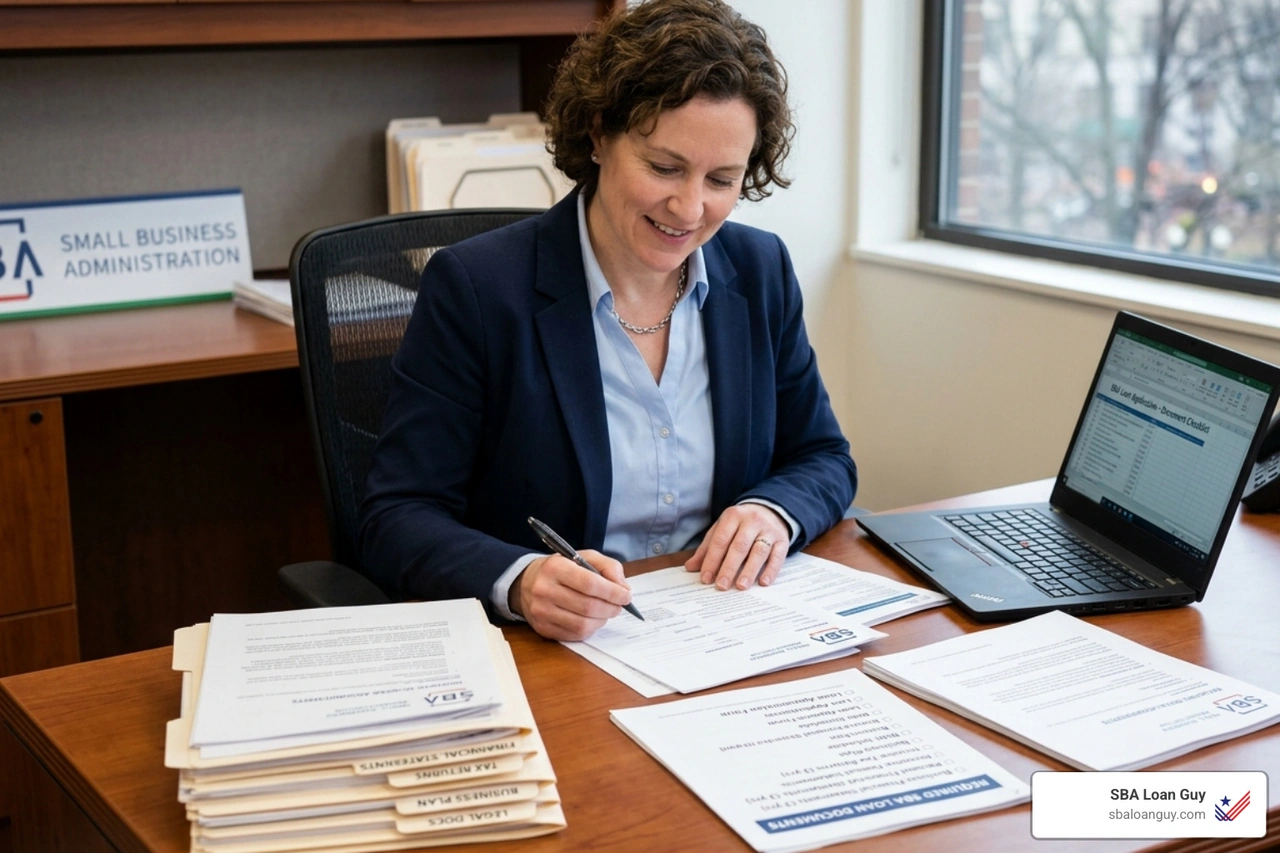
5. Gather property and borrower documents. That usually includes the purchase contract, entity records, tax returns, a Personal Financial Statement (SBA Form 413) and the lender's current checklist.
Each step helps you make a clearer comparison, and the lender may still recommend a different path based on its own policy.
Can a 7(a) loan be used to buy a building?
Often a 7(a) loan may be used for owner-occupied real estate, but eligibility and structure depend on the lender and SBA's current rules. Ask the lender how it would handle your specific property.
Is the 504 program only for real estate?
It is designed for fixed assets, which commonly include owner-occupied real estate and major equipment. Whether your specific project qualifies depends on the CDC, the lender and SBA requirements.
Which program costs less?
It depends on the lender, the structure and current terms, so a general answer would not be reliable. Ask for current quotes and compare total cost, not only the rate.
Do I have to use all of the building?
Not necessarily, but SBA programs for real estate generally require the business to occupy a meaningful share of the property. Confirm the current requirement with the lender before choosing a building.
Neither program is better in every situation. The 7(a) loan often suits projects where property is one piece of a larger financing need, while the 504 structure is built around fixed assets. The best choice comes from a clear project budget, a realistic occupancy plan and honest conversations with lenders about how each would structure your request. Preparation cannot guarantee approval or any particular terms, but it can make the comparison much easier.
Comparing financing paths for a property purchase? Contact SBA Loan Guy to talk through your project and questions before you speak with lenders.
This article is general information only. It is not legal, tax, accounting or financial advice. SBA Loan Guy is not a lender and is not affiliated with or endorsed by the U.S. Small Business Administration. Program rules, eligibility and requirements change, so confirm current details with a licensed lender and SBA.gov before you make a decision.

A distilled, 0–100 snapshot of how fundable you are based on credit, cash flow, equity, and documentation. Plus the top fixes to raise your score fast.
A curated shortlist of lenders that fit your profile and use of funds, with why each is a fit and exactly what they’ll want to see.
A tailored, step-by-step list of required docs and forms (formats, who provides them, and common pitfalls to avoid).
A realistic week-by-week path from pre-qual to closing, with milestones, dependencies, and an estimated target funding date.
Hands-on prep and documentation for SBA disaster programs (EIDL and others), including submissions, follow-ups, and guidance through appeals or requests for more info.
We prepare your application, match you with the
right lenders, and guide you until funding.