What goes on SBA Form 413, how lenders cross-check it, and how liquid assets differ from retirement funds and home equity.
October 30, 2026
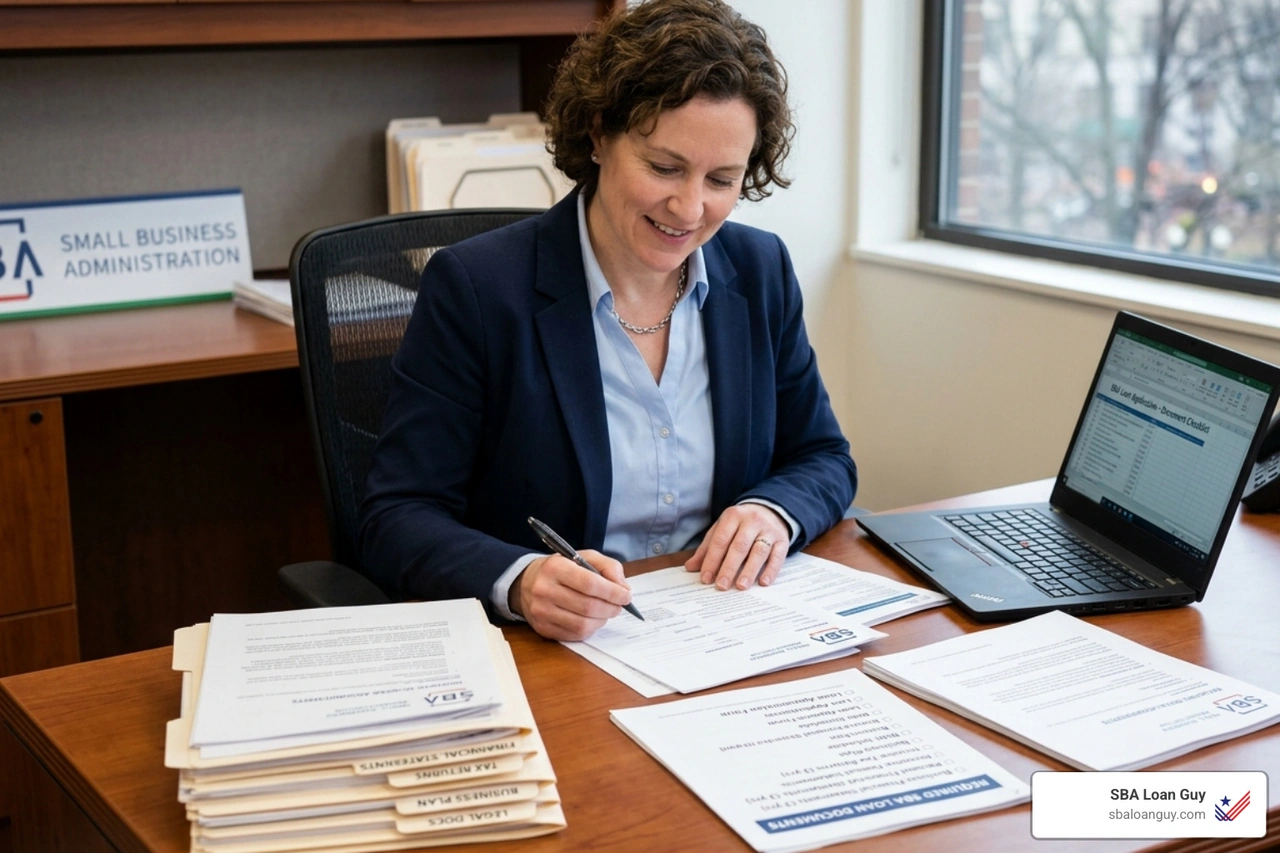
A personal financial statement is a snapshot of what an owner or buyer owns and owes on a given date. For many SBA loan requests, lenders ask the people behind the business to complete one, and then compare it with tax returns, credit reports, and bank statements. This guide explains the form, what lenders look for, how liquid assets differ from other assets, and where inconsistencies tend to cause delays.
Nothing here guarantees approval or fits every lender's checklist. Requirements differ by lender and program, so use this as preparation, not a substitute for the lender's instructions.

SBA Form 413 is the Personal Financial Statement. It lists the person's assets and liabilities as of a stated date and is signed by the individual. Lenders may also accept or request their own version, so ask which form they want.
Who must submit one depends on ownership and the lender. SBA programs generally ask owners above a stated share of the business to provide a statement, and lenders may ask for others, such as guarantors. Confirm the current ownership threshold and who the lender expects to sign before you begin, because the answer can change with SBA's rules and with lender policy.
The form groups information into a few main areas:
Because lenders may ask for support, keep recent statements and valuation backup for anything you list. The SBA 7(a) program page and our SBA 7(a) loan overview explain how personal information fits within the larger application.
A personal financial statement is not read alone. Underwriters check it against several other documents:
A statement that does not reconcile does not mean the borrower did anything wrong, but it does mean the underwriter will ask. Program-level requirements are in SBA SOP 50 10 (check the current revision), and each lender applies its own policy on top.

Lenders pay close attention to personal liquidity: how much accessible cash and near-cash a borrower has, and how much will remain after closing. This matters because a business owner with strong net worth but little accessible cash may struggle to handle a slow month or an unexpected cost.
In general terms, lenders look at assets differently depending on how quickly and cleanly they can become cash:
For example, a buyer lists cash and savings of $60,000, a brokerage account of $40,000, a retirement account of $120,000, and a home valued at $450,000. Debts are a $300,000 mortgage, a $20,000 auto loan, and $10,000 of credit cards. Assets total $670,000 and liabilities total $330,000, so net worth is $340,000. But only $100,000 is readily liquid. If the deal needs $80,000 of the buyer's cash at closing, about $20,000 of liquid assets would remain. The net worth looks comfortable, while the cushion after closing is thin. A lender may ask how the buyer would cover a slow quarter. Ask each lender how it measures liquidity and what it expects to remain after closing.
1. Choose the date. Complete the form as of a recent date and ask the lender how current it needs to be.
2. Gather support. Pull recent statements for every account and the latest mortgage and loan statements.
3. List everything. Include contingent liabilities, including guarantees on other businesses, even if they seem unlikely to be called.
4. Reconcile with your returns and credit report. Match what you list to your tax returns and credit report, and note the reason for any difference.
5. Sign and review. Read the certification above the signature. Rounded or missing items can create problems later.
Borrowers who want a sense of the process can read how SBA Loan Guy works before approaching lenders.
Who has to sign a personal financial statement?
Generally the owners above a stated ownership share and anyone the lender asks to guarantee the loan. Confirm the current threshold and the lender's requirements before you start.
Do lenders verify the numbers on Form 413?
Lenders commonly compare the statement with tax returns, credit reports, and account statements, and may ask for backup. Expect that what you list will be tested.
Can retirement savings count as liquidity?
It depends on the lender. Many treat them differently from cash because of access limits, taxes, and penalties, so ask how they will be considered before you plan around them.
What if my statement shows a lot of net worth but little cash?
That is common and not automatically a problem, but the lender may focus on what remains after closing. Be ready to explain how you would handle a slow period.
A clear, complete, and consistent personal financial statement helps a lender understand the person behind the business. List everything, support what you list, and be honest about what is liquid and what is not. Preparation can make the review smoother, but approval depends on the lender and SBA requirements.
Getting ready to complete your personal financial statement? Contact SBA Loan Guy to talk through what to gather and how to present your finances before you apply.
This article is general information only. It is not legal, tax, accounting or financial advice. SBA Loan Guy is not a lender and is not affiliated with or endorsed by the U.S. Small Business Administration. Program rules, eligibility and requirements change, so confirm current details with a licensed lender and SBA.gov before you make a decision.

A distilled, 0–100 snapshot of how fundable you are based on credit, cash flow, equity, and documentation. Plus the top fixes to raise your score fast.
A curated shortlist of lenders that fit your profile and use of funds, with why each is a fit and exactly what they’ll want to see.
A tailored, step-by-step list of required docs and forms (formats, who provides them, and common pitfalls to avoid).
A realistic week-by-week path from pre-qual to closing, with milestones, dependencies, and an estimated target funding date.
Hands-on prep and documentation for SBA disaster programs (EIDL and others), including submissions, follow-ups, and guidance through appeals or requests for more info.
We prepare your application, match you with the
right lenders, and guide you until funding.