How to think through replacing existing business debt, including merchant cash advance payments that strain daily cash flow.
October 30, 2026
Business debt is not always a problem to be solved, but some obligations carry payments that squeeze day-to-day cash flow, and owners reasonably ask whether a new loan could replace them. Refinancing means using proceeds from one loan to pay off existing debt. This guide explains when that idea may make sense, what lenders review when a request includes a payoff, and why merchant cash advances need extra care.
Nothing here promises that any debt can be refinanced or that a lender will approve a request. Eligibility depends on the lender, the program, and SBA's current rules, so the practical advice throughout is to ask early and to bring clean documents.

A refinance is usually worth discussing when it improves the business in a way a lender can see in the numbers. Houston-area owners often start the conversation after a period of fast growth, a seasonal squeeze, or a short-term financing decision that no longer fits the business. Situations where it may be worth exploring include:
Refinancing is not a fit for every situation. If the underlying problem is ongoing losses, replacing the debt only moves the payment. Whether a particular debt can be included in an SBA loan depends on the program, the lender's policy, and SBA's current rules, so ask the lender which obligations it can consider before you spend time on the package. Our SBA 7(a) loan overview and the SBA 7(a) program page are good places to start reading.
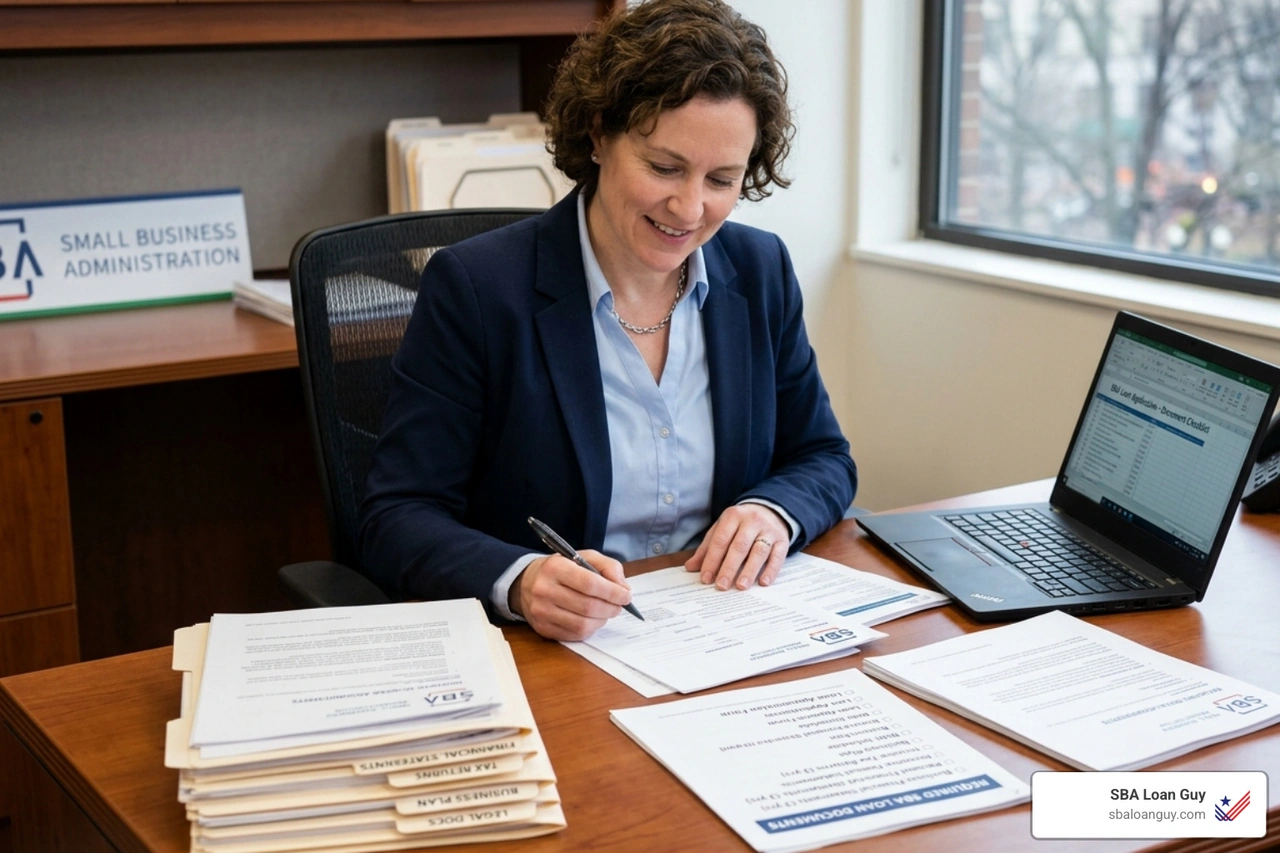
A lender reviewing a request that includes a payoff is trying to answer three questions: what is the debt, why was it taken, and does replacing it leave the business in a stronger position. Expect to be asked for:
Program-level requirements are set out in SBA's Standard Operating Procedure, SBA SOP 50 10 (check the current revision), and each lender applies its own credit policy as well. If a lender tells you a certain debt cannot be refinanced, ask whether that comes from SBA rules or from its own policy, because another lender may see it differently.

A merchant cash advance, or MCA, gives a business a lump sum in exchange for a larger amount of future receivables, repaid through frequent remittances, often daily or weekly. Because payments come out whether the day was busy or slow, they can strain cash flow in a way a monthly payment does not.
For example, suppose a business receives a $50,000 advance and agrees to repay $65,000 through $500 per business day. That is 130 business days of payments. With about 21 business days in a month, remittances are roughly $10,500 a month. If the business earns about $14,000 a month in cash before this obligation, only about $3,500 is left for everything else. A hypothetical replacement payment of $2,900 a month would leave about $11,100 of that cash instead of $3,500, an improvement of about $7,600 a month (illustrative numbers only, not an offer or a typical term).
The important question comes first: whether an MCA can be refinanced with an SBA loan depends on the lender and on SBA's current refinancing rules. Do not assume it can. Ask the lender early, before you sign anything new, and be ready to provide the MCA agreement, the payoff balance, and bank statements showing the remittances.
If you are in an MCA now, avoid taking additional advances while a refinance is being evaluated. A new advance changes the debt schedule, and a lender may need to review it from scratch.
1. List every obligation. Include balances, payment amounts, how often payments are made, and maturity dates, including any advances and lines of credit.
2. Collect the agreements and payoff figures. Lenders typically need current payoff statements, not estimates.
3. Compare cash flow before and after. Show how monthly cash would change under a realistic replacement payment, and test a slower-sales case.
4. Write the story. Explain why the debt was taken, what it funded, and what has changed so the business no longer needs the current structure.
5. Ask each lender what it can consider. Confirm which debts qualify, what documents it wants, and whether new borrowing during the review would cause problems.
Borrowers who want a sense of the process can read how SBA Loan Guy works before approaching lenders.
Can an SBA loan pay off a merchant cash advance?
It depends on the lender and on SBA's current refinancing rules. Some lenders may be able to consider it and others may not. Ask early, and bring the MCA agreement and a payoff balance.
Does refinancing always lower my payment?
No. A new loan can change the payment, the timing of payments, or both, but the result depends on the structure and the lender. Compare the cash flow impact, not just the headline numbers.
Will missed payments on my current debt rule out refinancing?
Not automatically, but a lender will want to understand them. Payment history is part of the review, and a documented explanation can matter more than silence.
What documents should I gather first?
Start with a debt schedule, the original agreements, payoff statements, recent bank statements, and the last few years of tax returns plus current interim financials. A lender may ask for more.
Replacing business debt can make sense when it improves cash flow and fits the business over time, and when a lender can see how and why. Merchant cash advances deserve a direct conversation with the lender about what is allowed. Clear documents help the review, but approval always depends on the lender and SBA requirements.
Thinking about replacing existing debt or a merchant cash advance? Contact SBA Loan Guy to review your debt schedule and the questions to ask lenders before you apply.
This article is general information only. It is not legal, tax, accounting or financial advice. SBA Loan Guy is not a lender and is not affiliated with or endorsed by the U.S. Small Business Administration. Program rules, eligibility and requirements change, so confirm current details with a licensed lender and SBA.gov before you make a decision.

A distilled, 0–100 snapshot of how fundable you are based on credit, cash flow, equity, and documentation. Plus the top fixes to raise your score fast.
A curated shortlist of lenders that fit your profile and use of funds, with why each is a fit and exactly what they’ll want to see.
A tailored, step-by-step list of required docs and forms (formats, who provides them, and common pitfalls to avoid).
A realistic week-by-week path from pre-qual to closing, with milestones, dependencies, and an estimated target funding date.
Hands-on prep and documentation for SBA disaster programs (EIDL and others), including submissions, follow-ups, and guidance through appeals or requests for more info.
We prepare your application, match you with the
right lenders, and guide you until funding.